On this page
Fumigation treats pests with a gas that fills an enclosed space and reaches places sprays cannot, such as the inside of bagged goods, packaging, stacked pallets or a sealed structure. It is used for shipping containers, stored commodities such as grain and dates, silos, warehouses and other spaces that can be closed off.
The property that makes fumigation effective also makes it hazardous: the gases used are toxic to people and animals as well as to pests. That is why every fumigation is planned in detail and carried out by trained personnel under strict safety controls. If your goods or premises are due to be fumigated, here is what to expect and what you will be asked to do.
Before the fumigation
Assessment and planning
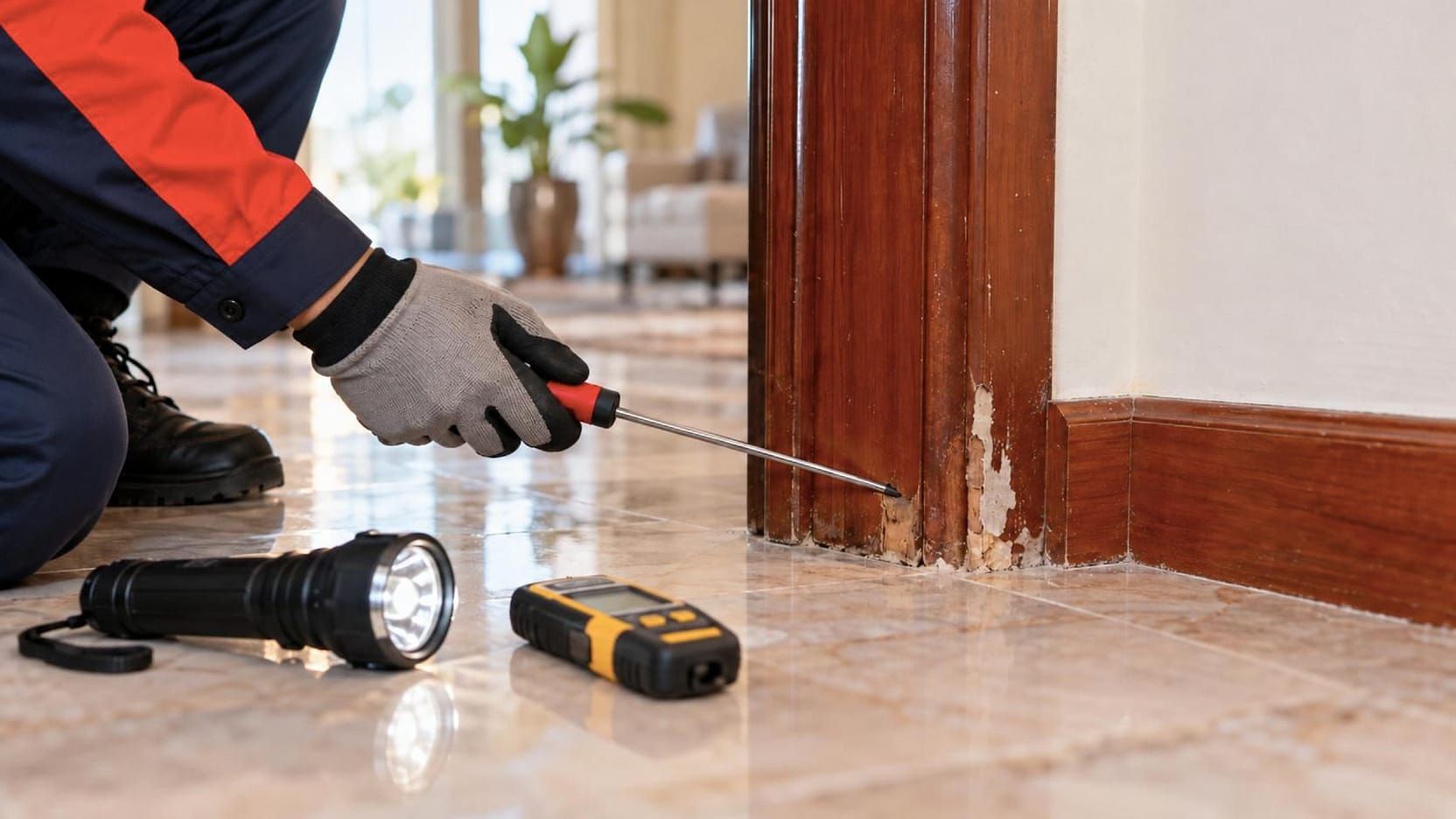
Every fumigation starts with a site visit. The team inspects what is to be treated and its surroundings, confirms that the space can be sealed, identifies nearby offices, workshops, homes and public areas, and plans the safety zone.
You should then receive a written plan that sets out:
- What will be treated, and where
- The date and start time
- The area that must be vacated and secured
- An estimate of how long the area will be closed
- The contact people on both sides
How long a fumigation takes depends on the commodity, the type of space, the temperature and other conditions, so the timeline is set for each job.
What you need to prepare
- Name a site contact who knows the premises and can be reached throughout the job.
- Inform everyone affected: staff, tenants, neighbouring units, security guards and drivers. Plan shifts, deliveries and collections around the closure.
- Share what you know about the space: openings, drains, cable ducts, ventilation systems and connections to neighbouring rooms. Gas can travel through gaps that are easy to overlook.
- Remove what should not be exposed, as the team advises. This can include food or goods outside the treatment, personal belongings, plants and animals.
- Switch off or isolate equipment that the team identifies, such as ventilation or air-conditioning that could move air between areas.
- Provide access: keys, gate passes and any work permits your site requires.
During the fumigation
The area is vacated and secured
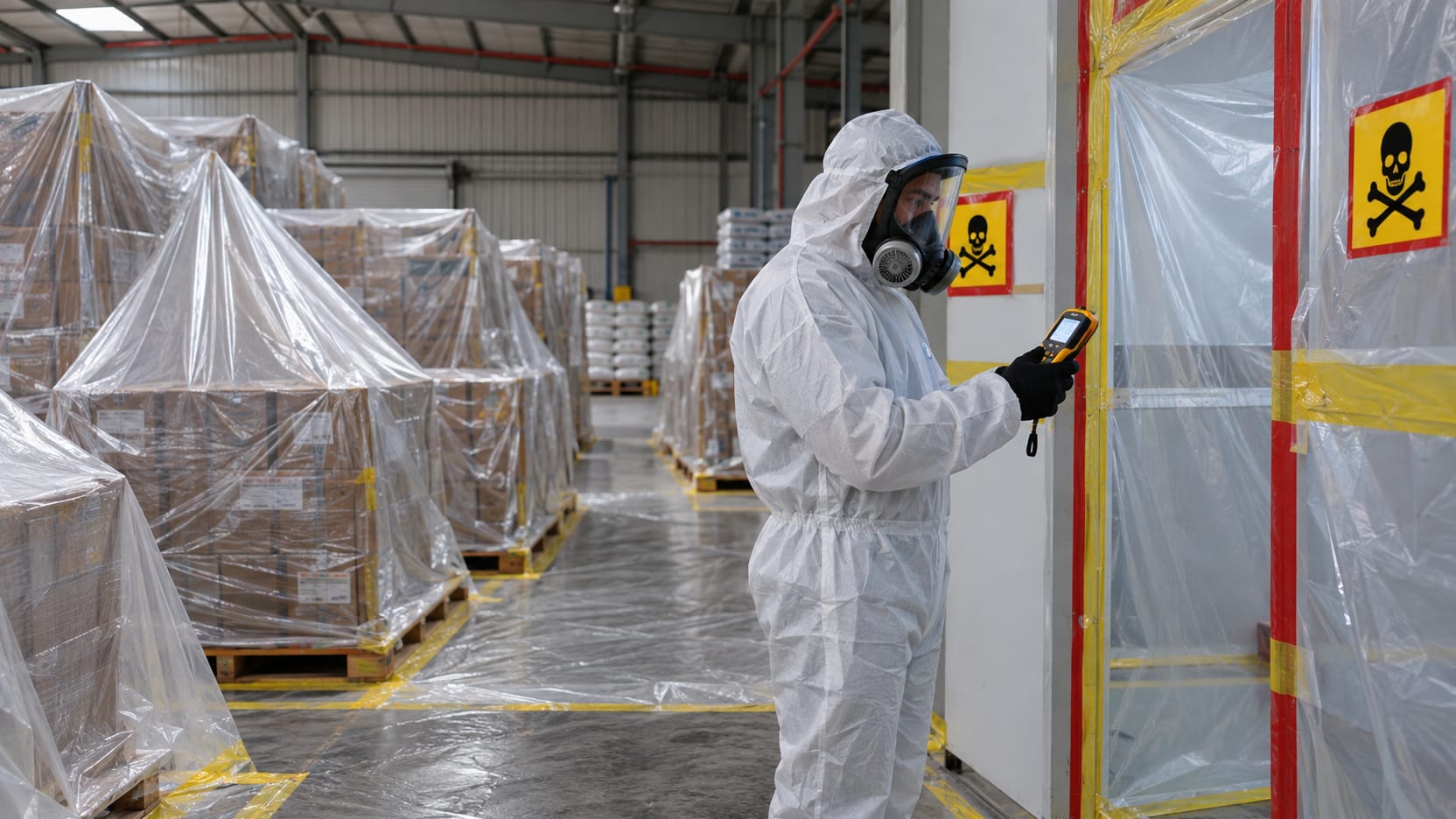
Before treatment begins, the team checks that everyone has left the area and the zone around it. The safety zone is marked off with barriers or tape, and entry is restricted until the job is complete.
Warning signs
Warning signs are posted at every entrance to the treated space and the safety zone. They show that fumigation is in progress, that entry is prohibited, and who to contact. The signs stay in place until the area has been cleared. Never remove or move them.
Trained personnel in protective equipment
Only trained fumigation personnel work inside the safety zone, wearing personal protective equipment (PPE) suited to the task, including respiratory protection where required. The space is sealed so that the gas stays where it is needed.
Gas monitoring
Throughout the treatment, the team uses gas detection equipment. Readings inside the space confirm the treatment is working as planned; readings around the perimeter confirm gas is not reaching areas where people are.
What you should do while it is under way
- Keep everyone, including your own staff, outside the safety zone.
- Do not open doors, vents, hatches or container doors in the treated area.
- Many fumigant gases have little or no smell, so the absence of a smell does not mean an area is safe.
- If you notice anything unusual, such as a damaged cover or seal, an open door or someone feeling unwell nearby, move people away and call the fumigation team or the emergency services straight away. Do not investigate yourself.
After the fumigation
Ventilation
When the treatment period is complete, the team ventilates the space in a controlled way so the gas disperses safely. The safety zone and signs stay in place while this happens.
Clearance before re-entry
The team measures gas levels again with detection equipment. Only when the readings confirm that the space is safe is the area cleared for re-entry, the signs removed and the space handed back to you. Ask for this clearance in writing and keep it with your records.
Do not let anyone enter before clearance is given, even if the work looks finished and the doors are open.
Containers you receive
Treat containers that arrive marked as fumigated with the same caution: do not open or unload them until a competent person has checked and ventilated them.
Back to normal
- Follow the written advice you receive on handling the treated goods, and on cleaning if any is needed.
- Keep the treatment report and the clearance with your records. If the treatment is for an export shipment, ask your buyer or shipping line in advance which documents they need.
- Inspect stock as you use or move it, and report any live insects.
Fumigation removes the pests present at the time of treatment, but it does not stop new ones from arriving later. Clean storage, stock rotation, regular monitoring and proofing are what keep pests out over the long term.
Your checklist
- Before: agree a written plan, name a site contact, inform everyone affected and prepare the space as advised.
- During: stay out of the safety zone, leave signs and seals untouched, and report any concern immediately.
- After: wait for written clearance before anyone re-enters, keep the paperwork and keep up prevention.
If you are planning to fumigate a container, commodity, silo or enclosed space, book a site survey first: call 92 000 6148 or message us on WhatsApp.