
Eastern Alliance — Home
Technician in a respirator thermal-fogging the hedges of a compound garden at dusk

Mosquito control · Villas, compounds, hotels & outdoor sites

Mosquito control

Stop mosquitoes in the water where they breed.

Fogging the mosquitoes you can see buys a few quiet evenings. Lasting relief comes from finding the standing water where Aedes and Culex mosquitoes breed, treating it, then fogging and ULV spraying the places they rest when a garden, compound or venue needs fast knock-down. Smart traps are available as a separate service.

  • Larviciding of breeding sites
  • Thermal fogging & ULV spraying
  • Residual treatment of resting sites

Service areas:Al KhobarDammamRiyadhJeddahJubailJizanTabukall of Saudi Arabia

When to call us

Signs of a mosquito problem

Mosquitoes breed in water you may not notice, often within a few metres of where people are bitten. These are the signs our technicians act on during a survey:

  • Bites at dusk and dawn in the garden, or during the day near planters and containers
  • Standing water in AC drip trays, tanks, planters, fountains or blocked drains
  • Larvae wriggling in buckets, ponds, water features or unused pools
  • Mosquitoes resting on shaded walls, under furniture and in dense shrubs
  • Complaints from residents, guests or staff using terraces and outdoor seating
  • Irrigation, construction or leaks leaving water pooled on site

Scope

What we treat and where

  • Aedes mosquitoes: day-biters breeding in clean water in containers, trays and tanks
  • Culex mosquitoes: night-biters breeding in drains, septic tanks and dirty standing water
  • Villas, gardens and residential compounds
  • Water features, irrigation tanks, AC drip trays and drains
  • Hotels, resorts and outdoor venues
  • Camps, labour accommodation and project sites
  • Schools, campuses and government facilities
  • Parks, farms and industrial perimeters

Why act now

Why mosquitoes cannot wait

  1. Disease risk

    Aedes mosquitoes can carry dengue and Culex can carry other viruses. Every week a breeding site is left alone, a new generation of biting adults emerges from it.

  2. Numbers grow fast

    In summer heat, eggs become flying adults in about a week, and one neglected tank or drip tray can supply a whole compound with mosquitoes.

  3. Outdoor spaces go unused

    Terraces, pool decks, gardens and event lawns lose their value when guests and residents are bitten, and complaints follow quickly.

  4. Spraying alone keeps failing

    Fogging without source treatment means repeat callouts, more product used and the same bites a week later. Treating the water is what breaks the cycle.

Options

Methods we use

The survey decides the mix; most sites need more than one.

  • Larviciding

    Water that cannot be drained, such as drains, tanks, ponds and water features, is treated with larvicides, including biological larvicides where suitable, so larvae never become biting adults.
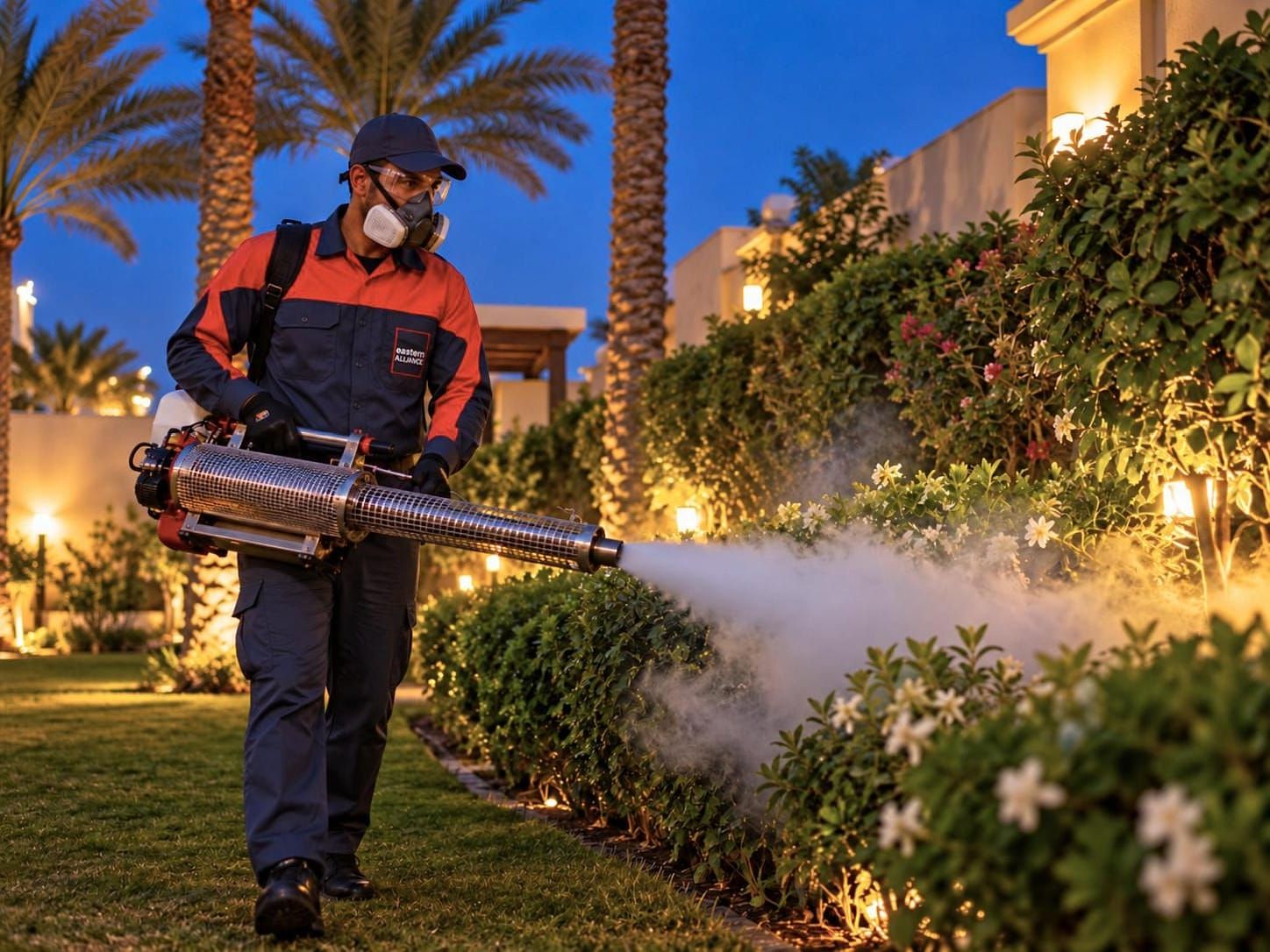
  • Thermal fogging

    A dense fog that drifts into hedges, palms and shaded corners where adults rest. Truck-mounted foggers cover large compounds, camps and perimeters quickly, timed to dusk or dawn.

  • ULV cold fogging & spraying

    Ultra-low-volume machines turn a small amount of product into a fine mist that reaches flying mosquitoes in gardens, terraces and venues, with no smoke and less product than thermal fogging.

  • Residual treatment

    A longer-lasting treatment applied to resting sites: shaded walls, under seating, dense shrubs and around doors, so mosquitoes that land there are controlled between visits.

Method

How mosquito control works

Every mosquito job follows the same four steps; the mix of larviciding, fogging and residual treatment depends on what the survey finds and how the site is used.

  1. 01

    Breeding-site survey

    We walk the site looking for standing water: AC drip trays, tanks, drains, planters, water features and low ground, and map where adult mosquitoes rest in the shade.

  2. 02

    Treatment plan

    You receive a written scope: which water to drain or cover, which to larvicide, where fogging or ULV spraying is needed and how often, with an itemised quote.

  3. 03

    Treatment

    Trained technicians larvicide the breeding water, fog or ULV-spray gardens and open areas when mosquitoes are active, and apply residual treatment to the shaded walls and vegetation where they rest.

  4. 04

    Monitoring & aftercare

    Follow-up visits through the season check the breeding sites again and adjust the programme, with a written report after each visit and our service warranty.

Why Eastern Alliance

Why clients choose us

  • Source firstAn IPM approach that treats or removes breeding water before anything is sprayed, so results last beyond the next hatch.
  • Equipment for every scaleTruck-mounted thermal foggers, ULV cold foggers and ULV sprayers, matched to the size of the garden, compound, camp or perimeter.
  • Approved, low-impact productsLarvicides and adulticides from ranges approved by the WHO, the SFDA and the US EPA, chosen and applied to protect people, pets and the environment.
  • Trained in-houseTechnicians trained at our own training centre on fogging equipment, larvicide dosing and safe application.

Before and after fogging

Before outdoor fogging, close windows and doors, bring pets, pet food, toys and laundry indoors, and cover fish ponds, pools and food preparation areas. Keep people and pets out of the treated area for the time your technician states, and follow the label and re-entry instructions. Your technician will also tell you which water containers to empty, cover or leave for larviciding.

Prevention

How to keep mosquitoes away

Mosquitoes need standing water for about a week to complete their life cycle. Removing it is most of the work between our visits.

  • Empty and scrub containers weeklyPlant saucers, buckets, pet bowls, toys and tyres hold enough water to breed Aedes. Tip them out and scrub the sides, where the eggs stick, once a week.
  • Check AC drip trays and drain linesCondensate trays and dripping drain lines are among the commonest breeding sites around villas. Keep trays draining freely and fix lines that leave water pooled on the ground.
  • Cover tanks and seal drainsFit tight lids on water tanks and barrels, mesh on overflow pipes, and keep floor drains and gullies trapped or covered.
  • Keep water features movingFountains and ponds with a running pump or fish rarely breed mosquitoes; stagnant decorative water does. Drain unused pools or keep them chlorinated and circulating.
  • Fix irrigation and low spotsSet timers so lawns dry between cycles, repair leaking drippers and fill the low spots where water sits for days.
  • Screen and seal the buildingFit insect mesh on windows and vents, keep door closers working and trim the dense shrubs against the walls where adults rest by day.

Price and quote

What decides the price of mosquito control

There is no fixed rate: a single villa garden and a compound with lakes and lawns need very different programmes. The survey sets the scope, and the quote itemises every visit and method.

  • Area to be coveredGardens, lawns, perimeters and water bodies to be treated.
  • Number of breeding sitesTanks, drains and water features that need larviciding on each visit.
  • Methods and equipmentThermal fogging, ULV, residual treatment or a combination, and the machines needed.
  • Visit frequencyOne-off relief before an event, or a seasonal programme with follow-up visits.

Inspection first, then an itemised quote with no hidden extras.

Request a quote

Tell us what you are seeing and where. A coordinator will call you back to arrange a survey.

Saudi mobile or landline, e.g. 05X XXX XXXX

Preferred contact method

FAQ

Frequently asked questions

Does fogging get rid of mosquitoes for good?
No single fogging does. Fogging knocks down the adults flying now, while new ones keep hatching from standing water nearby. That is why we combine fogging with larviciding or removing the breeding sites, and recommend follow-up visits through the mosquito season.
What is the difference between thermal fogging and ULV?
Thermal fogging heats the product into a visible fog that drifts deep into vegetation and shaded areas; it suits large gardens, compounds and perimeters. ULV cold fogging turns a smaller amount of product into a fine mist without heat or smoke, which suits terraces, venues and areas close to guests. The survey decides which, or both.
Where do mosquitoes breed around a villa?
Anywhere water stands for about a week: AC drip trays, plant saucers, buckets, uncovered tanks, blocked gutters and drains, fountains and unused pools. Emptying or covering these between visits is the most useful thing you can do.
Is fogging safe for children, pets and the garden?
The products come from ranges approved by the WHO, the SFDA and the US EPA and are applied by trained technicians at the label rate. Keep children and pets indoors during fogging and for the time the technician states, cover fish ponds and food areas, and follow the re-entry instructions you are given.
What time of day do you fog?
Usually at dusk or early morning, when Culex mosquitoes are active, the air is still and fewer people are outdoors. Daytime Aedes problems are handled mainly at the breeding sites and with residual treatment of the places they rest.
Can you treat a large compound, camp or project site?
Yes. For large areas we use truck-mounted thermal foggers and ULV equipment, plan routes along roads and perimeters, and schedule visits around site access, permits and the hours mosquitoes are most active. Each visit is documented for your HSE or facility team.
How often do we need treatment?
It depends on the season, the number of breeding sites and how the area is used. Many compounds and hotels run a programme through the mosquito season, with larviciding on every visit and fogging when adult numbers rise; a single visit can help before an event or wedding. Your technician will recommend an interval.
What are smart mosquito traps and do we need them?
Automated traps that attract and catch mosquitoes without releasing insecticide. They are a separate service that supplements fogging and larviciding at compounds, hotels, camps and venues, with catch counts recorded at each service visit. Ask the surveyor whether they suit your site.
Do you also control flies?
Yes, as a separate service. House flies, drain flies and fruit flies need source reduction in waste areas and drains, traps and residual treatment rather than fogging. Call us or request a quote online and we can cover both in one survey.

Smart mosquito traps

Automated traps that lure and catch mosquitoes without insecticide, placed and serviced by our technicians, with counts recorded at every visit.

View service

Fly control

Source reduction in waste areas and drains, fly traps and ribbons, and residual treatment for kitchens, food factories and farms.

View service

Garden & lawn pest control

Ants, grubs, aphids, mosquitoes and soil pests treated in villa gardens, compound lawns, hotel grounds and public landscaping.

View service

Residential pest control

One programme for villas, apartments and compounds: inspection, targeted treatment and follow-up, safe around children and pets.

View service

Commercial pest control

Scheduled, documented pest control for offices, malls, hotels, restaurants, hospitals, schools and government buildings.

View service

Annual maintenance contracts

Scheduled visits, monitoring, treatment as needed and a report after every visit, under one contract for the year.

View service

Learn more about the pest

Mosquitoes

Aedes, Culex and Anopheles: how to tell them apart, where they breed around Saudi homes and sites, what they can carry and how to stop them at the source.

Read the guide