
Eastern Alliance — Home
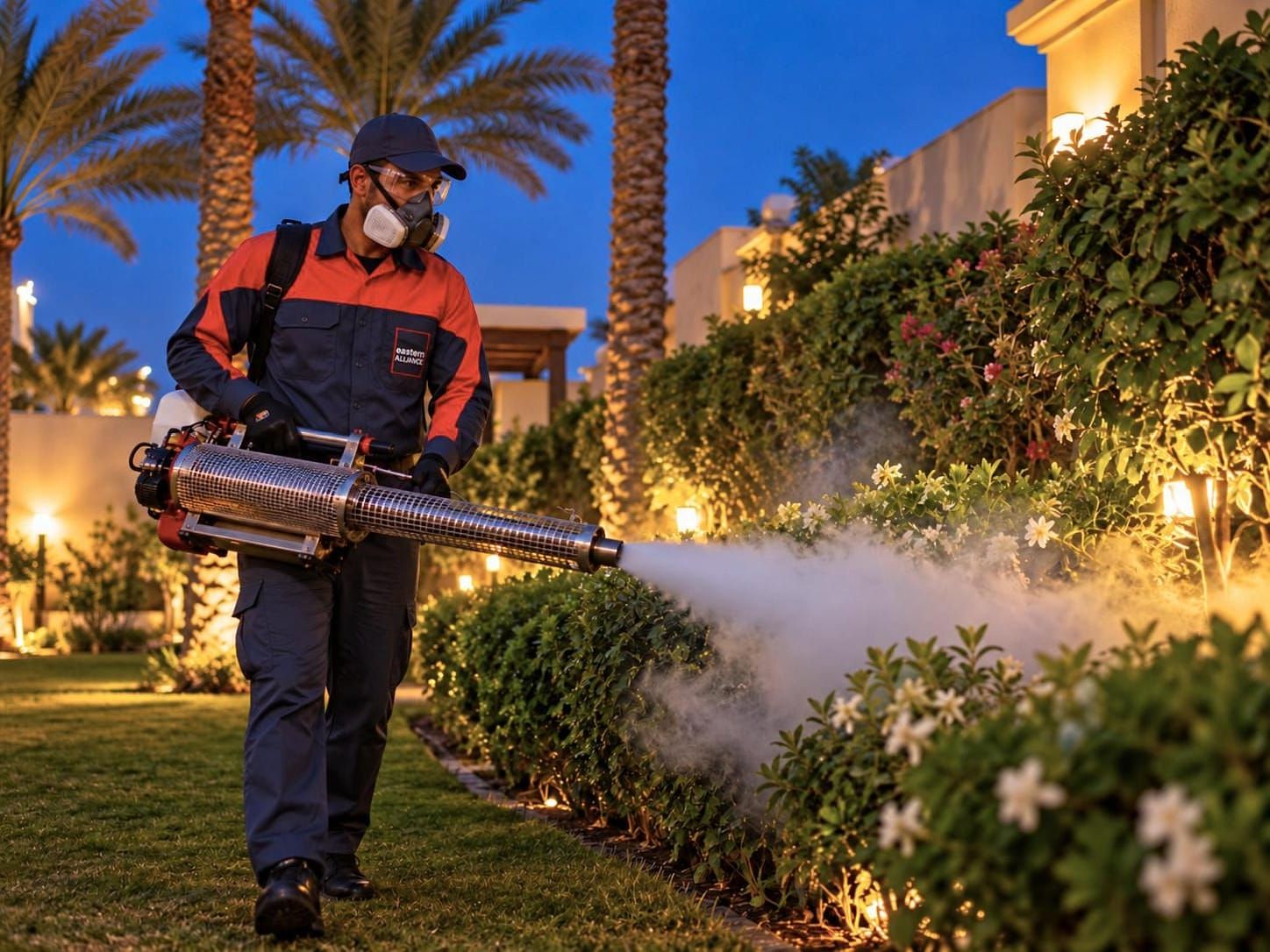
Technician in a respirator thermal-fogging the hedges of a compound garden at dusk

Garden & lawn pest control · Villas, compounds & grounds

Garden & lawn pest control

Healthy lawns and gardens, without the pests they attract.

An irrigated lawn is the greenest place for kilometres, so insects gather there: ants nest under turf, grubs feed on roots, aphids and mealybugs cover ornamentals and mosquitoes breed in wet mulch. We treat lawns, hedges, planters and soil in a targeted way, with products chosen for use near people and pets, and time the work around your watering.

  • Lawns, hedges & planters
  • Chosen for use near people & pets
  • Timed around irrigation

Service areas:Al KhobarDammamRiyadhJeddahJubailJizanTabukall of Saudi Arabia

When to call us

Signs your garden has a pest problem

Lawn and garden pests show in the plants before you see the insects themselves. These are the signs our technicians look for during a survey:

  • Yellow or brown patches in the lawn that spread despite watering
  • Turf that lifts like a carpet, with white grubs in the roots below
  • Ant mounds in lawns, along paths and in planters
  • Sticky leaves, sooty mould or cottony clusters on hedges and ornamentals
  • Mosquitoes rising from mulch, drip lines and plant saucers at dusk
  • Slime trails and chewed seedlings after watering

Scope

Pests and areas we treat

  • Ants, including nests under turf and paving
  • White grubs, cutworms and other lawn insects
  • Aphids, mealybugs, scale and whitefly on ornamentals
  • Mosquitoes breeding in irrigation, mulch and standing water
  • Snails and slugs in beds and planters
  • Soil-dwelling pests in beds, lawns and planters
  • Villa gardens, compound lawns and roof gardens
  • Hotel grounds, school fields, parks and street landscaping

Why act now

Why garden pests cannot wait

  1. Lawns and plants die back

    Grubs cut the roots and aphids drain the sap: a lawn that looks tired one month is bare the next. Replacing turf, hedges and mature ornamentals costs far more than treating the beds.

  2. Mosquitoes breed metres from the door

    Wet mulch, dripper lines and plant saucers are breeding sites. Every evening on the terrace, by the pool or in the playground becomes a bite risk.

  3. Pests move indoors

    Ants nesting under the lawn forage into kitchens, and cockroaches and crickets shelter in damp beds against the wall and come in at night. Many indoor problems start in the garden.

  4. Complaints and inspections

    For hotels, compounds and schools, a bitten guest, an ant trail across a playground or a bare, patchy lawn becomes a complaint or a finding during an inspection.

Options

Treatment options

Chosen after the survey, to match the pest, the planting and how the garden is used.

  • Lawn and turf treatment

    Granular or liquid treatment of the lawn for grubs, ants and surface insects, applied before or after watering as the product requires, with advice on mowing height and irrigation that keeps turf healthy.
  • Hedges, ornamentals and planters

    Targeted spraying of aphids, mealybugs, scale and whitefly on hedges, shrubs and potted plants, including the undersides of leaves where they hide, timed for the cooler part of the day.

  • Soil and mulch treatment

    Treatment of beds, mulch and the soil around roots for larvae, ants and snails, plus control of mosquito larvae in wet mulch, dripper trenches and plant saucers.

  • Grounds maintenance programme

    Scheduled visits for compounds, hotels, schools and public landscaping, planned around the growing season and irrigation, with a written report after each visit for the facility or landscaping team.

Method

How garden and lawn treatment works

Every garden job follows the same four steps; what we treat, and when, depends on the pests found and your irrigation schedule.

  1. 01

    Garden survey

    We inspect lawns, beds, hedges, planters, mulch and irrigation, identify the pests and the damage, and find the wet spots and nests behind them.

  2. 02

    Treatment plan

    You receive a written scope: which areas are treated, with what, when in relation to watering and mowing, and what your gardeners should change.

  3. 03

    Targeted treatment

    Trained technicians treat lawns, hedges, planters and soil where the pests are, with products chosen for use near people and pets, and treat the breeding sites in mulch and standing water.

  4. 04

    Monitoring & aftercare

    Follow-up visits check regrowth and new activity and repeat treatment where the season calls for it, with a written report after each visit, backed by our service warranty.

Why Eastern Alliance

Why clients choose us

  • Products chosen for the gardenEarth-friendly products from ranges approved by the WHO, the SFDA and the US EPA, chosen and applied to protect people, pets and the environment.
  • Survey before quoteThe survey finds the pest and the wet spot or nest behind it, so you pay for the treatment your garden needs, not a blanket spray.
  • Trained in-houseTechnicians trained at our own training centre on methods, safety and PPE.
  • Written report after each visitTreatment records, product names and recommendations for your gardeners or landscaping contractor.

Before and after garden treatment

Before the visit, remove toys, pet bowls and washing from the garden and tell the technician when the irrigation runs; most treatments need the lawn to stay dry for a while afterwards. Keep children and pets off treated lawns and beds for the time the technician states, and follow the label on re-entry. Do not water or mow until your technician says so, so the treatment keeps working.

Prevention

How to keep garden pests down

Most garden pests are a watering problem first. A garden that dries out between waterings has fewer grubs, ants, snails and mosquitoes.

  • Water deeply, less oftenShort daily watering keeps the surface wet, which suits grubs, snails and mosquito larvae. Water longer and less often, early in the morning, so the surface dries.
  • Check drippers and valvesA leaking dripper or a stuck valve makes a permanent wet patch. Walk the lines once a month and fix leaks, especially against walls and under hedges.
  • Keep mulch thin and away from wallsThick, wet mulch is a nursery for mosquitoes, cockroaches and ants. Keep it a few centimetres deep and leave a dry strip along the house.
  • Empty saucers and traysPlant saucers, buckets and wheelbarrows hold enough water for mosquitoes to breed in a week. Empty them after watering.
  • Mow at the right heightScalped lawns weaken and let pests in. Mow a little higher in summer and remove clippings before they pile up and rot.
  • Look under the leavesAphids, mealybugs and scale start on the undersides of leaves and on new shoots. A weekly look at hedges and potted plants catches them early.

Price and quote

What decides the price of garden pest treatment

There is no single rate: the quote follows the survey, so you pay for the areas and pests your garden actually has and nothing more.

  • Area to treatSquare metres of lawn, length of hedging and the number of beds and planters.
  • Pests foundAnts, grubs, ornamental pests, mosquito breeding or a combination.
  • Treatment typeLawn, foliage or soil treatment, and whether wet areas need a larvicide.
  • Visits agreedOne treatment, or scheduled visits through the growing season.

Survey first, then an itemised quote with no hidden extras.

Request a quote

Tell us what you are seeing and where. A coordinator will call you back to arrange a survey.

Saudi mobile or landline, e.g. 05X XXX XXXX

Preferred contact method

FAQ

Frequently asked questions

Is the treatment safe for children and pets playing on the lawn?
Yes, when the re-entry time is respected. Products are chosen for use near people and pets and applied by trained technicians, and your technician will tell you how long to keep the lawn clear and when it can be watered again.
Will you treat the whole garden or only the affected areas?
Only what the survey calls for. A blanket spray wastes product and harms the insects that help the garden; we treat the lawn, beds, hedges or soil where the pests are, and the wet spots that feed them.
Why does my lawn have brown patches even though it is watered?
Often because of what lives under it: grubs feeding on the roots or ant nests drying the soil. Over-watering can also drown roots and invite fungus. The survey tells which it is before anything is applied.
Do you treat the mosquitoes breeding in my garden?
Yes. We treat the larvae in wet mulch, dripper trenches and standing water and show you the breeding sites to remove. For adult mosquitoes around the property, see our mosquito control service.
Can you treat the ornamental plants and hedges?
Yes. Aphids, mealybugs, scale and whitefly on hedges, shrubs and potted plants are treated with targeted spraying, including the undersides of leaves, timed for the cooler part of the day.
Should I water before or after the treatment?
It depends on the product: some lawn treatments need watering in, others need the lawn dry for a time. Tell us your irrigation schedule and the technician will set the timing and tell you when to water again.
Do you offer regular visits for compounds, hotels and schools?
Yes. Scheduled grounds visits are planned around the growing season and irrigation, and each visit is reported in writing for your facility or landscaping team. Call us or request a quote online.
Will the pests come back?
Garden pests return when the conditions that suit them return: wet mulch, leaking drippers and short daily watering. Treatment reduces the population; the watering and housekeeping changes we recommend keep it down.
Do you treat lawns and landscaping on government and public sites?
Yes. Parks, school fields, campuses and street landscaping are covered under scheduled programmes, carried out under your site rules and documented after every visit.

Mosquito control

Breeding water treated at the source, then fogging, ULV spraying and residual treatment for villas, compounds, hotels and outdoor sites.

View service

Ant control

Black garden ants, pharaoh ants and carpenter ants traced to the nest and baited at the source, in kitchens, gardens, compounds and hospitals.

View service

Snake & reptile control

Inspection, safe removal and proofing against snakes, lizards and other reptiles around homes, farms and sites.

View service

Scorpion control

Night inspection with black light, treatment of the places scorpions shelter and sealing of the gaps they use to get indoors.

View service

Residential pest control

One programme for villas, apartments and compounds: inspection, targeted treatment and follow-up, safe around children and pets.

View service

Flea & tick control

Fleas and ticks treated in floors, carpets, pet areas, gardens and yards, with follow-up timed to the eggs and pupae that hatch later.

View service

Learn more about the pest

Household insects

Ants, silverfish, beetles, pantry moths, centipedes, fleas and ticks: how to recognise the everyday crawling insects of Saudi homes and what keeps them out.

Read the guide

Mosquitoes

Aedes, Culex and Anopheles: how to tell them apart, where they breed around Saudi homes and sites, what they can carry and how to stop them at the source.

Read the guide