
Eastern Alliance — Home
Snake & reptile control by Eastern Alliance

Snake & reptile control · Homes and sites

Snake & reptile control

Snakes removed safely, and the way in sealed.

Most snakes are harmless, but some species are venomous and put people and pets at risk, so every sighting should be left to a professional. A technician assesses the situation and plans the work, removes snakes and lizards with safe, humane methods, then seals the openings they used.

  • Snakes & lizards
  • Safe, humane removal
  • Entry points sealed

Service areas:Al KhobarDammamRiyadhJeddahJubailJizanTabukall of Saudi Arabia

When to call us

When to call us

Snakes and lizards look for shade, shelter and prey such as rodents. Call a professional if you notice any of these:

  • A snake seen in the garden, yard or near buildings
  • Shed snake skins near walls, rocks, stores or AC units
  • Lizards getting into homes, kitchens or stores
  • Rodent activity nearby, which draws snakes in
  • Gaps under doors, around pipes or in boundary walls

Scope

What we cover

  • Snakes, including venomous species
  • Lizards and geckos indoors
  • Villas, gardens and residential compounds
  • Farms and agricultural land
  • Construction sites and industrial perimeters
  • Schools and campuses with open grounds
  • Warehouses and storage yards

Why act now

Why a snake sighting cannot wait

  1. A bite is a medical emergency

    Some species found in the Kingdom, such as vipers and cobras, are venomous. Most bites happen when someone tries to catch or kill the snake, and children, workers and pets are most at risk.

  2. The property becomes a habitat

    A snake that has found rubble, long grass, water and rodents stays and may breed. Shed skins and repeat sightings mean it is living there, not passing through.

  3. Work stops on sites

    A snake in a cabin, store or pipe rack halts work in that area until it is cleared and becomes an HSE incident and report. On farms and camps it keeps workers out of stores and pump rooms.

  4. Lizards foul kitchens and stores

    Geckos and lizards indoors leave droppings on worktops, in food stores and on stock, a hygiene finding in any kitchen or warehouse inspection.

Options

Removal and proofing options

Set by what the assessment finds: a single animal, a property that keeps attracting them, or a site with a long perimeter.

  • Call-out removal

    For a snake or lizard seen in a room, garden or store: the technician locates and removes it with the proper tools and checks how it got in.
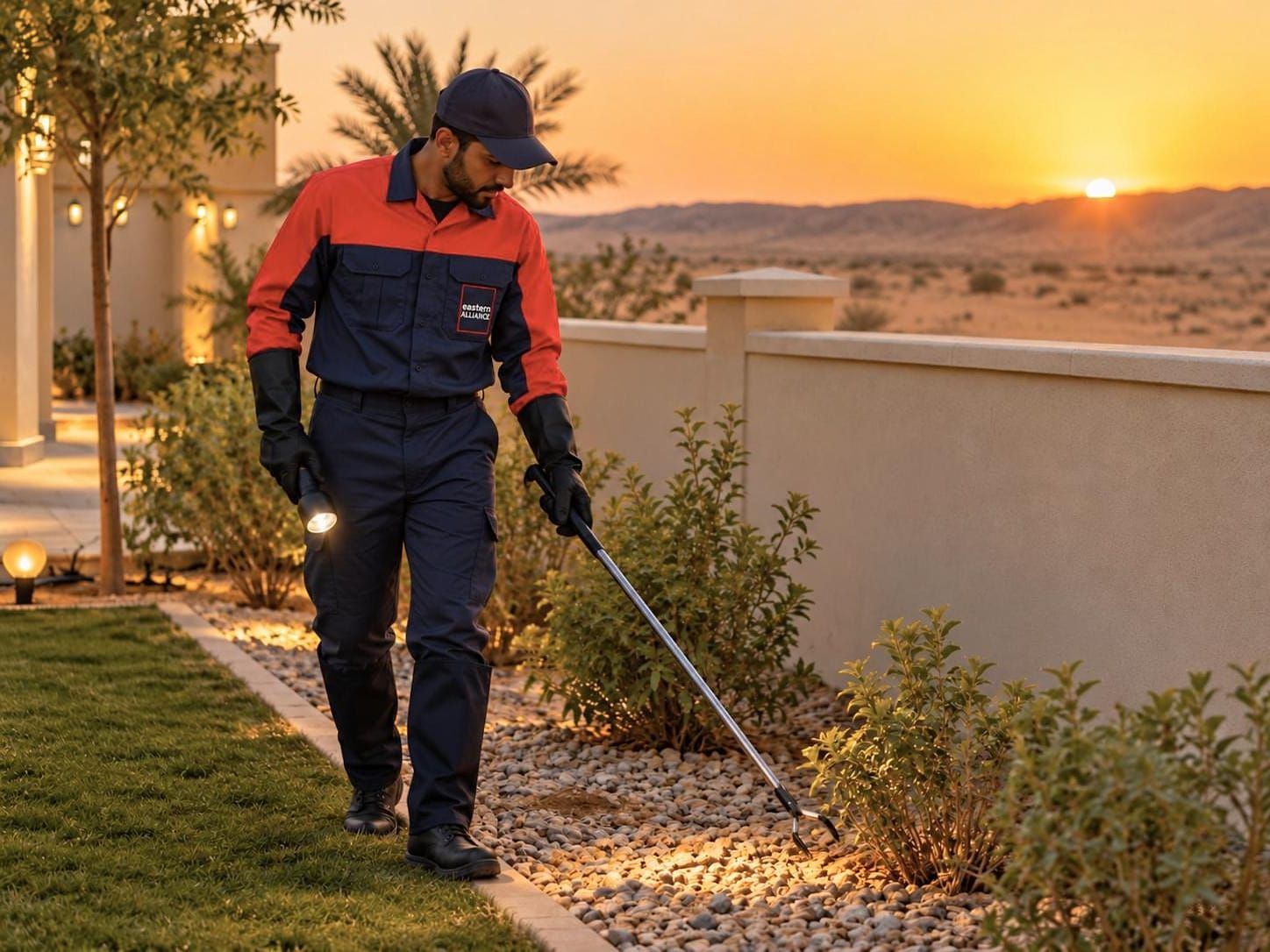
  • Proofing for villas and compounds

    Gaps under doors and gates, pipe entries, weep holes and boundary-wall cracks are sealed, and the shelter and rodent activity that draw snakes are dealt with.

  • Perimeter programme for farms and sites

    Scheduled walks of the perimeter, cabins, stores and laydown areas through the warm months, under your site rules, with a written report after each visit.

Method

How snake and reptile control works

Every job follows the same four steps, starting with a technician’s assessment of the situation.

  1. 01

    Assessment

    A technician assesses the situation: where the animal was seen, where it may be sheltering and how it got in.

  2. 02

    Plan

    The technician formulates a plan for removal and proofing that accounts for people, pets and any site rules.

  3. 03

    Safe removal

    Snakes and lizards are removed with safe, humane methods, using the right tools and protective equipment.

  4. 04

    Sealing & aftercare

    Openings are sealed, and you receive advice on removing the shelter and food sources that attract reptiles, backed by our service warranty.

Why Eastern Alliance

Why clients call us

  • Assessment firstA technician assesses the situation and plans the work before any removal starts.
  • Safe and humaneMethods that protect people and pets and treat the animal humanely.
  • Proofing, not just removalOpenings are sealed, leaving reptiles fewer ways back in.
  • Trained in-houseTechnicians trained at our own training centre on methods and safety.

If you see a snake

Keep people and pets away, and do not try to catch, corner or kill it. If you can do so safely, note from a distance where it went, then call us. If anyone is bitten, seek emergency medical help immediately.

Prevention

How to keep snakes away

Snakes come for food, water and shelter. Remove those three and most of them move on.

  • Deal with rodents firstSnakes follow their food. Rodent control, closed bins and no spilled feed or pet food remove the main reason a snake visits.
  • Clear what they hide underRubble, stacked blocks, timber, pallets and garden waste against walls are shelter. Store materials off the ground and away from buildings.
  • Keep the grass shortMow lawns, trim ground cover and hedges back from walls and paths, and avoid overwatering, which draws frogs, insects and the snakes that hunt them.
  • Seal the gapsFit sweeps under external doors and gates, seal around pipes and cables, mesh weep holes and drains, and repair cracks in boundary walls.
  • Look before you reachIn stores, pump rooms and generator rooms, use a torch and check before lifting covers or reaching into corners, especially on warm evenings.
  • Walk the perimeter regularlyOn farms, camps and sites, a routine check of the fence line, drains and laydown areas finds shed skins and burrows before anyone meets the snake.

Price and quote

What decides the price of snake and reptile control

There is no fixed rate: the quote follows the assessment, so you pay for the removal and proofing your property needs and nothing more.

  • Size of the property or perimeterA single room or garden, or a farm, camp or site boundary.
  • Where the animal isIn the open, or behind stored materials, in a void or under a structure.
  • Proofing work neededDoor sweeps, sealing around pipes, mesh on drains and wall repairs.
  • One visit or a programmeA single removal, or scheduled perimeter checks through the warm months.

Inspection first, then an itemised quote with no hidden extras.

Request a quote

Tell us what you are seeing and where. A coordinator will call you back to arrange a survey.

Saudi mobile or landline, e.g. 05X XXX XXXX

Preferred contact method

FAQ

Frequently asked questions

Are all snakes dangerous?
No. Most snakes are harmless, but some species are venomous and pose a risk to people and pets. Because they can be hard to tell apart, treat every snake as potentially dangerous and leave it to a professional.
What should I do if a snake gets indoors?
Get everyone, including pets, out of the room and close the door behind you if it is safe to do so. Do not try to catch it; call us and tell us where it was last seen.
How do you keep snakes from coming back?
Openings are sealed, and we advise on removing what attracts snakes: long grass, rubble, materials stored against walls and rodent activity. Large sites and perimeters benefit from regular checks.
Do you deal with lizards inside homes?
Yes. Lizards and geckos that get into homes, kitchens or stores are removed, and the gaps they use around doors, windows and pipes are sealed.
Do you treat scorpions?
Yes, under a service of their own: a night inspection with black light, treatment of the places they shelter and sealing of the gaps they use. See scorpion control under related services, or call us or request a quote online.
Do you cover construction and industrial sites?
Yes. Our technicians work under your site permits and HSE rules, inspect the perimeter and site cabins, and advise on the housekeeping that keeps snakes away.
What attracts snakes to a villa or compound?
Food, water and shelter: rodents, bird feed and pet food, dripping taps and irrigation, and hiding places such as rubble, stacked materials, long grass and gaps in boundary walls. Remove those and most snakes move on.
When are snakes most active in Saudi Arabia?
On warm nights from spring to autumn. In the hottest weeks they shelter by day and hunt after dark, which is when most sightings near houses, camps and site cabins happen. Winter is quieter and a good time for proofing.
What should I do if a pet is bitten?
Take it to a veterinarian immediately and, if you can do so safely, note the snake’s colour and size from a distance. Do not try to catch the snake; call us afterwards so we can find and remove it.

Scorpion control

Night inspection with black light, treatment of the places scorpions shelter and sealing of the gaps they use to get indoors.

View service

Rodent control

Rats and mice removed, entry points sealed, and bait stations monitored on schedule.

View service

Garden & lawn pest control

Ants, grubs, aphids, mosquitoes and soil pests treated in villa gardens, compound lawns, hotel grounds and public landscaping.

View service

Stray animal control

Humane control of stray cats and dogs at compounds, schools, hotels and sites: survey, monitoring, repellents, proofing and humane capture where needed.

View service

Industrial pest control

Pest control for plants, refineries, warehouses, ports and camps, run under permit-to-work and HSE rules with documentation for audits.

View service

Residential pest control

One programme for villas, apartments and compounds: inspection, targeted treatment and follow-up, safe around children and pets.

View service

Learn more about the pest

Snakes

Which snakes turn up around Saudi homes, farms and sites, how to read the signs, what to do after a bite and how to make your property less inviting.

Read the guide