Where there are rodents, shade and water, snakes follow.
Saudi Arabia has dozens of snake species, most of them harmless, a few highly venomous. They are not hunting people: they arrive on a property because it offers rodents, shade, water and places to hide, and most bites happen when someone tries to catch or kill one. This guide covers the species you are likely to meet, the signs, first aid and prevention.
Species
Snakes you may meet in Saudi Arabia
01
Horned and sand vipers
Short, thick vipers of sand dunes and gravel plains, sand-coloured with darker blotches; some carry a small horn above each eye. They bury themselves in sand by day, leave looping sidewinder tracks and strike fast when stepped on. Venomous.
02
Saw-scaled vipers
Small brown vipers of rocky ground, wadis and farmland in the west and east. When cornered they coil and rub their scales together with a sizzling sound. Quick to bite, they cause many of the serious bites in the region. Venomous.
03
Arabian cobra
Found in the south-west, from the Hijaz mountains to Asir and Jizan, around farms, terraces and villages. Long and plain brown to yellowish, it raises a hood when alarmed. Dangerously venomous, but it usually retreats if given the chance.
04
Desert black snake
Glossy black, up to about a metre long and active on warm nights across central, northern and eastern Saudi Arabia, often near farms and camps where rodents are. It does not raise a hood and is rarely aggressive, but its venom is potent.
05
Harmless and near-harmless species
Most snakes you meet are harmless: the Arabian sand boa, which burrows in loose sand, slender fast racers and sand snakes, the diadem snake near rodent burrows, and the false cobra, which hisses and spreads a hood but is only mildly venomous. Leave them be.
Identification
Reading a snake from a safe distance
Colour alone will not tell you whether a snake is venomous, so never get close to check. From a distance, body shape is the best clue: vipers are short and thick with a broad, triangular head and narrow vertical pupils, while most harmless species are slender with a head barely wider than the neck and round pupils. Whatever you see, photograph it from a distance, note where it went and keep people and pets away.
Short, thick body and a broad triangular head: likely a viper, keep well back
Raised hood and a hiss: a cobra, or the harmless false cobra; treat it as a cobra
A sizzling, rasping sound from a coiled snake: a saw-scaled viper warning you off
Slender, fast and gone in a second: usually a harmless racer or sand snake
Looping S-shaped tracks across sand: a sidewinding viper passed this way
Blunt tail, small eyes, body half-buried in sand: a sand boa, harmless
Habitat and behaviour
Where snakes shelter and when they are active
Snakes are cold-blooded, so the climate sets their timetable. In spring and autumn they hunt by day and on warm evenings; in summer they turn nocturnal and spend the day in shade: under AC units, in rubble and block piles, store rooms, animal pens and damp soil around irrigation and leaking tanks. In winter they mostly stay hidden. They come onto a property for food, meaning rodents, birds, geckos and frogs, so a feed store, chicken shed, bin area or construction site with a rat problem is also a snake site. They get in under gates and doors, around pipes and through cracks in boundary walls.
Warning signs
Signs a snake is around
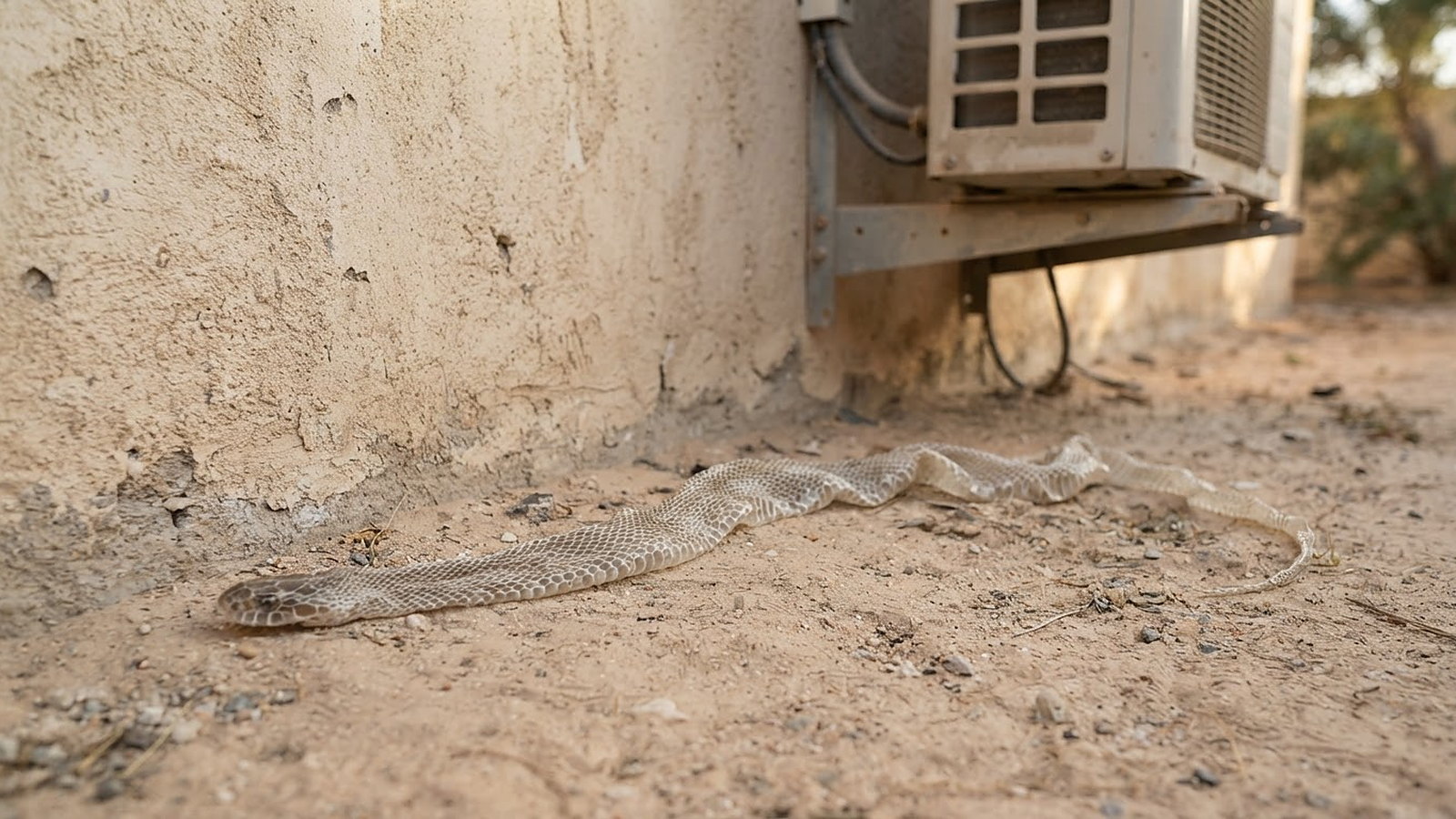
A shed skin, whole or in pieces, near a wall base, store room or AC unit
Winding or S-shaped tracks across sand, dust or a freshly swept yard
Rodent droppings, burrows or gnawing: the food that draws snakes in
Holes at the base of walls, under slabs or along irrigation lines
Pets or poultry suddenly agitated, barking or avoiding a corner of the yard
A musky smell in a store room, pump room or under a site cabin
Sightings on warm nights near outdoor lights, which draw the insects and geckos they hunt
Why it matters
Why a snake sighting should be taken seriously
01
Venomous bites
Viper and cobra bites are medical emergencies: swelling, bleeding, tissue damage or paralysis can follow within hours. Antivenom is available in Saudi hospitals, which is why getting to emergency care quickly matters more than anything done at the scene.
02
Children, workers and pets
Most bites happen on hands and feet: a child lifting a stone, a labourer reaching into a block pile, a gardener in sandals, a dog nosing a burrow. Farms, construction sites and camps carry the highest exposure.
03
A sign of a rodent problem
A snake that keeps returning is feeding on something. On a site or farm that usually means rats or mice in feed, waste or stores, which is a health, stock and compliance problem in its own right.
04
Panic does more harm than the snake
Attempts to kill or catch a snake with sticks, shovels or bare hands cause a large share of bites, and killing harmless species removes natural rodent control. Standing back and calling a professional is the safe option.
Prevention
Making your property less inviting
Control the rodents firstNo rodents, far fewer snakes. Keep feed, pet food and waste in sealed bins, clear spillage at pens and loading areas and deal with any rat or mouse activity as soon as it shows.
Remove the hiding placesClear rubble, block piles, old timber, tyres and sheet metal from around buildings, store materials on racks off the ground and away from walls, and keep grass and ground cover short.
Seal the way inFit brush strips under gates and doors, mesh over drains and vents, and fill gaps around pipes and cracks in boundary walls and slab edges. A snake needs only a gap the width of its head.
Fix leaks and manage irrigationRepair dripping taps, AC drain lines and leaking tanks, and keep irrigation away from wall bases. Damp, shaded soil draws the frogs, insects and rodents that snakes follow.
Light and look before you reachOn warm nights carry a torch, wear closed shoes in gardens and on sites, and look before lifting stones, boards or bags that have sat on the ground. Teach children not to put hands into holes or piles.
Never handle or kill a snake yourselfKeep people and pets back, watch from a distance where it goes and call a professional. A snake that is left alone almost always moves off; one that is cornered or struck defends itself.
How we deal with it
When to call a professional
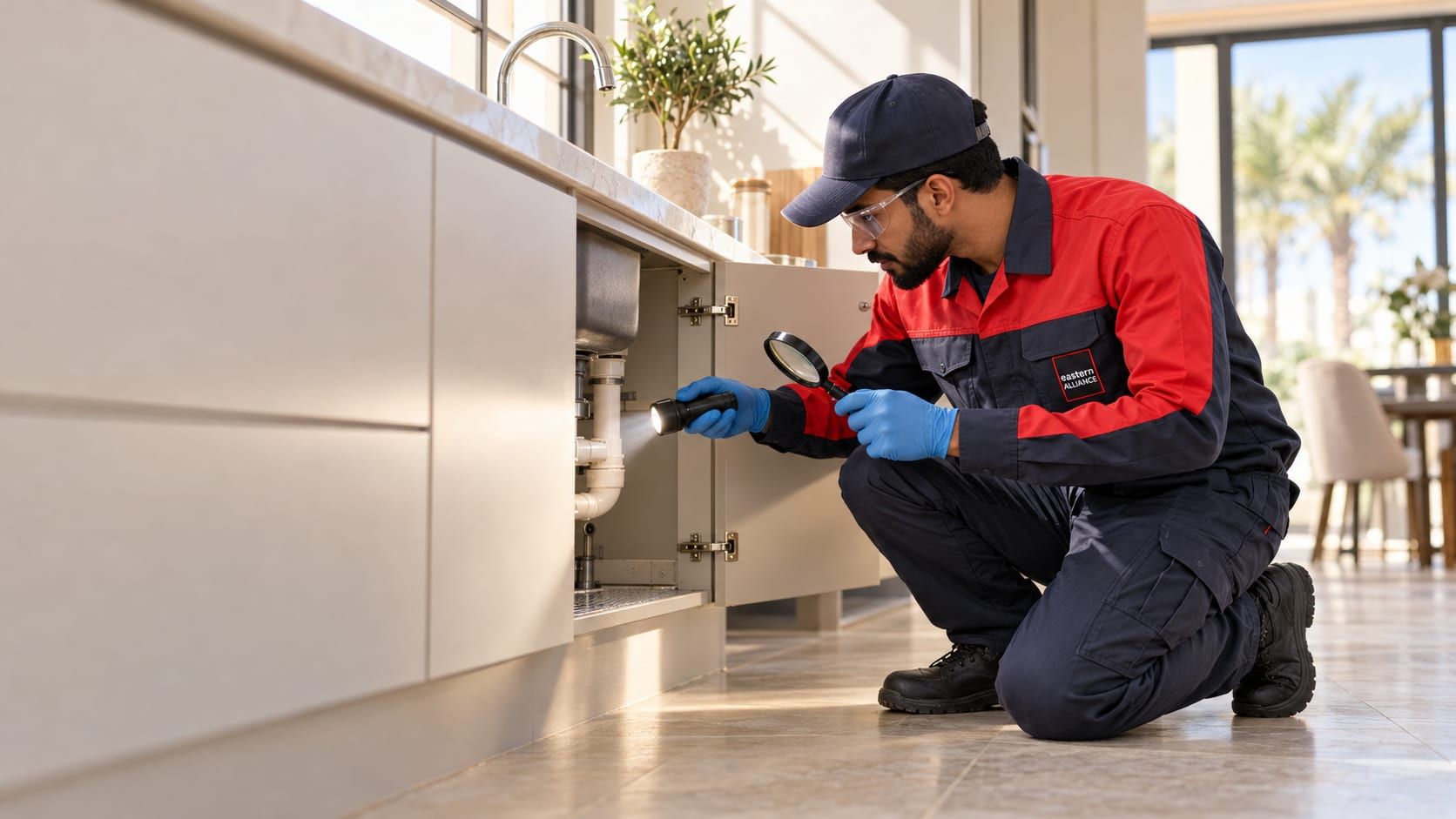
Call for any snake seen inside a building, in a garden used by children or pets, or on a site where workers are exposed, and for repeat sightings, shed skins or tracks. Our technician assesses the situation, locates where the snake is sheltering and how it got in, removes it with safe, humane methods and the right equipment, then seals the openings and advises on the rodent and shelter problems that drew it in.
Our services that cover this pest, from inspection to monitoring.
Move away from the snake, keep the person still and calm with the bitten limb at or below heart level, remove rings and watches before swelling starts, and get to the nearest emergency department at once. Do not cut the wound, suck out venom, or apply a tourniquet or ice. A photo of the snake taken from a distance helps the doctors.
Are all snakes in Saudi Arabia venomous?
No. Of the dozens of species in the Kingdom, only a minority are dangerously venomous, mainly the vipers, the Arabian cobra and the desert black snake. Most of what turns up in gardens and stores is harmless, but because they can be hard to tell apart, treat every snake as dangerous and leave it to a professional.
When are snakes most active in Saudi Arabia?
From spring to autumn, and on warm nights in particular. In the summer heat they rest by day in shade and come out after dark, which is when most garden, farm and site encounters happen. They are largely inactive in the cooler winter weeks.
A snake went under our outdoor AC unit. Will it leave on its own?
Often, but not reliably: the unit offers shade, warmth at night and geckos to eat, so it may stay. Keep people and pets away, do not poke or flood it out, and call us; the technician will remove it safely and tell you how to close the gap it used.
Do snake repellents, sulphur or garlic work?
There is no good evidence that powders, sprays, sulphur, garlic or ultrasonic devices keep snakes away, and some are harmful to pets and children. Removing rodents, shelter and gaps is what works; the rest is money spent on reassurance.
Do you cover farms, camps and construction sites?
Yes. Our technicians work under your site permits and HSE rules, inspect the perimeter, stores, cabins and feed areas, remove snakes safely and combine the visit with rodent control where that is the real cause. Call us or request a quote online to arrange an inspection.
Aedes, Culex and Anopheles: how to tell them apart, where they breed around Saudi homes and sites, what they can carry and how to stop them at the source.
Paper wasps, hornets, honey bees, stinging ants and scorpions: where they nest, when they are active, what a sting needs and what never to do yourself.
Ants, silverfish, beetles, pantry moths, centipedes, fleas and ticks: how to recognise the everyday crawling insects of Saudi homes and what keeps them out.
Pigeons, mynas, sparrows and crows on ledges, roofs and plant: how they choose a building, the damage droppings and nests do, and what keeps them off.
Read the guide
This guide is general information for homes and facilities in Saudi Arabia. Species and their behaviour vary by region and season, and the right treatment is decided after an inspection.