Birds return to the same ledge until it is proofed.
Feral pigeons, mynas, house sparrows and crows live on towers, villas, warehouses and industrial plant across Saudi Arabia; gulls join them on the coasts. A bird picks a building for its ledges, shade and nearby food, then returns to the same spot daily. Here is how to spot a problem, what droppings and nests damage and the proofing that keeps birds off.
Species
Birds that settle on Saudi buildings
01
Feral pigeon
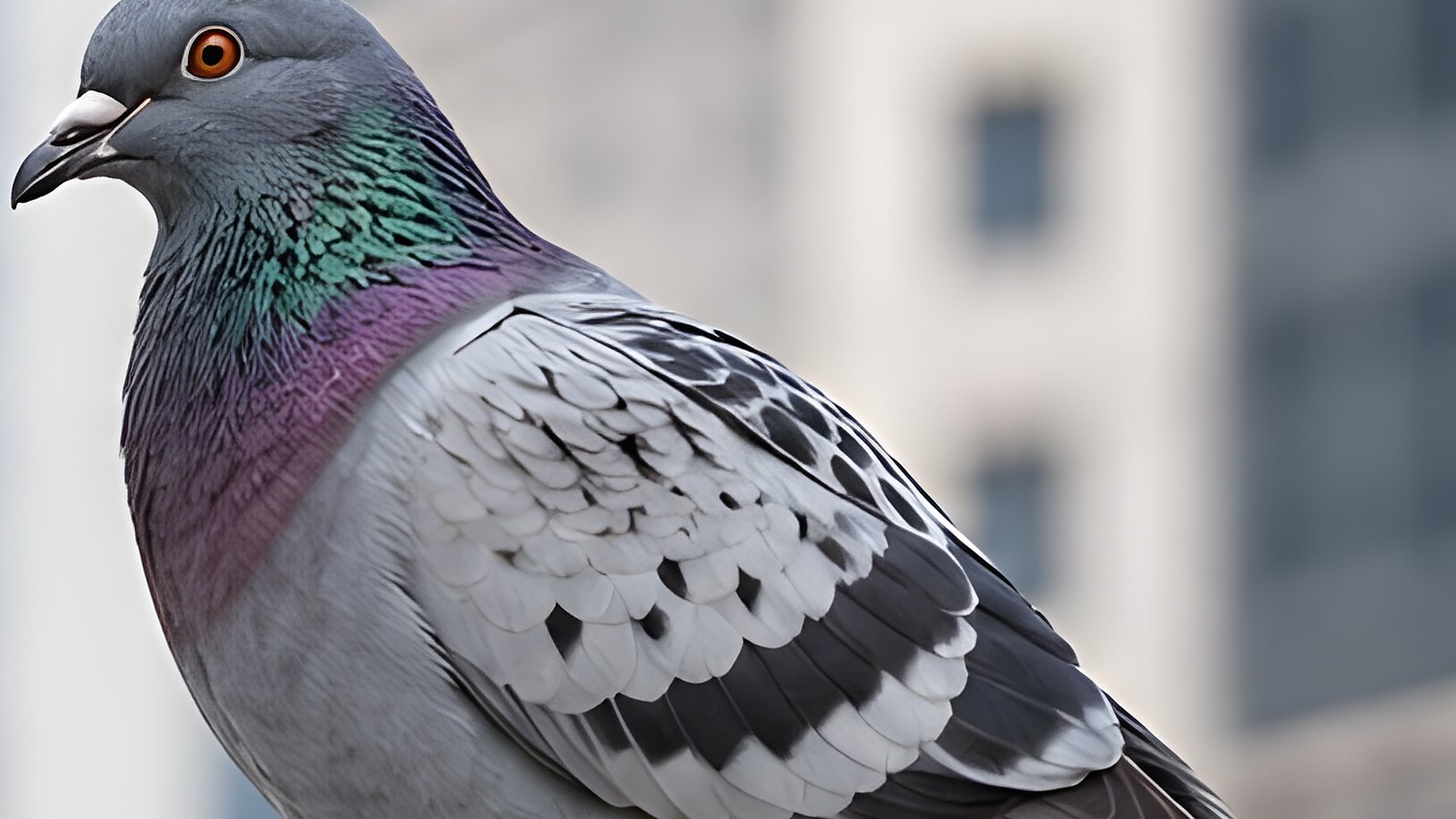
Grey-blue with two dark wing bars, though colours vary. The main building pest: it roosts on ledges, parapets and AC plant, nests in any sheltered corner and breeds through most of the year, so flocks grow quickly wherever food is left out.
02
Common myna
Brown with a black head, yellow bill and legs and white wing patches in flight. Loud, bold and now widespread in Saudi cities, it nests in roof voids, signage, vents and palm crowns and crowds out native birds.
03
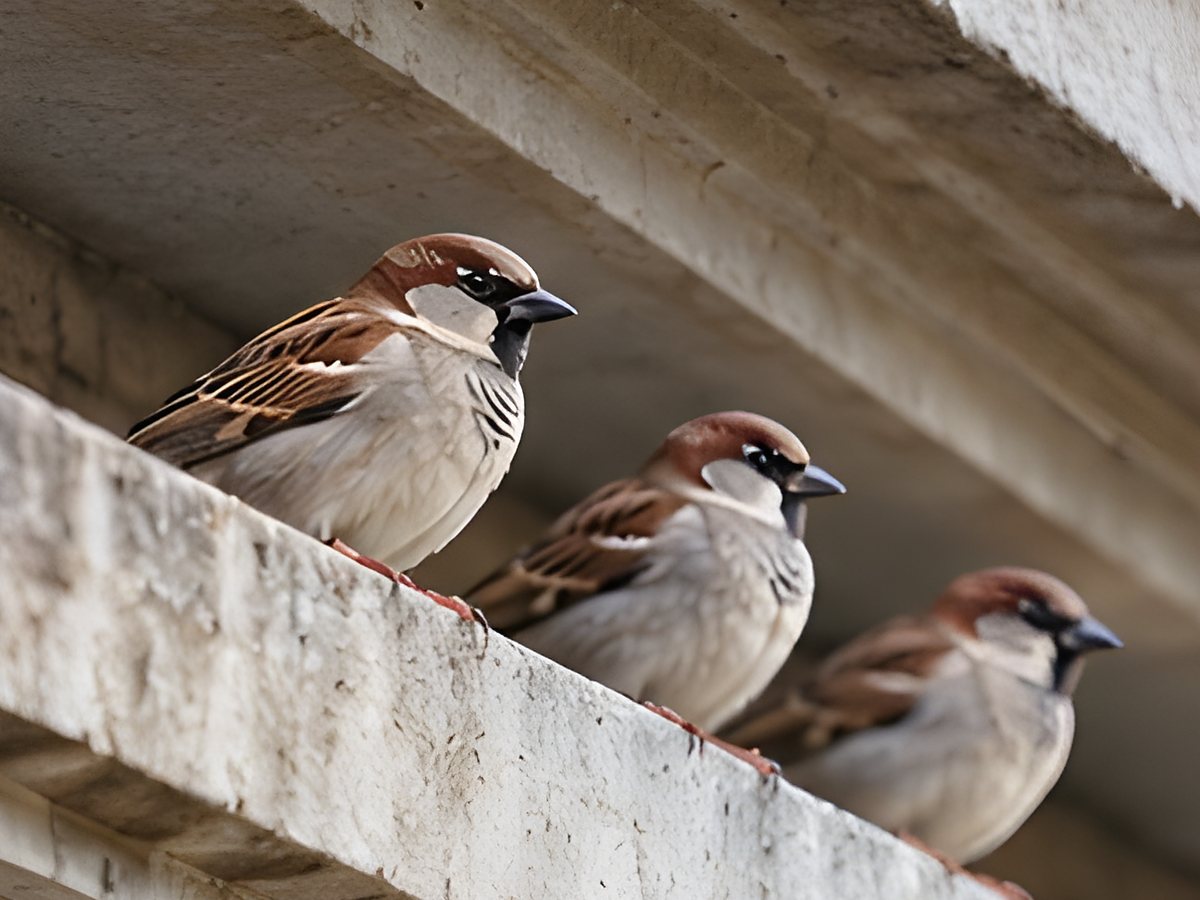
House sparrow
Small and brown; the male has a grey crown and black bib. Sparrows nest in gaps behind cladding, in vents and in warehouse rafters, and feed inside food stores, markets and canteens, where droppings on stock are the main problem.
04
House crow
Black with a grey collar, intelligent and gregarious. Crows raid bins, markets and fishing harbours, nest in tall trees and towers and mob people near a nest. They are hard to deter and a notable problem in coastal cities.
05
Gulls near the coast
Large, pale and noisy. Along the Gulf and Red Sea coasts, gulls roost on flat roofs, ports, fish markets and desalination and industrial plants, and their heavy droppings corrode roofing and block drains.
Identification
How to recognise a bird problem early
You rarely need to name the species to know a building has a problem; you need to find where the birds sit, where they nest and when. Watch at dawn and dusk, when flocks arrive and leave, and follow the white streaks: droppings collect directly under the favourite perches. Nests are tucked wherever a ledge meets a wall, behind signs and inside plant screens and warehouse roofs.
Birds in the same spot at the same time each day: a roost, not a visit
White streaks and crusts on walls, signs, cars and pavements below a ledge
Twigs, feathers and straw in gutters, on AC units or behind cladding
Cooing, chatter or chicks heard inside a false ceiling or roof void
Feathers and droppings around the open doors of a warehouse or loading bay
Habitat and behaviour
Why birds choose a building and stay
Pigeons are cliff birds, so a tower or parapet is a cliff with better food. They want a perch out of the wind and sun, a protected spot to nest and food nearby: spilled grain, bins, cafe terraces or people who feed them. Pigeons breed several times a year and bring their young back to the same ledge, so a colony outlasts any one-off scare. Mynas and sparrows nest in cavities, so vents, signage boxes and gaps behind cladding matter more than open ledges. In the Saudi summer birds shift to shaded facades, plant rooms and the space under solar panels; in winter to warm exhausts and roof voids.
What to look for
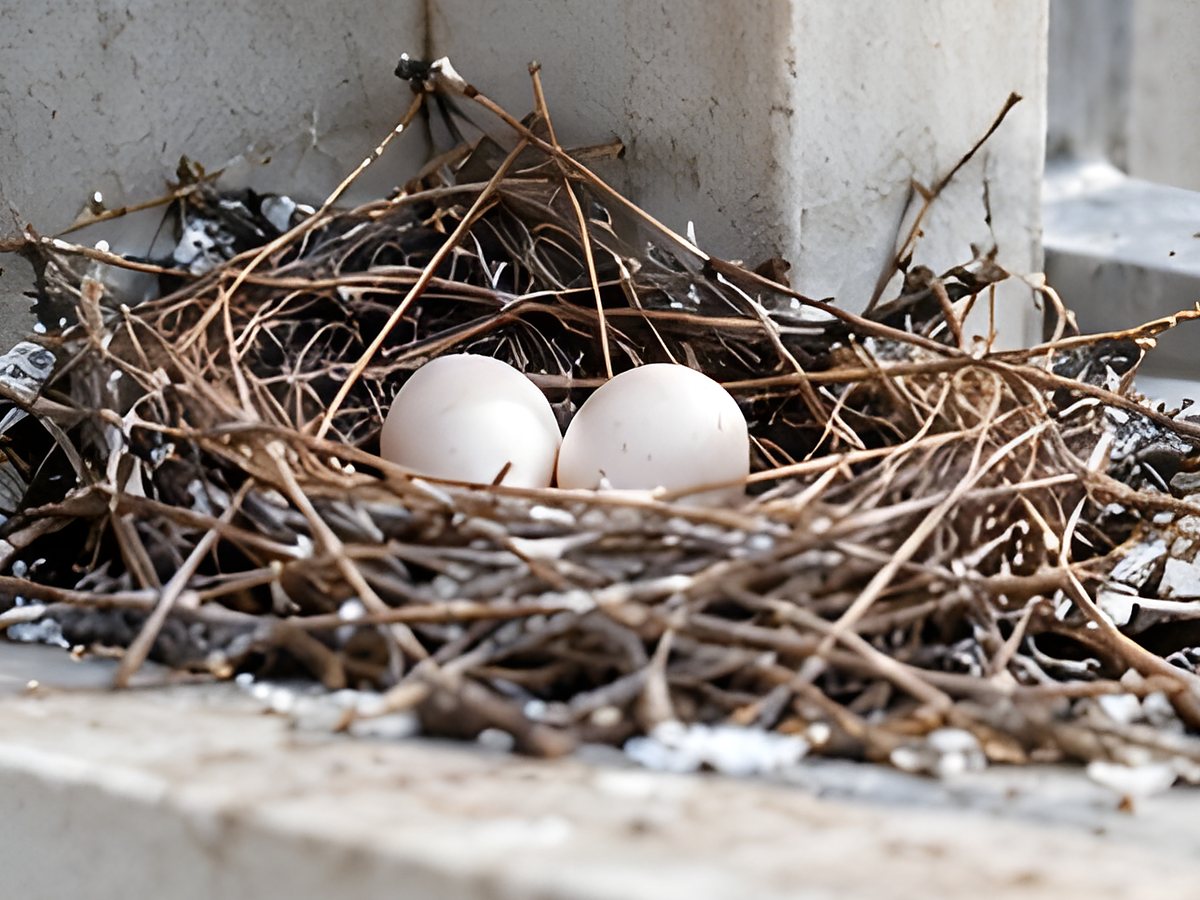
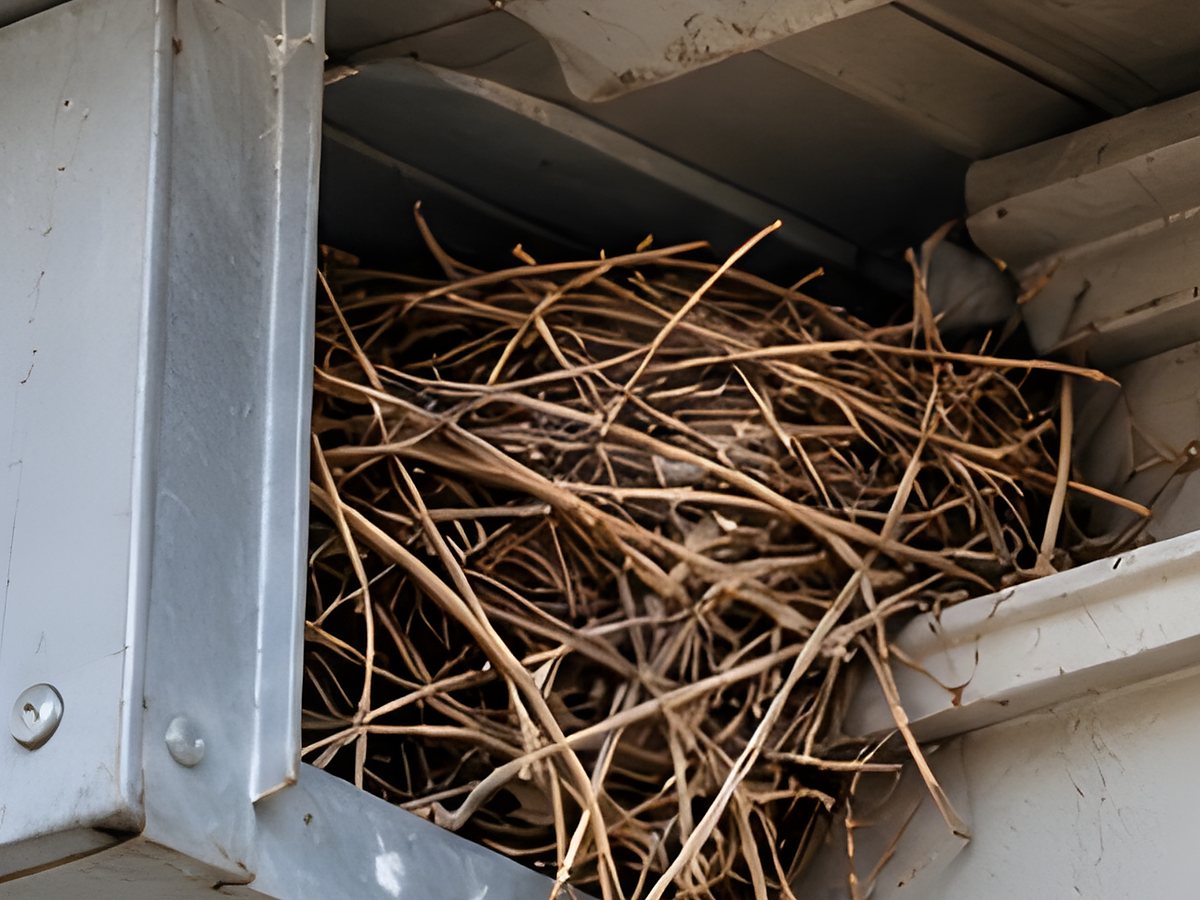
Pigeon nests
Loose twig nests on ledges and in roof spaces.
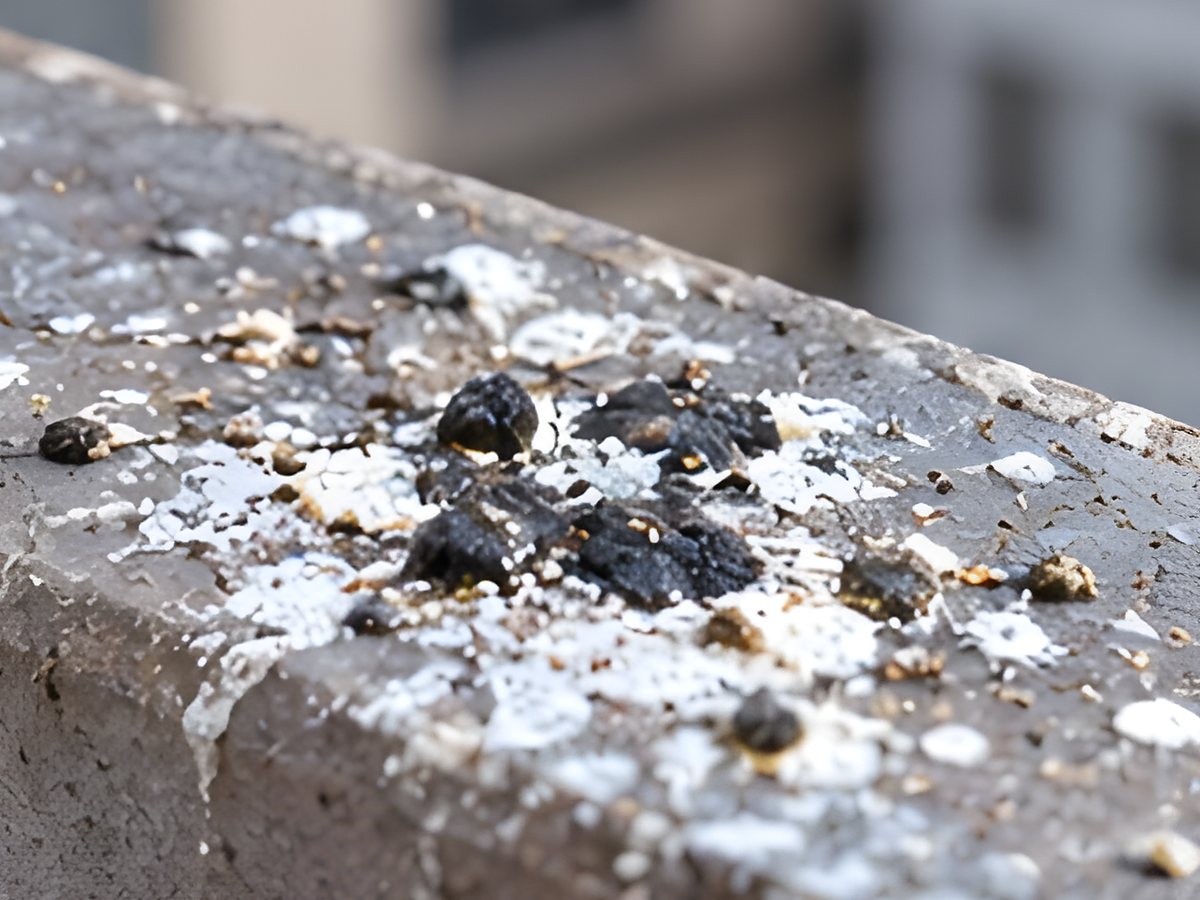
Droppings
Acidic droppings that stain and corrode ledges and walkways.
Nests in vents
Dry grass packed into vents, ducts and gaps by sparrows.
Roosting
Birds lining ledges and beams at dusk mark a roost.
Warning signs
Signs of roosting and nesting
Droppings building up under ledges, signs, beams or rooftop plant
Nests in gutters, downpipes, AC units, solar panel frames or warehouse rafters
Overflowing gutters or a roof drain that blocks after every rain
Stains and pitting on paint, stone, metalwork and car bodies
Tiny biting mites indoors near a window, vent or ceiling with a nest above
Birds flying in and out of a warehouse, hangar or loading dock
Feathers, droppings or nesting material on stock, food lines or air intakes
Why it matters
Why droppings and nests cannot be ignored
01
Acid damage to the building
Droppings are acidic. Left on stone, render, paint, steel and roofing membranes they etch, stain and corrode, and under the Saudi sun they bake on. Solar panels lose output under a crust of droppings, and signage and facades age years early.
02
Slips, blocked drains and fire
Wet droppings on walkways, fire escapes and loading bays are a slip hazard. Nests block gutters, roof drains and AC condensate lines, so rain backs up into the building, and dry nesting material near exhausts, lights and electrical plant is a fire risk.
03
Health risks from droppings and dust
Dried droppings turn to dust that can carry fungal and bacterial infections, including histoplasmosis-type lung illness, when disturbed in roof voids and plant rooms. Maintenance staff are most exposed, so clean-up needs respiratory protection, not a broom.
04
Mites and ticks from the nest
Bird mites, ticks and beetles live in nests. When chicks fledge or a nest is cleared without care, the mites move indoors through vents and windows and bite people, usually in the rooms directly below the nest.
05
Hygiene findings in food and healthcare sites
Birds inside a food store, central kitchen, market or hospital plant area contaminate stock and surfaces, and inspectors treat droppings on packaging or near air intakes as a serious finding.
Prevention
Keeping birds off: what works and what does not
Remove the food firstClose bins, clear spilled grain and feed at loading bays, keep cafe terraces swept and ask staff and residents not to feed pigeons. A building without food loses most of its flock before any proofing goes up.
Proof, do not just scarePlastic owls, reflective tape and noise work for days at most; pigeons learn there is no threat and return. Physical proofing changes the ledge itself, which is why it lasts.
Netting for open spacesTensioned bird netting closes off courtyards, canopies, plant screens, loading bays and the space under solar panels and warehouse roofs. The mesh size is matched to the bird, and it is fitted after the area has been cleaned.
Spikes and wire on ledgesStainless spikes and low tensioned wires stop birds landing on parapets, signs, beams and window ledges without harming them. They suit narrow edges; on wide ledges or where birds are already nesting, netting or sloped covers work better.
Seal the cavitiesFit mesh over vents, close the gaps behind cladding and signage boxes and repair broken soffits and roof tiles. Mynas and sparrows need a hole to nest in; without one they move on.
Clean and maintainHave droppings and old nests removed with protective equipment before proofing goes up, then check gutters, nets and spikes once or twice a year, after sandstorms and before the rains.
How we deal with it
When to call a professional
Call when birds are nesting rather than visiting, when droppings reach walkways, stock, signage or solar panels, or when mites appear indoors. Our technician surveys the building, identifies the species, roosts and nests and how each area can be reached safely, then gives you a written proofing plan and an itemised quote. Droppings and nests are cleared by technicians in PPE before anything is installed.
Our services that cover this pest, from inspection to monitoring.
Why do the pigeons come back after we chase them away?
Pigeons are loyal to a roost and return to the ledge where they were raised, so scaring them moves them for an hour. Only changing the ledge itself, with netting, spikes or wire, and removing the food keeps them off.
Do bird spikes and netting hurt the birds?
No. They are physical deterrents that stop birds landing or entering; they do not trap or injure them. Netting is tensioned and checked so that birds cannot get caught behind it.
Is it legal to remove nests and birds from a building?
Rules on wild birds, nesting seasons and protected species vary, and some birds may not be disturbed while they have eggs or chicks. A professional works within the local wildlife and municipal rules and relies on non-lethal proofing; ask before touching an active nest.
Can we clean the droppings ourselves?
Small fresh deposits can be wet-wiped with gloves. Thick dry layers in roof voids, plant rooms and under solar panels should be dampened and removed by people in masks and gloves, because the dust can carry infection; our clean-up is done in PPE before proofing is installed.
Birds are nesting under our solar panels. What can be done?
The gap under panels is shaded and sheltered, so it fills with nests that foul the panels and the roof below. Once the nests are cleared, a mesh skirt fixed around the array closes the gap without drilling the panels.
Which deterrent is right for our building?
It depends on the bird, how determined it is and the surface: spikes and wire for narrow ledges, netting for open areas and nesting sites, mesh for vents and cavities. The survey matches each area to a method; call us or request a quote online to arrange it.
Aedes, Culex and Anopheles: how to tell them apart, where they breed around Saudi homes and sites, what they can carry and how to stop them at the source.
Paper wasps, hornets, honey bees, stinging ants and scorpions: where they nest, when they are active, what a sting needs and what never to do yourself.
Ants, silverfish, beetles, pantry moths, centipedes, fleas and ticks: how to recognise the everyday crawling insects of Saudi homes and what keeps them out.
Which snakes turn up around Saudi homes, farms and sites, how to read the signs, what to do after a bite and how to make your property less inviting.
Read the guide
This guide is general information for homes and facilities in Saudi Arabia. Species and their behaviour vary by region and season, and the right treatment is decided after an inspection.