The pest that eats a building quietly from the inside.
Termites feed on cellulose: timber, paper, cardboard and the paper face of gypsum board. In Saudi Arabia most damage comes from subterranean species that nest in the soil and reach door frames, cabinets and skirting through cracks you never see. This guide explains how to recognise them, where they come from and what makes a building less inviting.
Species
Termite species found in Saudi Arabia
01
Subterranean termites
The main building pest in the Kingdom, including the sand termite common in desert soils. Colonies live underground, need moisture and travel to timber inside sealed mud tubes. They attack frames, skirting, wardrobes, flooring and the paper on gypsum walls.
02
Harvester termites
Seen in gardens, farms and open ground, where they collect dry grass, palm litter and dead wood at night and carry it underground. They are mostly a landscape pest, but timber lying on the soil and wooden posts set in the ground are fair game.
03
Drywood termites
Live entirely inside the timber they eat, with no contact with soil and no mud tubes. Colonies are small and slow, often arriving in imported furniture, doors or pallets. The giveaway is small piles of dry, sand-like pellets below a tiny hole.
04
Wood-boring beetles: the look-alike
Powder-post and furniture beetles also hollow out timber, but from round exit holes 1–3 mm wide with flour-fine dust beneath. The larvae work inside for months before the holes appear. Treatment differs from termites, so the species matters.
Identification
How to recognise a termite
Most of a colony never leaves its tunnels, so you are more likely to meet the evidence than the insect. When you do see termites, it is usually workers exposed when a tube or a piece of timber is broken open, or winged adults during a swarm. Winged termites are often mistaken for flying ants; the waist, antennae and wings tell them apart.
Workers: soft, cream-white, 3–6 mm, blind, and quick to die in dry air and light
Soldiers: the same pale body with a larger, darker head and strong jaws; they guard breaks in the tube
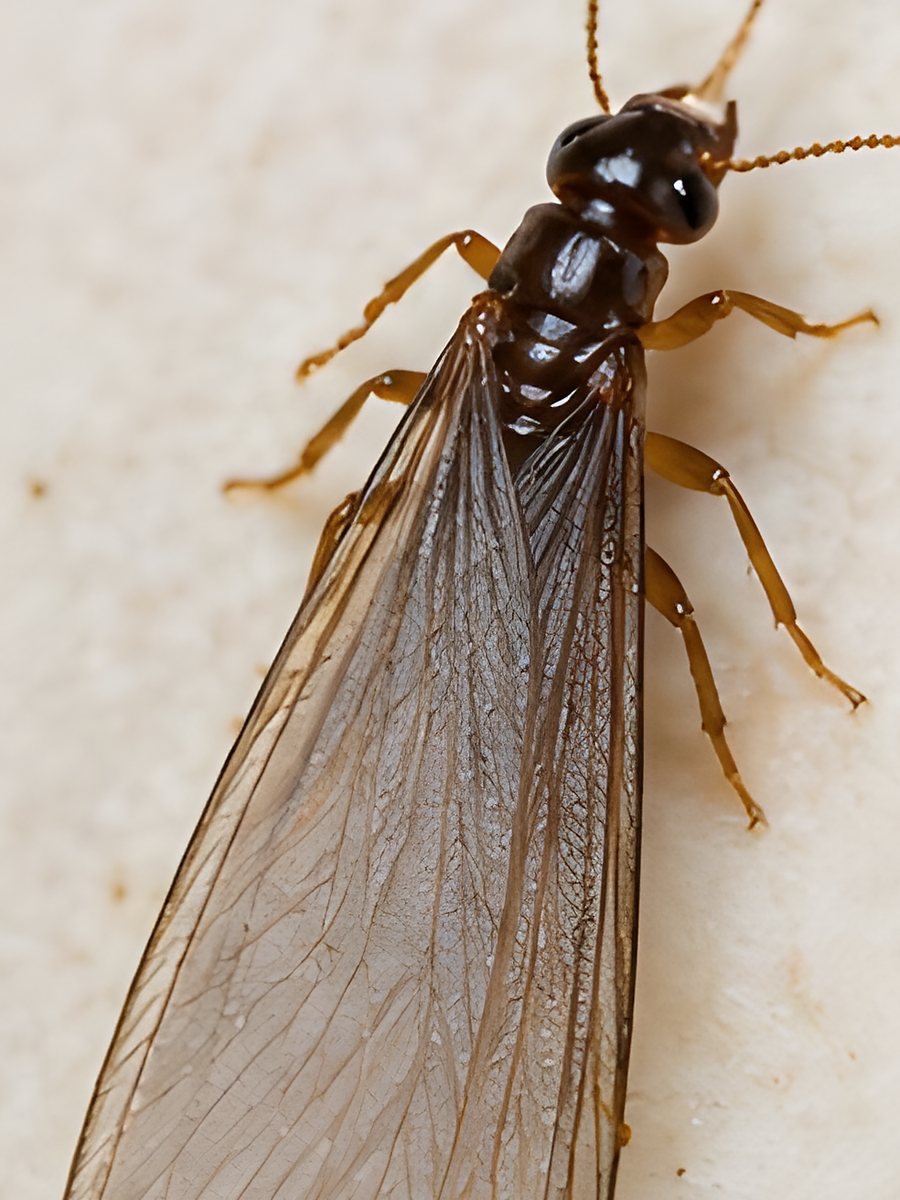
Winged adults: dark brown to black, with four equal, translucent wings longer than the body
Termite or ant: termites have a thick waist and straight antennae; ants a pinched waist and bent antennae
Drywood pellets: tiny, hard, six-sided grains in small cones below furniture or frames
Habitat and behaviour
Where termites live and how they reach a building
A subterranean colony starts with a pair of swarmers that shed their wings and dig into damp soil; in a few years it holds hundreds of thousands of workers foraging tens of metres away. Moisture draws them, so irrigated planters, AC condensate and leaking tanks beside a villa make the soil along the foundation attractive, and a crack of a millimetre or two in the slab, a joint or a pipe sleeve is enough to get in. Swarms fly mostly in spring, at dusk after rain. Drywood termites skip the soil: a winged pair settles into a crack in a door, bed or pallet, and the colony grows unseen for years.
What to look for
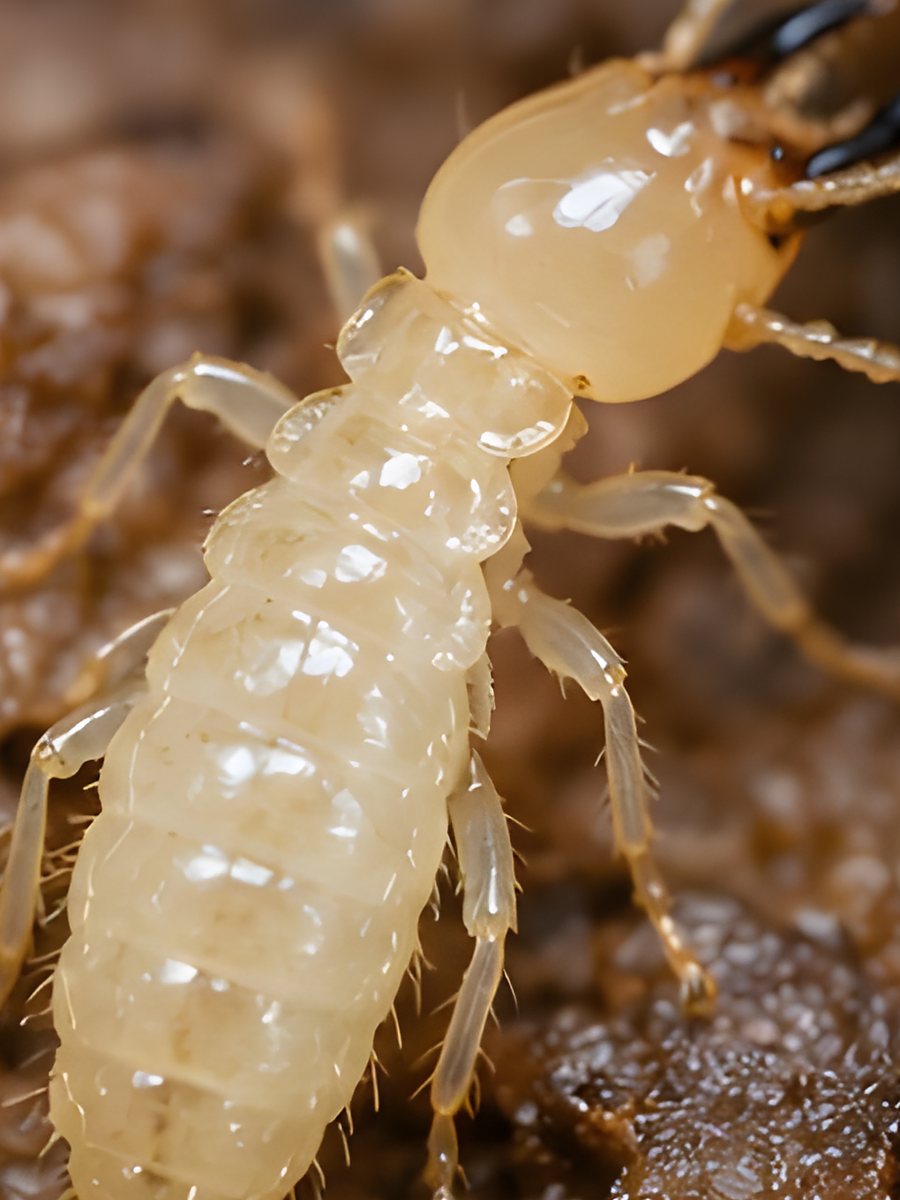
Worker
Pale and soft-bodied: the termite you find inside damaged wood.
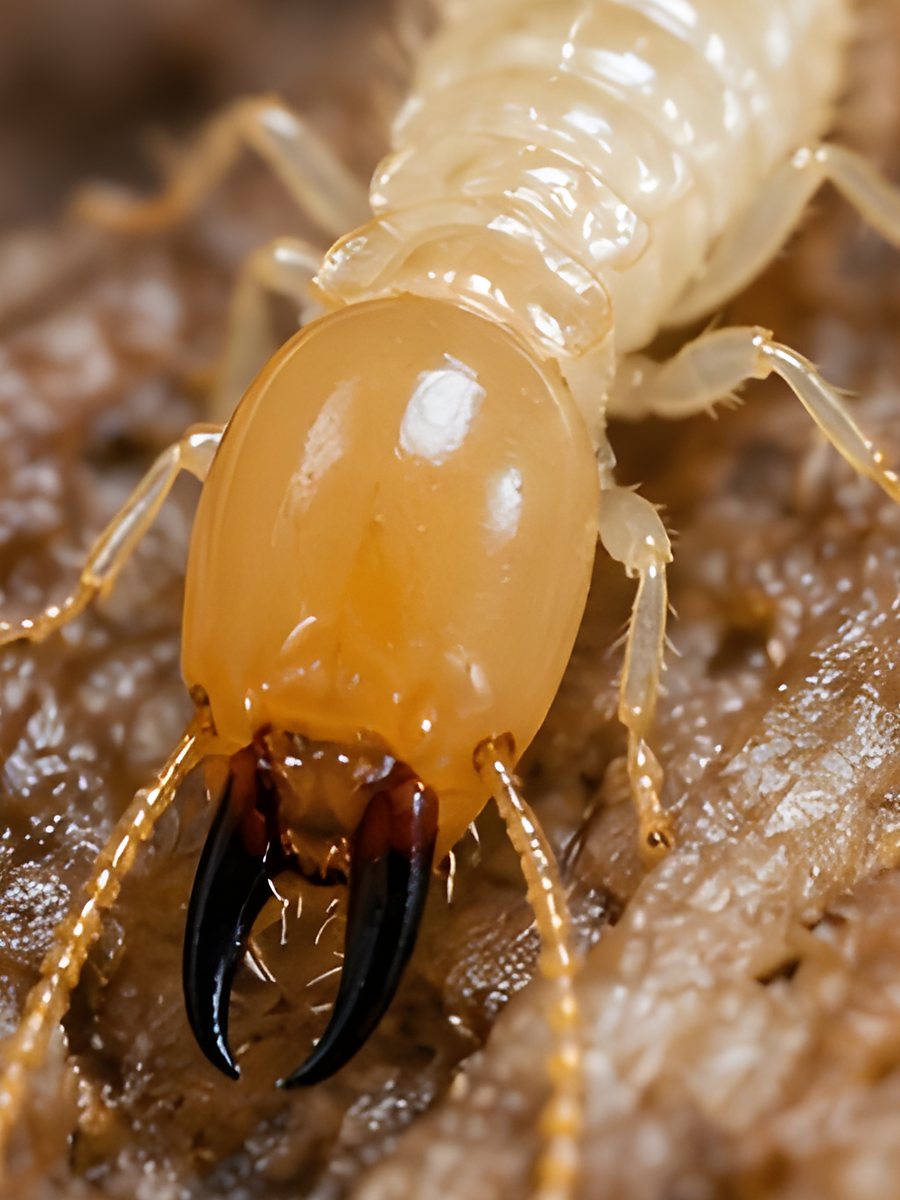
Soldier
A larger orange-brown head and strong jaws for guarding the colony.
Winged swarmer
Four wings of equal length that drop off soon after a swarm.
Mud tubes
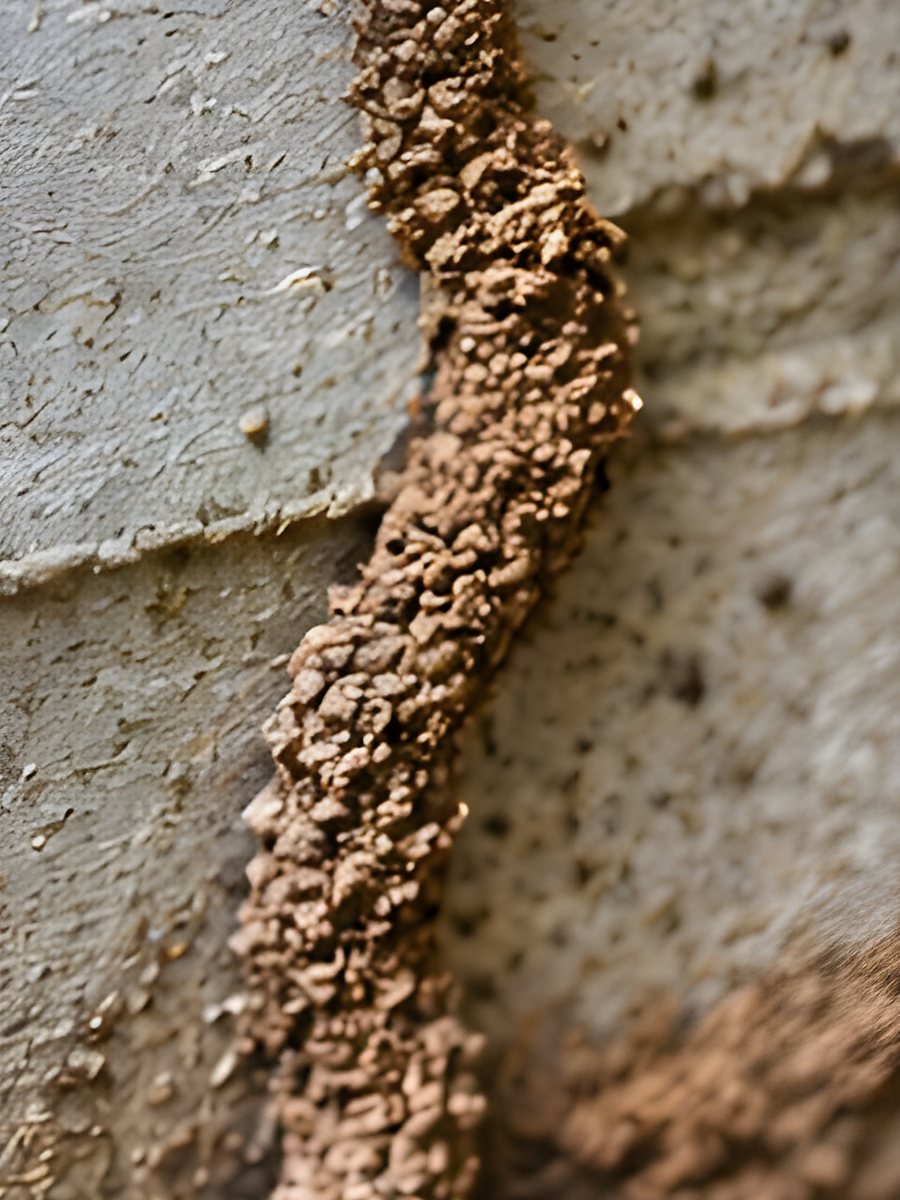
Pencil-wide soil tunnels on walls, foundations and pipes.
Warning signs
Early signs of termites
Pencil-width mud tubes on foundation walls, behind skirting, in store rooms or along pipe sleeves
Door frames, skirting or cabinets that sound hollow when tapped, or paint that ripples and blisters
Winged insects around lights on a spring evening, then shed wings on sills and floors
Fine soil packed into cracks, around sockets or between tiles
Small cones of dry, sand-like pellets beneath furniture, doors or frames
Eaten paper on gypsum board, books, archives and cartons in stores
Round pinholes with flour-like dust point to wood-boring beetles instead
Why it matters
Why termites matter
01
Damage that stays hidden
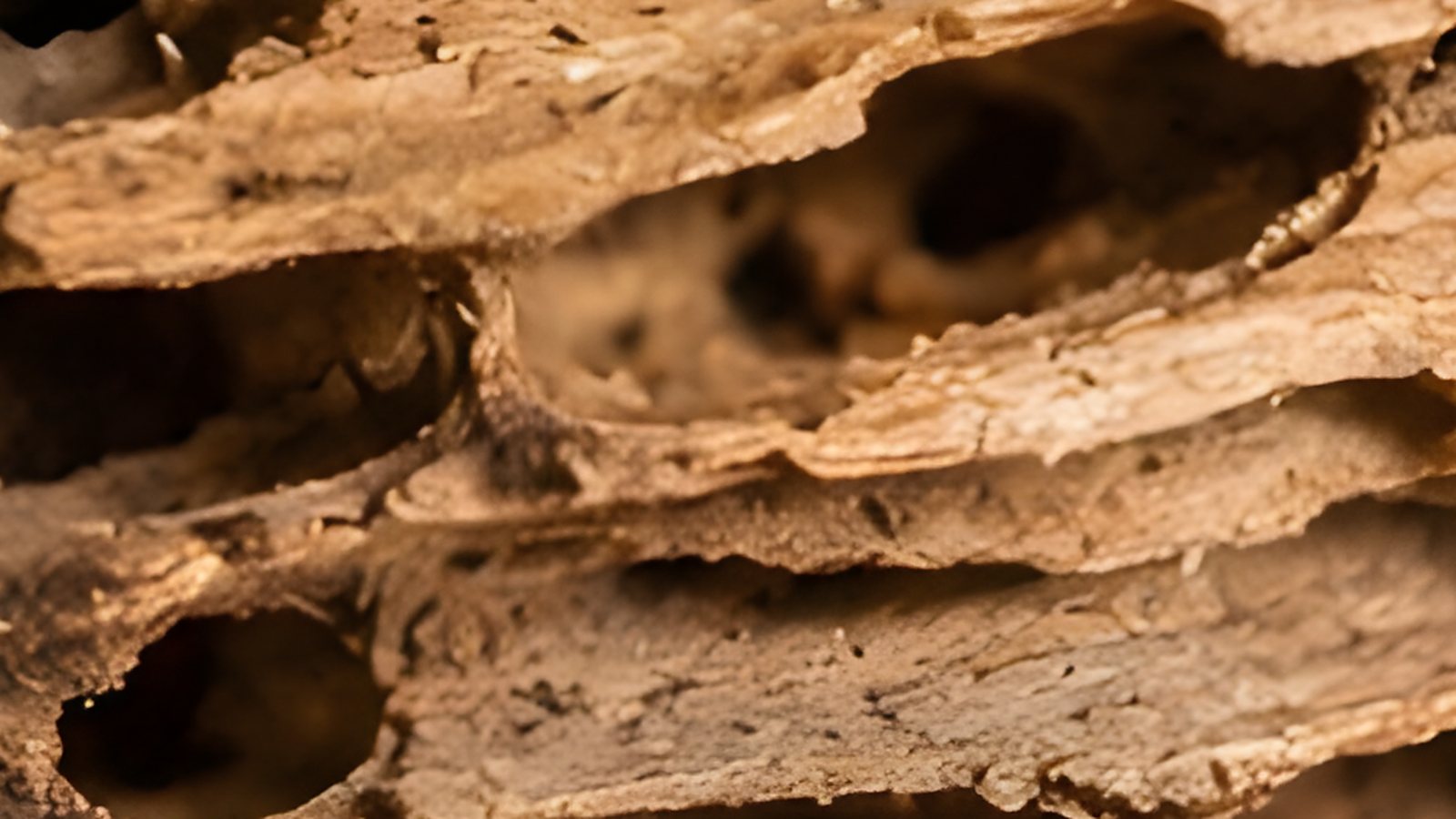
Termites eat timber from the inside and leave the surface intact. Door frames, wardrobes, kitchen units and wooden floors can be hollow long before a finger goes through the paint.
02
Repairs cost more than treatment
Replacing built-in joinery, flooring and roof timber, and redecorating afterwards, costs many times more than dealing with the colony when it is first noticed.
03
Archives, stock and packaging
Paper is cellulose too. Files, books, cartons and pallets stored on the floor of a ground-floor room are a food source, and termites can ruin a store room's contents without touching the walls.
04
A property risk, not a health risk
Termites do not bite, sting or carry disease. Their cost is structural and financial: buyers, tenants and insurers ask about termite history, and an untreated infestation lowers the value of a villa or building.
Prevention
How to make a building less inviting
Keep timber away from soilStore firewood, pallets, formwork offcuts and garden timber off the ground and away from walls. Dig out buried wood left after construction; it is often where a colony starts.
Keep the foundation dryRoute AC condensate and drains away from the building, fix leaking tanks and taps, and move drip lines and sprinklers so a strip of soil along the walls stays dry.
Seal cracks and service entriesFill cracks in slabs and render, and seal around pipes, cables and conduit where they pass through the floor or the outside wall.
Check timber before it comes inLook over second-hand furniture, imported doors, crates and pallets for pinholes, pellets or soft patches before they enter the building. Drywood termites travel this way.
Store off the floorIn ground-floor stores and archives, keep cartons, files and books on shelving with a gap below, and leave the skirting visible so tubes cannot form unnoticed.
Look once a yearWalk the skirting, door frames, wet areas, store rooms and the outside of the foundation once a year, ideally before spring. Pre-construction soil treatment remains the cheapest protection for a new build.
How we deal with it
When to call a professional
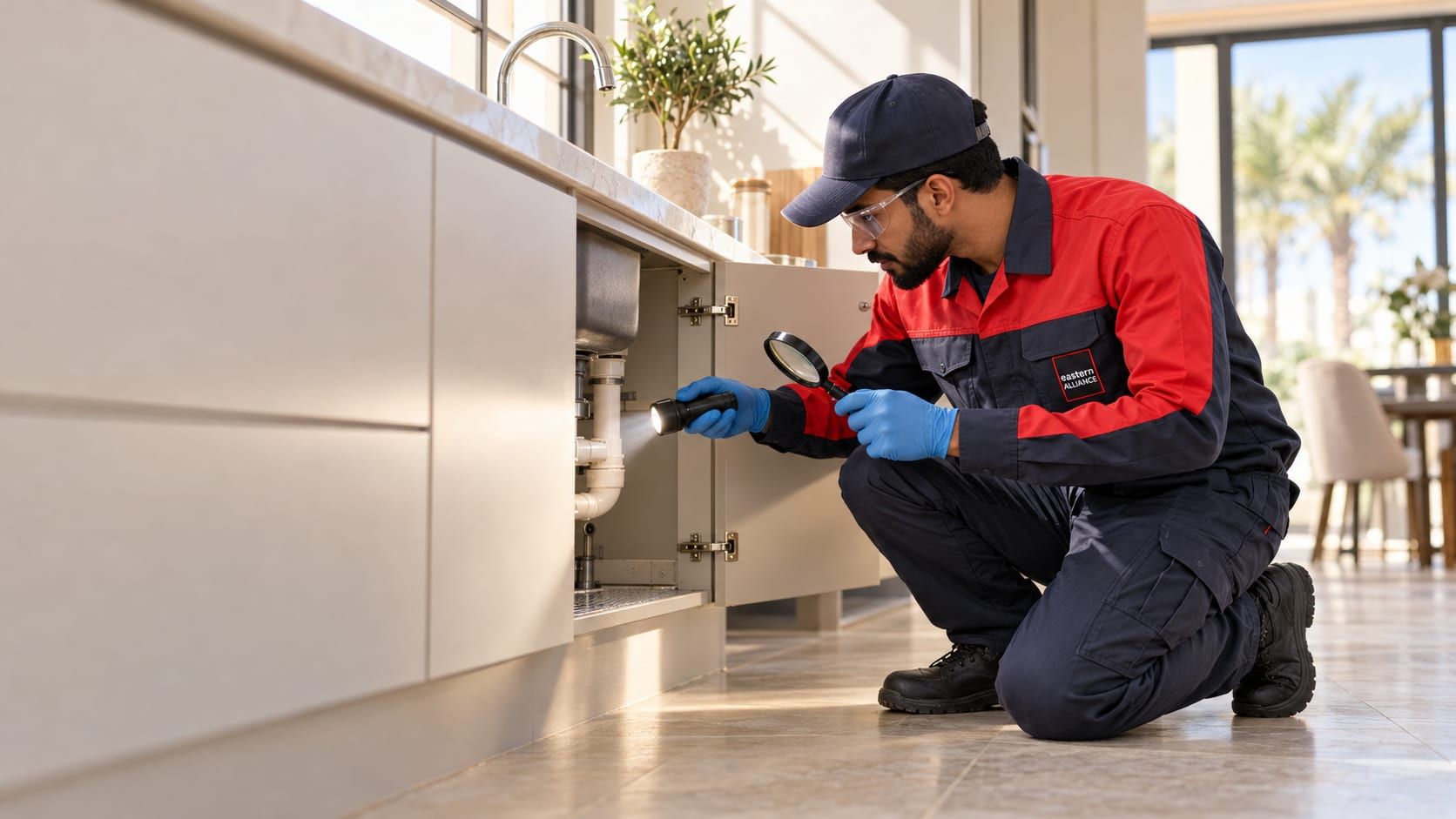
Call as soon as you find a mud tube, hollow timber, pellets or a swarm indoors. Do not break or spray the tubes: that scatters the foragers and hides the trail, and household sprays reach a few workers while the colony in the soil carries on. Our termite inspection is free: a technician checks skirting, frames, wet areas and the garden boundary, confirms live activity and reports the options in writing.
Our services that cover this pest, from inspection to monitoring.
No. Termites are not known to bite people or pets or to carry disease. The harm is to timber, paper and the value of the property, and it grows quietly the longer the colony is left.
Why do flying termites appear after rain?
Humid, still air after rain is the colony's cue to release its winged adults, which pair up and start new colonies. A swarm outside means mature colonies nearby; a swarm indoors, or wings on the sills, means one is already in or under the building and the structure should be inspected.
How do I tell flying termites from flying ants?
Look at three things. Termites have a broad waist, straight beaded antennae and four wings of equal length, often twice the body. Ants have a pinched waist, elbowed antennae and front wings longer than the hind pair. Shed wings lying in piles are typical of termites.
Can a concrete villa get termites?
Yes. Termites do not eat concrete, but they pass through hairline cracks, expansion joints and the gaps around pipes to reach what they do eat: door frames, kitchen units, wardrobes, parquet and the paper on gypsum partitions.
Can I treat termites myself?
Surface sprays kill the workers you see and leave the colony in the soil untouched, so activity returns within weeks, often somewhere less visible. Treatment has to reach the colony or cut its route to the building. Call us or request a quote online; the termite inspection is free.
Is it termites or wood-boring beetles?
Beetles leave round exit holes of 1–3 mm with fine, flour-like dust and no mud. Termites leave mud tubes, packed soil or hard sand-like pellets, and the timber is hollowed into soil-lined galleries. The two need different treatments, so the inspection identifies which you have before anything is applied.
Aedes, Culex and Anopheles: how to tell them apart, where they breed around Saudi homes and sites, what they can carry and how to stop them at the source.
Paper wasps, hornets, honey bees, stinging ants and scorpions: where they nest, when they are active, what a sting needs and what never to do yourself.
Ants, silverfish, beetles, pantry moths, centipedes, fleas and ticks: how to recognise the everyday crawling insects of Saudi homes and what keeps them out.
Which snakes turn up around Saudi homes, farms and sites, how to read the signs, what to do after a bite and how to make your property less inviting.
Read the guide
This guide is general information for homes and facilities in Saudi Arabia. Species and their behaviour vary by region and season, and the right treatment is decided after an inspection.