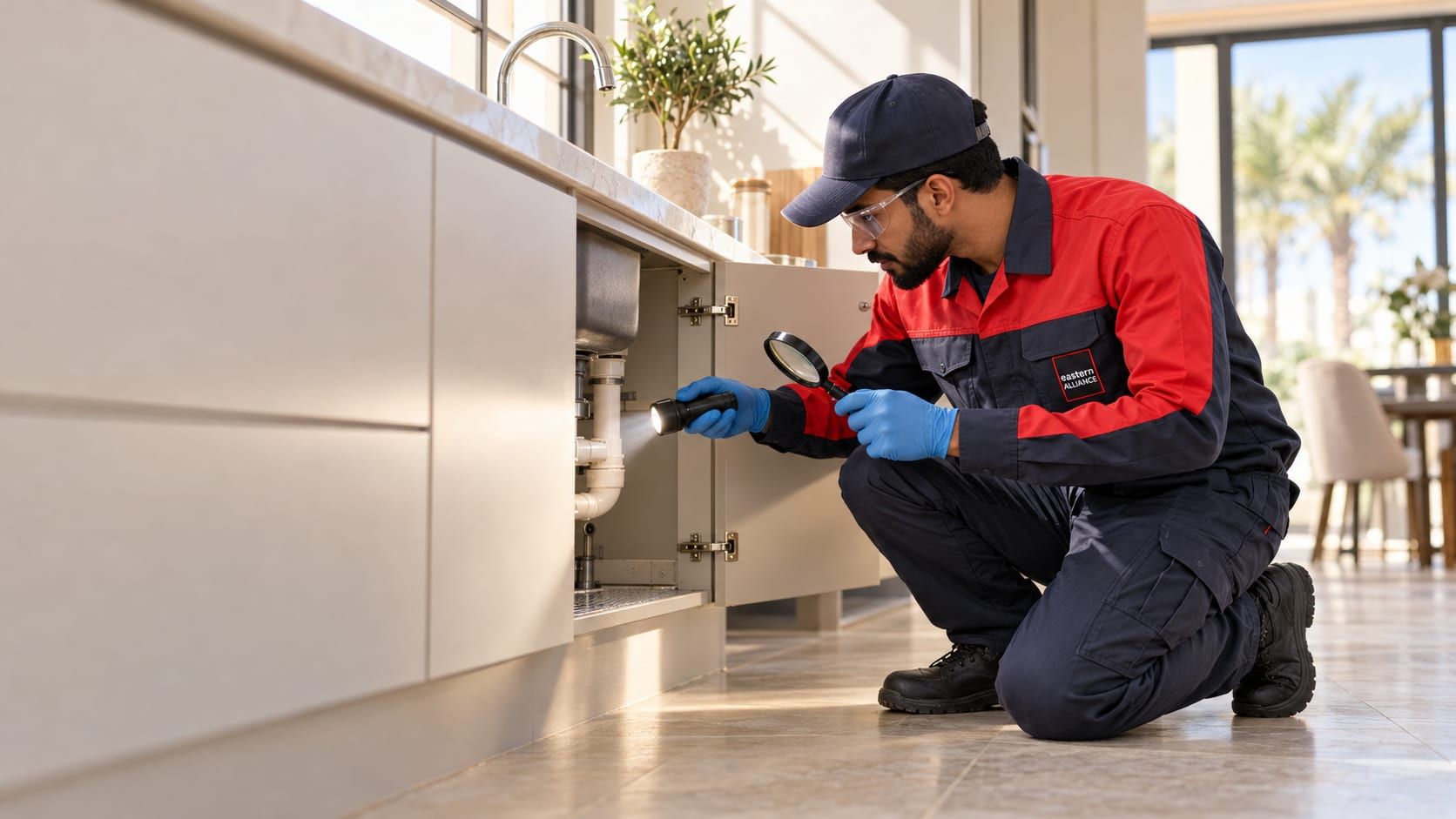
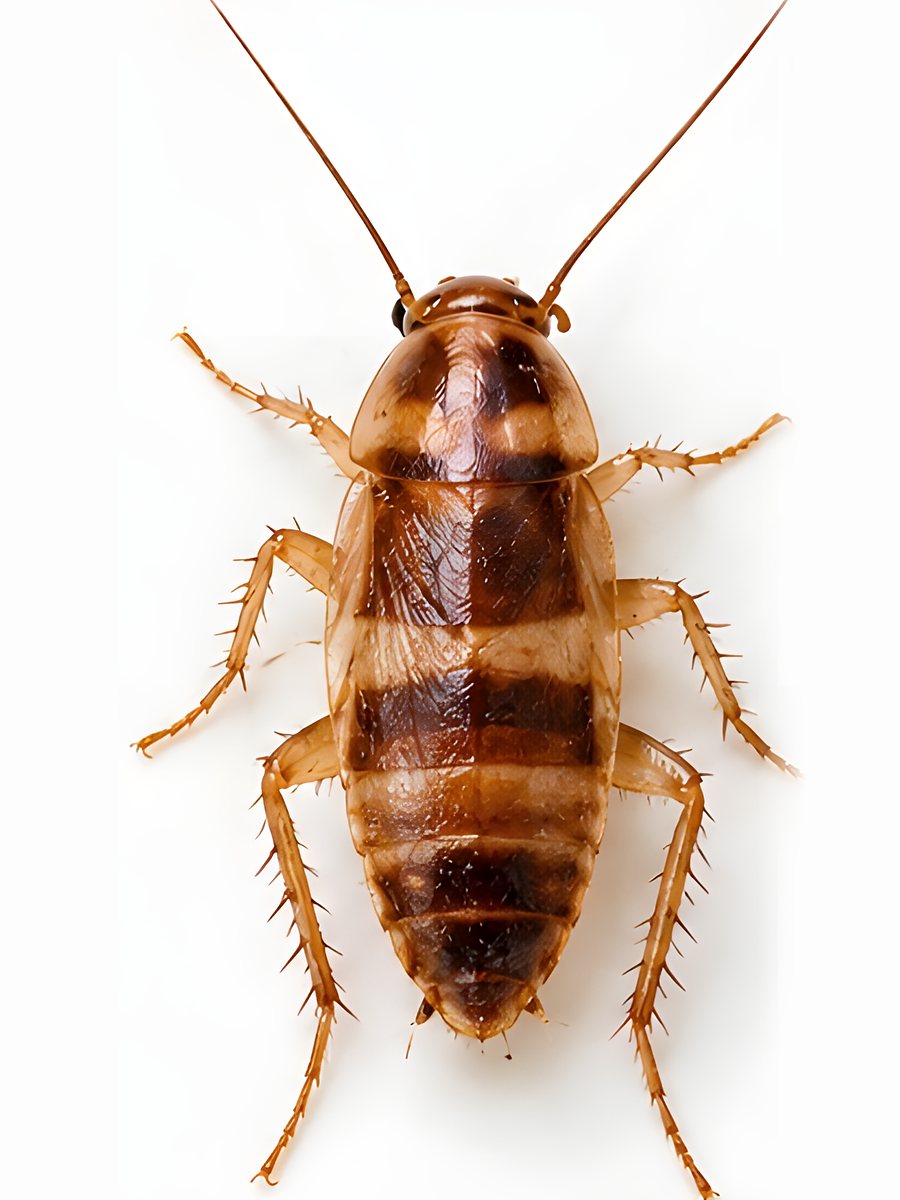
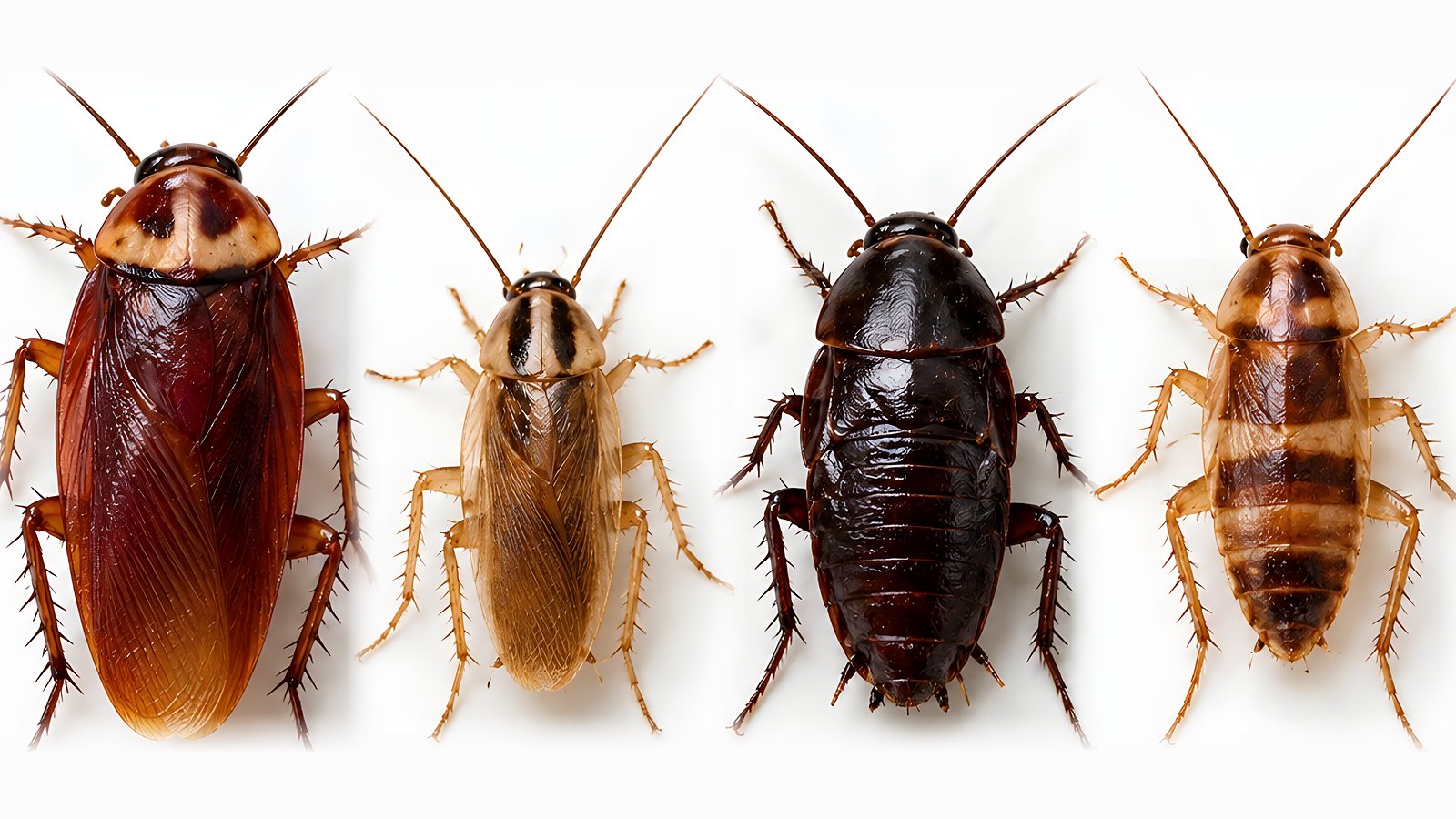
Two very different cockroaches, and two different problems.
Most cockroach calls in Saudi Arabia are about one of two insects. The small German cockroach breeds inside warm kitchens and spreads with cartons and appliances; the large American cockroach lives in drains and sewers and comes up into buildings when the summer heat sets in. Knowing which one you have decides where to look and what works.
Species
Cockroach species found in Saudi Arabia
01
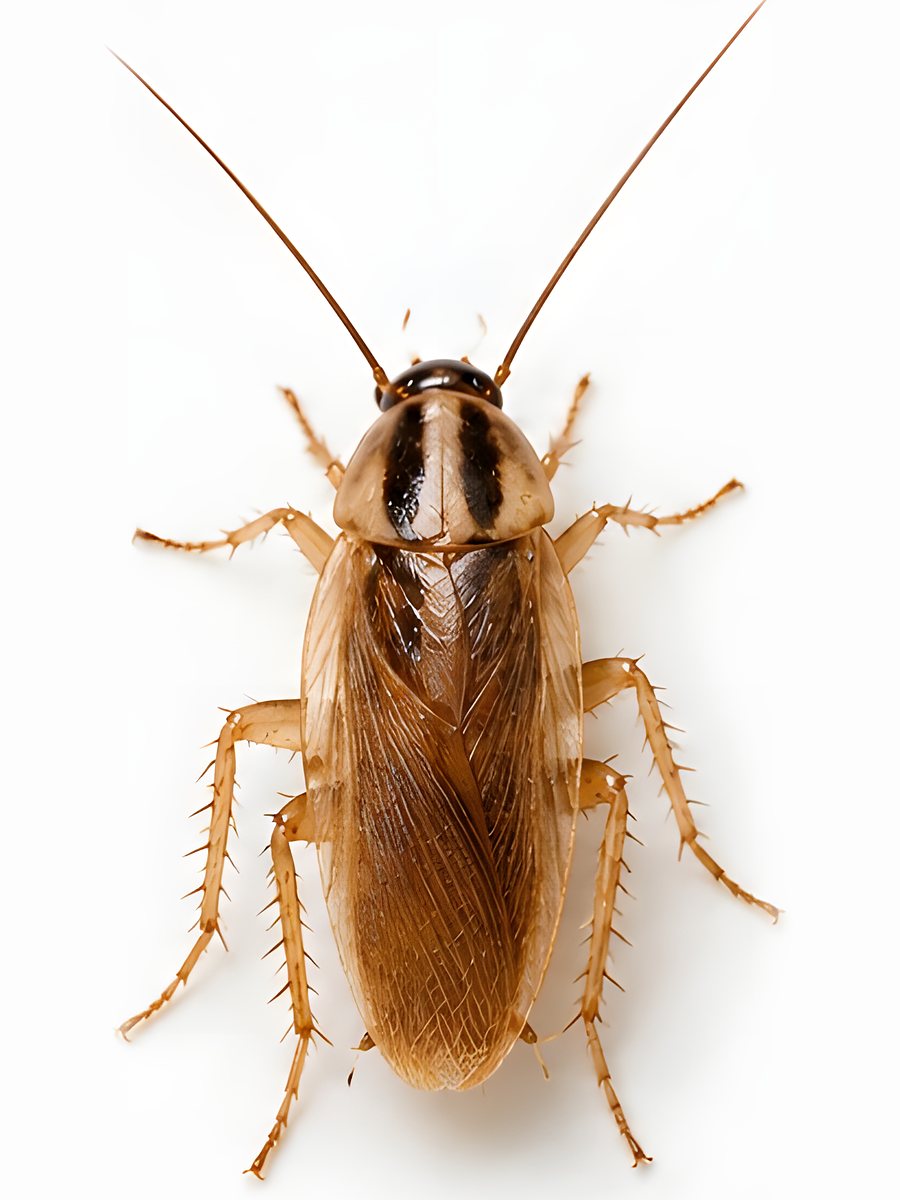
German cockroach
Small, 12–15 mm, tan with two dark stripes behind the head. It lives indoors, close to warmth, water and food: behind fridges, under sinks, in cooker hoods and dishwasher housings. The fastest breeder, and the usual pest of restaurants and apartment kitchens.
02
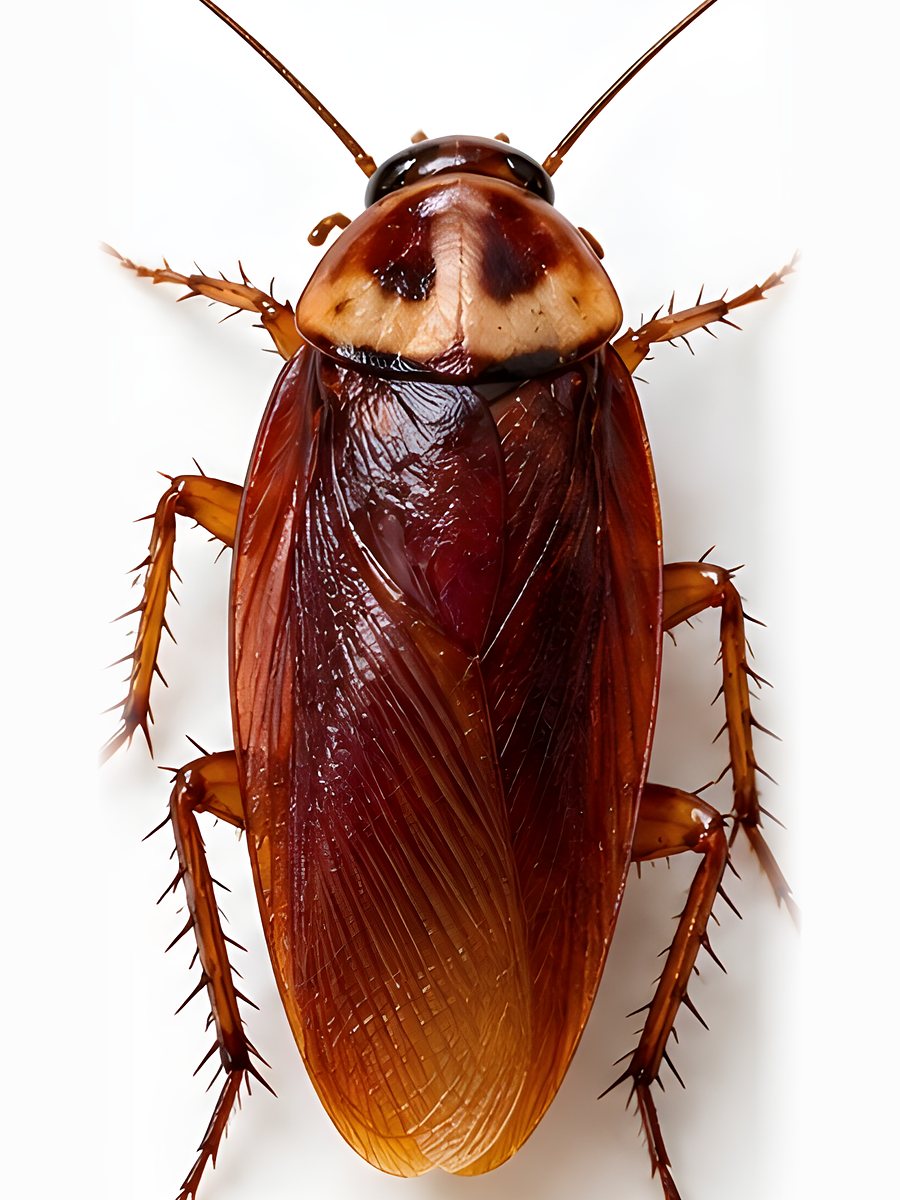
American cockroach
Large, 35–40 mm, reddish-brown with a pale band on the shield behind the head. It breeds in sewers, manholes, drains and basements and comes indoors through floor drains and pipe gaps. In hot humid weather it glides from heights, which is why it seems to fly.
03
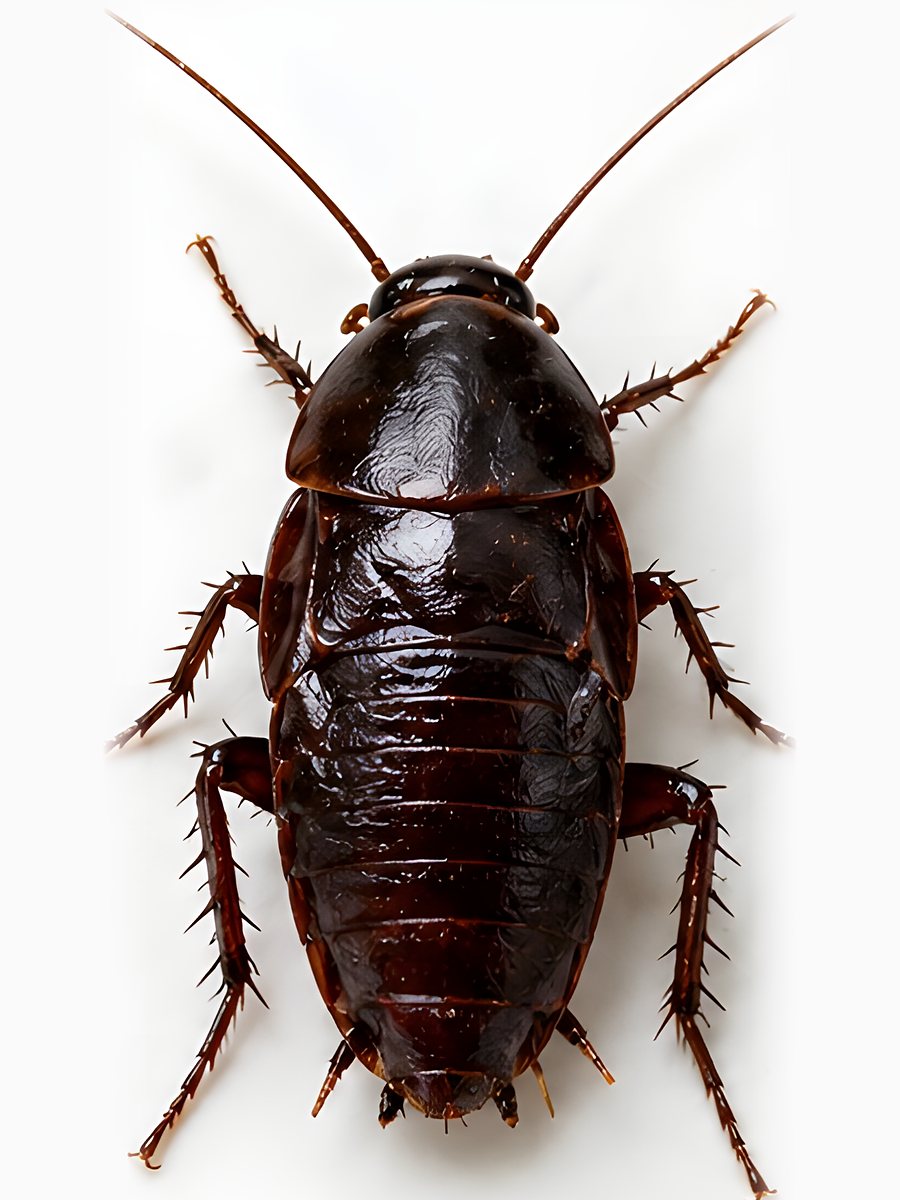
Oriental cockroach
Dark brown to black and glossy, 20–25 mm, with a strong musty smell. Less common in the Saudi heat, it turns up in cool damp places such as basements, plant rooms and drains, mostly in the cooler months. It crawls rather than flies.
04
Brown-banded cockroach
Small, 10–14 mm, with two pale bands across the back. Unlike the German cockroach it prefers warm, dry spots high up: behind picture frames, inside electronics, in ceilings and office furniture. It arrives with furniture and equipment rather than with food.
Identification
How to recognise a cockroach
All cockroaches share a flattened oval body, a small head tucked under a shield, long whip-like antennae and spiny legs built for running. Young cockroaches, called nymphs, are smaller, darker versions of the adults without wings, and seeing several sizes together means they are breeding on site. Size and colour tell you the species; the species tells you where the nest is.
Size: German and brown-banded about 1–1.5 cm; American up to 4 cm; Oriental in between
Colour: tan with two stripes, red-brown with a pale rim, or glossy black
Egg cases: purse-shaped brown capsules, about 8 mm, glued in cracks or carried by the female
Droppings: pepper-like specks and smears from small species, ridged cylinders from large ones
Movement: a fast run for cover when a light goes on; American cockroaches may glide
Where: around water and warmth at night; in daylight only when numbers are high
Habitat and behaviour
Where cockroaches live and how they get in
Cockroaches are nocturnal and squeeze into cracks where back and belly both touch: behind a fridge, a freezer motor housing, a hollow door hinge. They need water every few days, so sinks, drip trays and leaking traps anchor an infestation. A German female produces several capsules of 30–40 eggs; in a warm kitchen the young mature in two to three months, so a few arrivals in a carton are hundreds by autumn. American cockroaches breed in the sewers and surface through floor drains, dry gully traps and pipe gaps, especially when summer heat drives them towards cool, air-conditioned buildings.
Warning signs
Signs of a cockroach problem
Cockroaches seen in daylight, a sign that the hiding places are full
Dark specks like ground pepper along hinges, drawer runners and the backs of appliances
Brown egg cases, empty or full, in cupboard corners and behind kick boards
Shed skins and dead nymphs under the sink or in the cooker hood
An oily, musty smell in a cupboard or store that does not clear with cleaning
Large cockroaches emerging from floor drains or gully traps on summer nights
Gnawed packaging, and allergy or asthma symptoms that are worse at home
Why it matters
Why cockroaches matter
01
Food contamination
Cockroaches move between drains, bins and food surfaces and pick up bacteria such as Salmonella on the way. They foul food, cutlery and worktops with droppings, saliva and regurgitated matter.
02
Allergens and asthma
Droppings, shed skins and body fragments of German cockroaches are a recognised indoor allergen, linked to asthma attacks, especially in children living with a long-standing infestation.
03
Inspections and reputation
For restaurants, cafés, catering kitchens and food stores, a cockroach sighting during a Balady or SFDA inspection, or in a customer's photo, costs far more than the pest itself.
04
Numbers grow fast
German cockroaches breed faster than any other household pest. An infestation that looks minor in spring can involve every cupboard, appliance and neighbouring flat by autumn.
Prevention
How to keep cockroaches out of a kitchen
Take away the waterFix dripping taps and leaking traps, empty fridge drip trays, wipe sinks dry at night and keep AC drain lines clear. Without water, cockroaches cannot settle.
Clean where you cannot seeGrease and crumbs behind and under the cooker, fridge and dishwasher feed a colony for months. Pull appliances out on a schedule and clean the floor and the backs of the units.
Keep food and waste closedKeep dry goods in sealed boxes, pet food off the floor overnight, and bins lidded and emptied daily. Rinse recycling before it sits in the kitchen.
Keep drains trapped and coveredFloor drains that dry out are an open door from the sewer. Pour water into unused traps weekly, fit covers or one-way drain seals, and repair broken gully gratings.
Check deliveries and cartonsGerman cockroaches arrive in cardboard boxes, egg trays and second-hand appliances. Unpack deliveries away from the kitchen and do not let corrugated cardboard pile up.
Seal the gapsFill cracks in tiling and skirting, seal around pipes under sinks and behind units, and close the gaps where cable conduits enter from the flat next door.
How we deal with it
When to call a professional
Call when you see cockroaches by day, find egg cases or nymphs of mixed sizes, or when they return weeks after a household spray, which scatters them into new cupboards and teaches them to avoid baits. Food premises should not wait for the next inspection. We inspect first and quote an itemised plan: gel baits and targeted treatment at the harbourages, drains where needed, and a written report after each visit.
Our services that cover this pest, from inspection to monitoring.
The large reddish ones are American cockroaches from the drains and sewers. Heat and humidity push them up through floor drains and pipe gaps towards cooler buildings and water. Keeping traps full and drains covered removes most of the route.
Does having cockroaches mean my home is dirty?
Not necessarily. German cockroaches arrive in cartons, grocery bags and second-hand appliances, and American cockroaches come up from the sewer. Hygiene decides how fast they multiply, not whether they arrive.
Are cockroaches dangerous to health?
They do not bite, but they carry bacteria from drains onto food and surfaces, and their droppings and shed skins are a common indoor allergen linked to asthma. The risk rises with the size and age of the infestation.
Why do cockroaches come back after I spray?
Sprays kill the cockroaches they touch and miss the egg cases and the colony deep in cracks and appliances. Survivors spread to new hiding places, and the eggs hatch a few weeks later. Baits and targeted treatment at the harbourages work on the colony rather than the individuals.
How quickly do cockroaches breed?
A German cockroach female produces several egg cases of 30–40 eggs each, and the young are breeding adults within two to three months in a warm kitchen. American cockroaches develop more slowly but live longer and lay steadily for a year or more.
Do we have to leave the kitchen during treatment?
Gel baits placed in cracks and hinges need no evacuation. Where a spray or drain treatment is used, the technician tells you which areas to keep clear, for how long, and what not to wipe afterwards so the treatment keeps working.
How often does a restaurant need cockroach control?
Kitchens with heat, water and deliveries every day need a scheduled programme rather than one-off visits, with monitoring between treatments. The inspection sets the interval, and the report after each visit gives you the record inspectors ask for. Call us or request a quote online.
Aedes, Culex and Anopheles: how to tell them apart, where they breed around Saudi homes and sites, what they can carry and how to stop them at the source.
Paper wasps, hornets, honey bees, stinging ants and scorpions: where they nest, when they are active, what a sting needs and what never to do yourself.
Ants, silverfish, beetles, pantry moths, centipedes, fleas and ticks: how to recognise the everyday crawling insects of Saudi homes and what keeps them out.
Which snakes turn up around Saudi homes, farms and sites, how to read the signs, what to do after a bite and how to make your property less inviting.
Read the guide
This guide is general information for homes and facilities in Saudi Arabia. Species and their behaviour vary by region and season, and the right treatment is decided after an inspection.