
Cellar and house spiders
The long-legged spiders in ceiling corners, behind wardrobes and in store rooms, hanging in loose tangled webs that collect dust. Harmless, and the main reason a room looks neglected.
Pest guide · Spiders
Where spiders gather, other insects got there first.
Almost every spider in a Saudi home is harmless and quietly useful: it eats cockroaches, flies, moths and mosquitoes. A home full of webs is still a problem, partly because it looks neglected and partly because it means the insects that feed spiders are there in numbers. This guide covers the common species, the few to respect, and what keeps them out.
Species
The long-legged spiders in ceiling corners, behind wardrobes and in store rooms, hanging in loose tangled webs that collect dust. Harmless, and the main reason a room looks neglected.
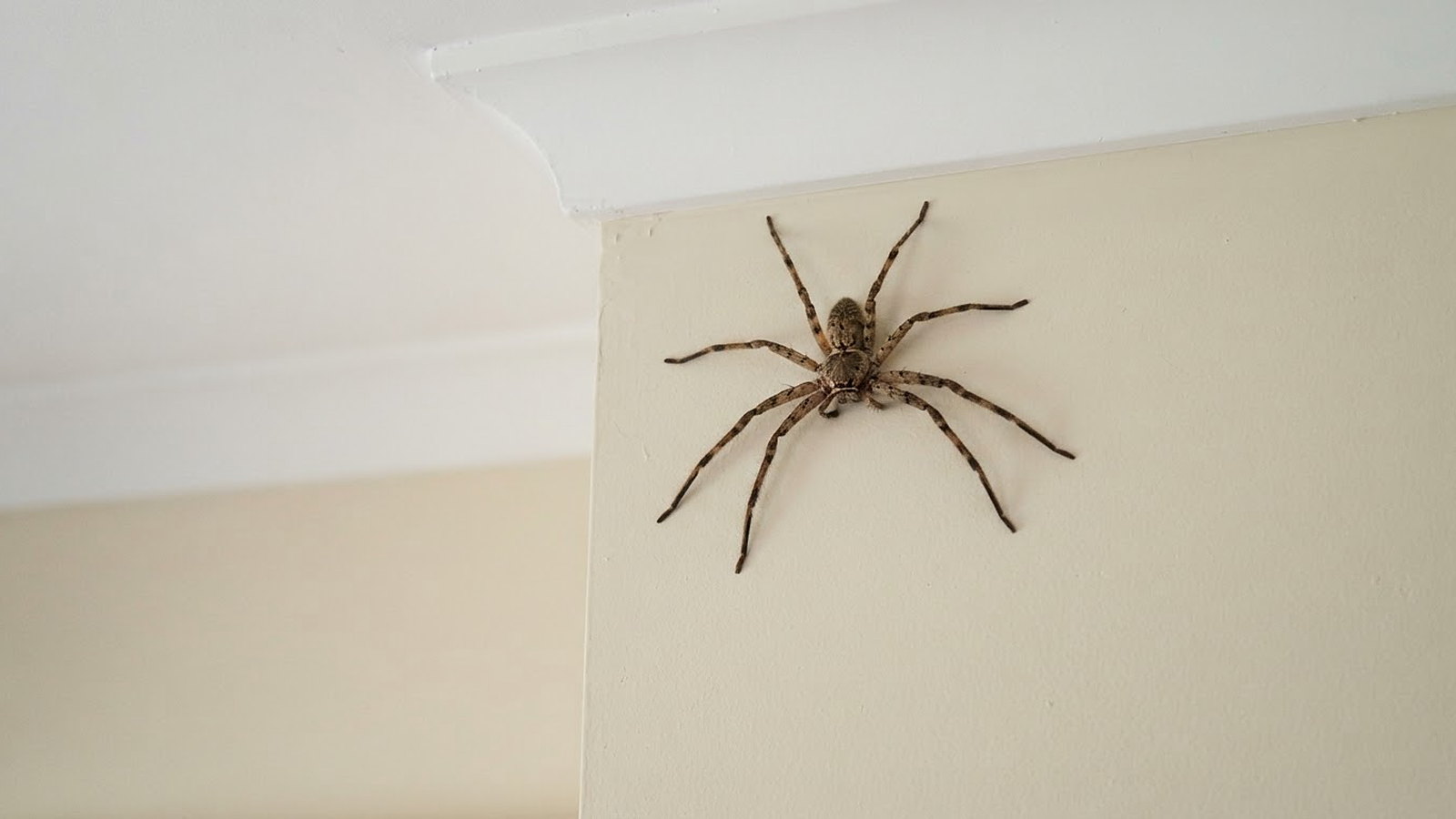
Large, flat and fast, with legs spread sideways like a crab, up to a palm width. They build no web and hunt cockroaches at night, hiding by day behind pictures, in garages and inside car doors. Alarming, but bites are rare and usually mild.
Ground hunters. Wolf spiders are stocky, brown and hairy, running across floors and garden beds, the female often carrying her egg sac. Jumping spiders are small and compact with large front eyes, stalking flies on windowsills by day. Both are harmless.
Black and brown widows live outdoors in sheltered spots: under garden furniture, in meter boxes, sheds, wall gaps and stacked blocks. Glossy black or mottled brown with an orange hourglass underneath. A bite can cause strong pain and cramps and needs a doctor.
Brown and long-legged with a dark violin shape on the back, occasionally found in undisturbed storage, under boxes and in rarely used rooms. Shy and seldom met, but a bite can develop into a slow-healing sore that should be seen by a doctor.
Identification
Spiders have eight legs, two body parts and no wings or antennae. Start with the web: a loose tangle in a corner is a cellar spider, an orb web on the garden light is a harmless orb weaver, and a strong, irregular web low down under furniture or in a meter box deserves a careful look for a widow. No web and a fast runner on the wall at night is a huntsman; a stocky runner on the floor is a wolf spider.
Habitat and behaviour
Spiders go where prey, shelter and quiet overlap. Outdoors that means lights that draw moths and midges, shrubs, meter boxes, eaves and stacked materials. Indoors they take the undisturbed corners: behind furniture, in store rooms, garages, false ceilings and bathrooms where small flies breed. Web builders stay put and wait; hunters roam at night and end up in baths and sinks because they cannot climb the smooth sides. Spiders move in when autumn cools the nights and whenever insect numbers rise, and one overlooked egg sac, with dozens to hundreds of eggs, becomes a roomful of spiderlings.
Warning signs
Why it matters
Most spiders cannot pierce skin or inject enough venom to matter, and most bites are a mild local sting. Widow and recluse bites are the exception: severe pain, cramps, sweating, a spreading sore or any reaction in a child needs medical care.
Spiders stay only where there is food. Many spiders indoors means cockroaches, flies, moths or mosquitoes are breeding somewhere, and that is the problem worth solving first.
Webbing on facades, lights, ceilings and shelving is a cleanliness finding in food, hospitality and healthcare audits, and the first thing a guest or tenant photographs.
A huntsman in a hotel room, a classroom or a staff bathroom produces complaints, lost sleep and calls out of hours, however harmless the spider is.
Prevention
How we deal with it
Call when you find widow or recluse spiders within reach of children or staff, when webs are back within days of cleaning, when spiders appear in numbers across a compound or warehouse, or when the insects behind them persist. Our technician identifies the species, finds harbourages and prey, treats cracks, voids and the perimeter, removes webs and egg sacs and leaves a written report. Inspection first, then a quote.
Our services that cover this pest, from inspection to monitoring.
Web removal for villas, garages, stores and warehouses, plus treatment of the harbourages, entry points and insect prey that attract spiders.
View serviceSeen the signs?
Tell us what you have seen and where. A coordinator will call you back to arrange a survey.
Leave your number and the best time to reach you.
FAQ
How to recognise subterranean and drywood termites, the mud tubes and swarms that give them away, and what keeps them out of a building.
How to tell German, American and other cockroaches apart, what their droppings and egg cases look like, and what keeps a kitchen free of them.
How to recognise bed bugs at every life stage, where they hide, how they travel between homes, hotels and labour housing, and when to act.
How to tell the Norway rat, roof rat and house mouse apart by size, droppings and habits, the damage they do, and how to keep them out.
House flies, drain flies, fruit flies, blow flies and coastal midges: where each one breeds, what it carries and why ribbons alone do not solve it.
Aedes, Culex and Anopheles: how to tell them apart, where they breed around Saudi homes and sites, what they can carry and how to stop them at the source.
Paper wasps, hornets, honey bees, stinging ants and scorpions: where they nest, when they are active, what a sting needs and what never to do yourself.
Ants, silverfish, beetles, pantry moths, centipedes, fleas and ticks: how to recognise the everyday crawling insects of Saudi homes and what keeps them out.
Pigeons, mynas, sparrows and crows on ledges, roofs and plant: how they choose a building, the damage droppings and nests do, and what keeps them off.
Which snakes turn up around Saudi homes, farms and sites, how to read the signs, what to do after a bite and how to make your property less inviting.
This guide is general information for homes and facilities in Saudi Arabia. Species and their behaviour vary by region and season, and the right treatment is decided after an inspection.