
Common bed bug
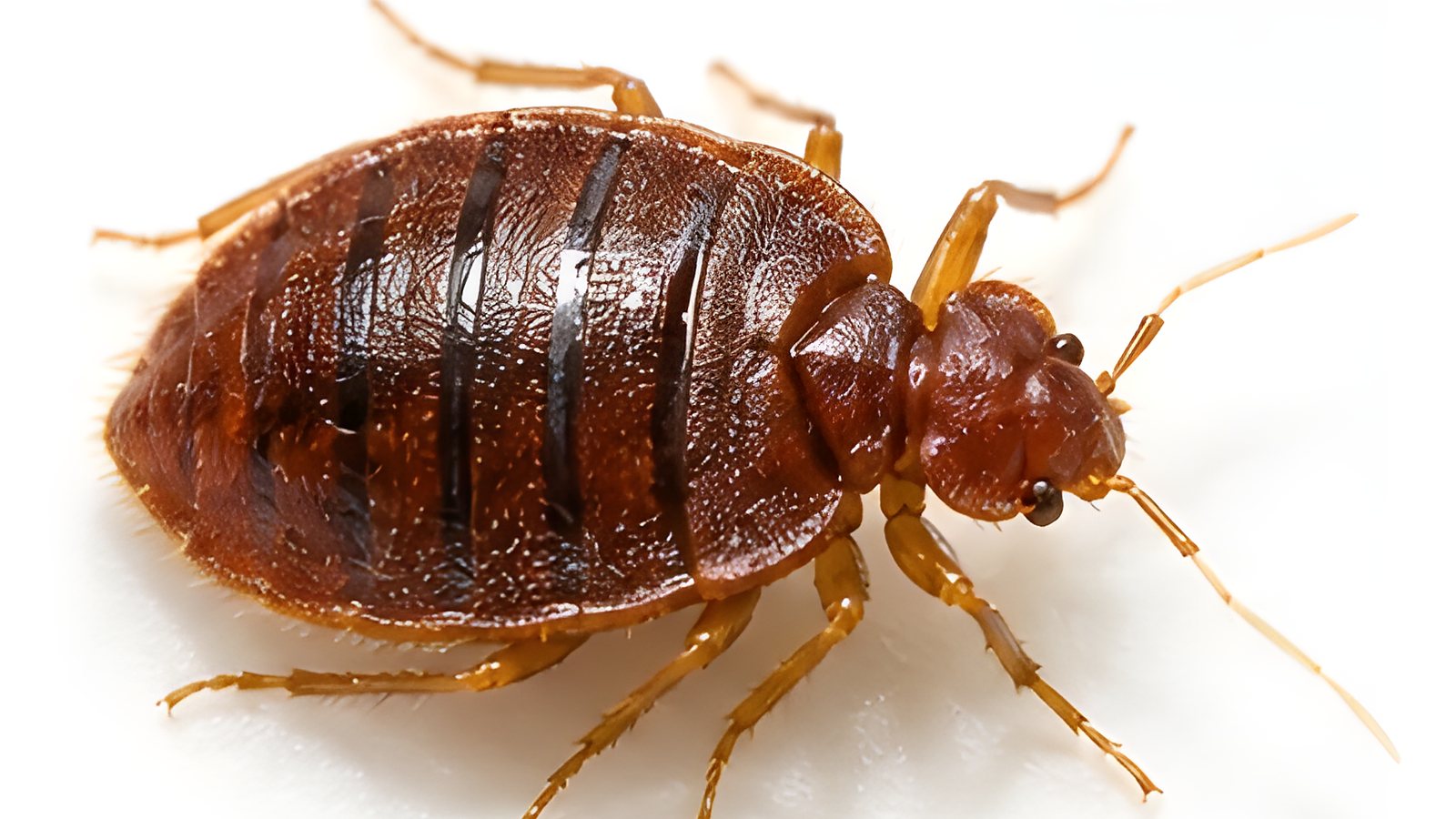
The species in most Saudi homes and hotels. Adults are 5–7 mm, oval, flat and rusty brown, swelling to a darker red after a meal. It lives wherever people sleep regularly and copes well with air-conditioned rooms all year round.
Pest guide · Bed bugs
Small, flat and patient: the pest that travels with people.
Bed bugs feed on blood at night and hide within a metre or two of where people sleep. Cleanliness does not keep them out: they arrive in luggage, second-hand furniture and workers' bags, and spread through apartments, hotels and labour housing faster than they are noticed. This guide covers how to recognise them, why they are hard to shift and when to act.
Species
The species in most Saudi homes and hotels. Adults are 5–7 mm, oval, flat and rusty brown, swelling to a darker red after a meal. It lives wherever people sleep regularly and copes well with air-conditioned rooms all year round.
A close relative from hot, humid regions, recorded across the Gulf. It looks and behaves almost the same and needs the same treatment; only a specialist can separate the two under magnification.
Related bugs that live on pigeons and bats sometimes wander indoors from nests on roofs and AC ledges. Carpet beetle larvae and booklice are also mistaken for bed bugs. The inspection confirms the species before anything is treated.
Identification
Bed bugs pass through an egg stage and five nymph stages before they are adult, and each nymph needs a blood meal to grow to the next size. All stages hide together in the same seams and joints, so a close look at a mattress edge with a torch usually shows eggs, shells and bugs of several sizes side by side. None of them has wings, and they cannot jump; they walk, quickly.
Habitat and behaviour
Bed bugs come out before dawn, drawn by warmth and breath, feed and return to a crack nearby: mattress seams, bed-frame joints, headboards, bedside tables, skirting, sockets and curtain hems. A female lays several hundred eggs in her life; they hatch in about ten days, and in a warm room egg to adult takes five to eight weeks. Adults survive months without feeding, so they outlast an empty flat. They hitch-hike in luggage, laundry and second-hand furniture and travel between rooms through wall voids; hotels and bunk-bed labour housing with high turnover are the usual starting points.
Warning signs
Why it matters
Bed bugs are not known to pass on disease, but the bites itch for days, scratching can lead to skin infection, and weeks of broken sleep and anxiety about the bed take a real toll on a household.
Bugs carried on clothes or moved furniture seed new rooms, and in apartment blocks and dormitories they travel through walls and conduits. One untreated room keeps reinfesting the ones around it.
For hotels, furnished apartments and labour accommodation, a bed bug complaint means refunds, closed rooms, online reviews and questions from the client's HSE team.
A single room caught early is a contained job. After months of growth the treatment covers several rooms, more furniture and more follow-up visits, and discarded beds add to the bill.
Prevention
How we deal with it
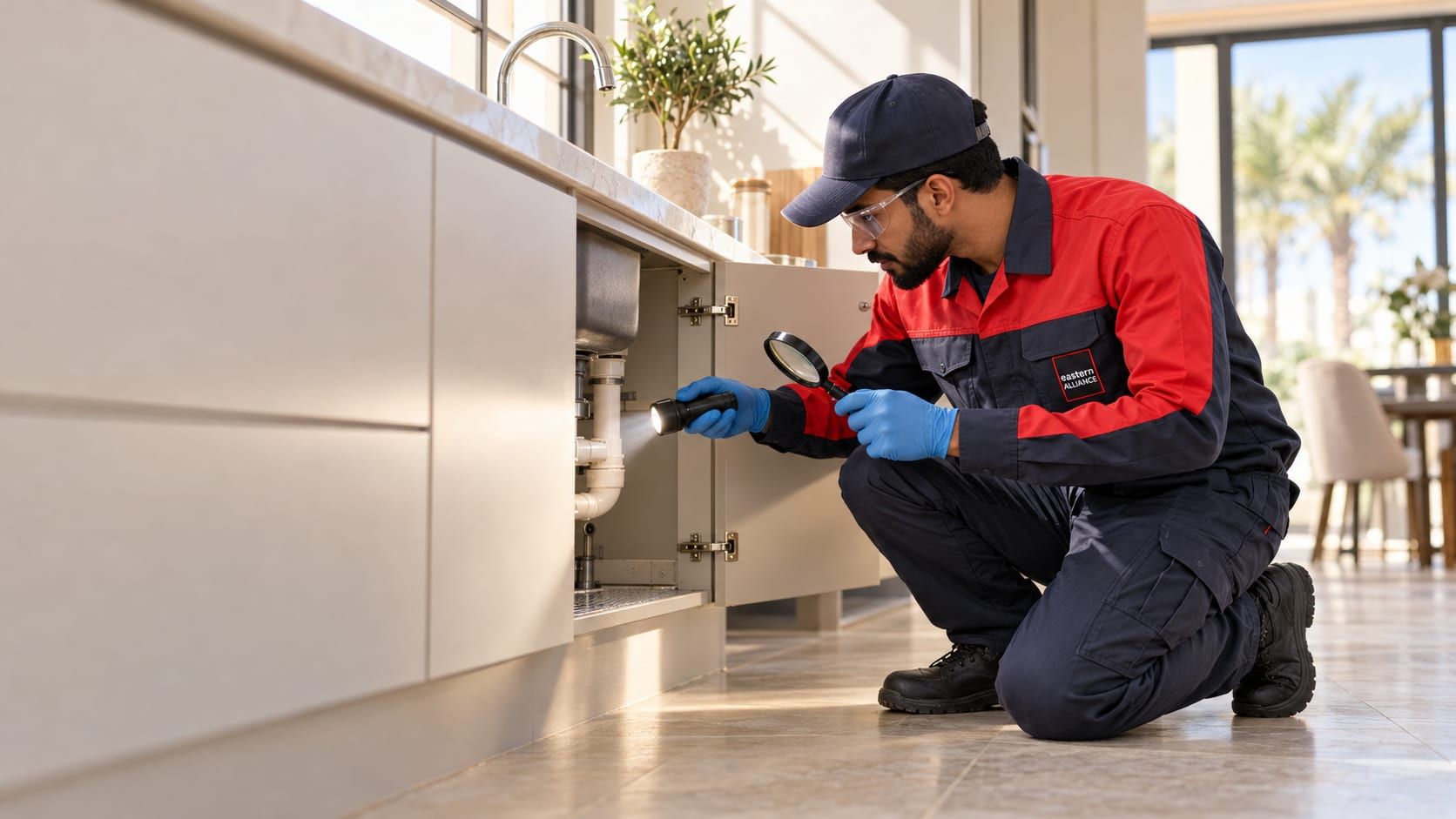
Call when you find live bugs, eggs or spotting in more than one place, or when bites continue after the bedding has been washed. Household sprays and foggers do not reach eggs in seams and screw holes, and push the survivors into other rooms. Our technician inspects the bed, frame, furniture and adjoining rooms, confirms the extent, then quotes an itemised plan with follow-up visits and a written report after each.
Our services that cover this pest, from inspection to monitoring.
Inspection of beds, headboards and skirting, targeted treatment and a follow-up visit for the eggs, in homes, hotels and accommodation.
View serviceOne programme for villas, apartments and compounds: inspection, targeted treatment and follow-up, safe around children and pets.
View serviceSeen the signs?
Tell us what you have seen and where. A coordinator will call you back to arrange a survey.
Leave your number and the best time to reach you.
FAQ
How to recognise subterranean and drywood termites, the mud tubes and swarms that give them away, and what keeps them out of a building.
How to tell German, American and other cockroaches apart, what their droppings and egg cases look like, and what keeps a kitchen free of them.
How to tell the Norway rat, roof rat and house mouse apart by size, droppings and habits, the damage they do, and how to keep them out.
House flies, drain flies, fruit flies, blow flies and coastal midges: where each one breeds, what it carries and why ribbons alone do not solve it.
Aedes, Culex and Anopheles: how to tell them apart, where they breed around Saudi homes and sites, what they can carry and how to stop them at the source.
House spiders, huntsmen, wolf spiders and the few that matter medically: webs versus hunters, what a spider problem really signals and when to act.
Paper wasps, hornets, honey bees, stinging ants and scorpions: where they nest, when they are active, what a sting needs and what never to do yourself.
Ants, silverfish, beetles, pantry moths, centipedes, fleas and ticks: how to recognise the everyday crawling insects of Saudi homes and what keeps them out.
Pigeons, mynas, sparrows and crows on ledges, roofs and plant: how they choose a building, the damage droppings and nests do, and what keeps them off.
Which snakes turn up around Saudi homes, farms and sites, how to read the signs, what to do after a bite and how to make your property less inviting.
This guide is general information for homes and facilities in Saudi Arabia. Species and their behaviour vary by region and season, and the right treatment is decided after an inspection.