
Eastern Alliance — Home
Residential pest control by Eastern Alliance

Spider control · Villas, stores & warehouses

Spider control

Clear the webs and remove what brings spiders in.

Spiders settle where insects gather: around outdoor lights, in quiet garages and stores, behind stock and in ceiling corners. Most species in Saudi Arabia are harmless, but a few bite, and webs on a facade or shop ceiling look like neglect. We remove the webs, treat where spiders hide and get in, and reduce the insects and lighting that feed them.

  • Web removal inside and out
  • Harbourage & entry-point treatment
  • Fewer insects, fewer spiders

Service areas:Al KhobarDammamRiyadhJeddahJubailJizanTabukall of Saudi Arabia

When to call us

Signs spiders have settled in

A spider or two is normal. Webs that return days after cleaning, egg sacs and spiders in numbers mean the building is feeding them. Look for:

  • Webs that return within days on facades, soffits, railings and light fittings
  • Webs in ceiling corners, behind stock, under shelving and in false ceilings
  • Egg sacs, small silk balls, in corners, window frames and behind furniture
  • Spiders in baths, sinks, garages and store rooms, mostly at night
  • Clouds of small insects around outdoor lights at night, the spiders' food
  • Bites after reaching into stored boxes, shoes or garden furniture

Scope

Where we treat spiders

  • Villas, apartments and residential compounds
  • Garages, store rooms, basements and roof spaces
  • Facades, soffits, balconies, railings and light fittings
  • Shops, showrooms, offices and reception areas
  • Warehouses, racking, loading bays and canopies
  • Gardens, boundary walls, pergolas and outdoor furniture
  • Pump rooms, plant rooms and electrical cupboards

Why act now

Why spiders cannot wait

  1. A few species bite

    Most spiders in Saudi Arabia are harmless, but a few, such as widow spiders, give a bite that can need medical care. They hide in stored boxes, shoes, garden furniture and dark corners, exactly where hands reach without looking.

  2. Webs read as neglect

    On a shop front, hotel entrance or office reception, webs and the dead insects in them are the first thing a visitor or auditor notices. In a warehouse, webbing over stock means cleaning before anything ships.

  3. They point to an insect problem

    Spiders stay where food is reliable. A building with many spiders usually has flies, mosquitoes, moths or crawling insects breeding nearby, and those need attention too.

  4. Egg sacs multiply the problem

    One sac holds dozens to hundreds of eggs. Left in a corner, a few spiders become many within a season, and the spiderlings spread through vents and gaps into new rooms.

Options

Treatment options for spiders

The approach depends on where the spiders are and what is feeding them.

  • Web removal & residual treatment

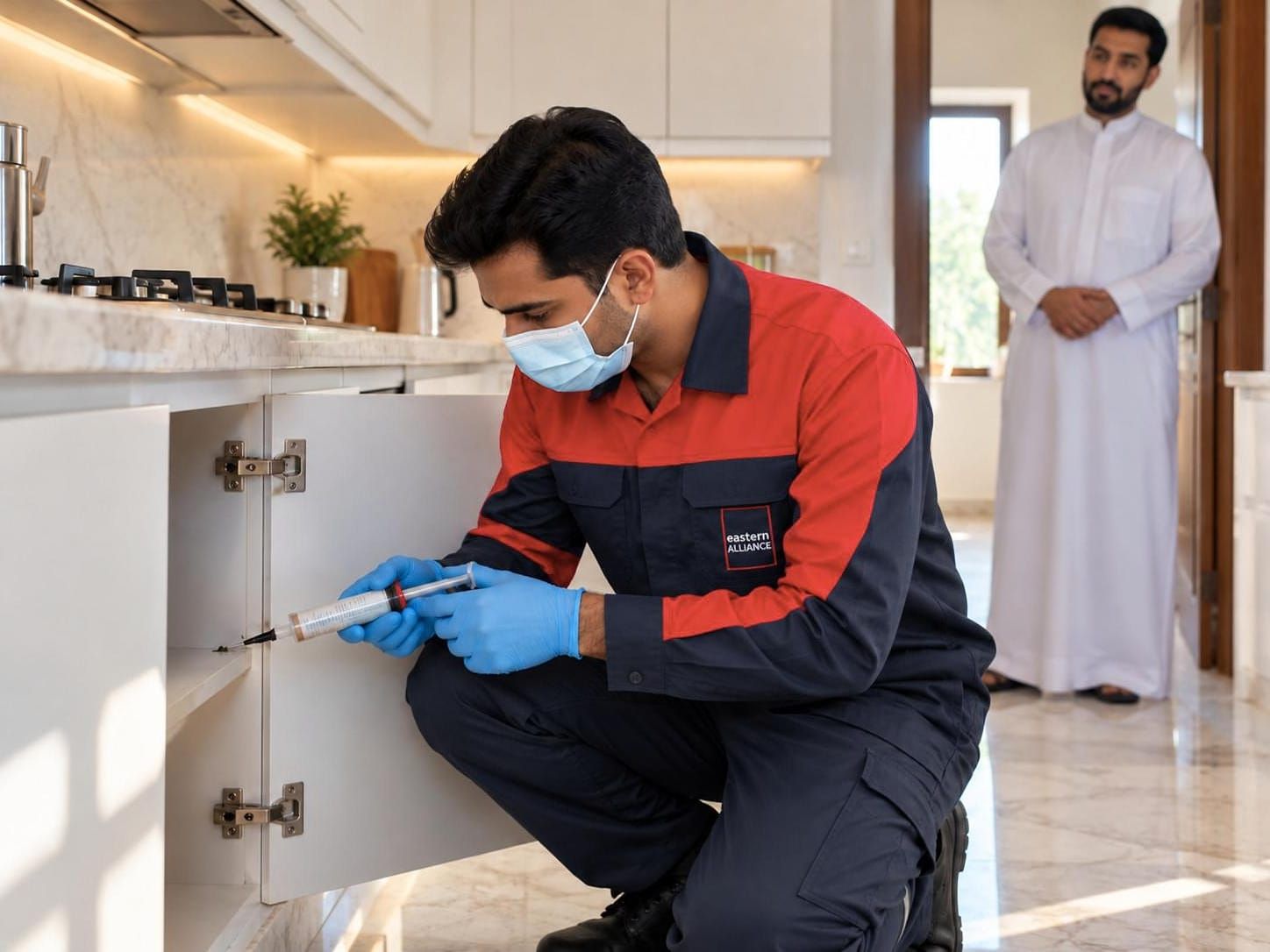
    Webs and egg sacs removed inside and out, then a residual applied to the corners, frames, soffits and voids spiders return to. The usual answer for villas, shops and offices.
  • Facade & lighting programme

    For buildings whose lights draw insects at night: scheduled de-webbing of facades, canopies, signage and light fittings, with advice on lamp types and positions that attract fewer insects.

  • Warehouses & stores

    Treatment of racking, dock doors, ceiling voids and the quiet corners behind stock, together with the fly and crawling-insect control that cuts the spiders' food, scheduled around your operations.

  • Gardens & perimeters

    Pergolas, boundary walls, outdoor furniture, meter boxes and garden stores treated so spiders stay out of the places hands and children reach.

Method

How spider control works

Every spider job follows the same four steps. Removing webs is the visible part; treating where spiders hide and cutting off their food is what keeps them from coming back.

  1. 01

    Inspection

    We check facades, lights, eaves, garages, stores, false ceilings and behind stock for webs, egg sacs and live spiders, identify the species and note the insects they are feeding on.

  2. 02

    Plan & quote

    You receive a written scope: the areas to de-web, the harbourages and entry points to treat, the lighting and insect-control changes we recommend and any follow-up visit, with an itemised quote.

  3. 03

    Web removal & treatment

    Trained technicians remove webs and egg sacs with brushes and vacuums, then apply a residual treatment to the corners, cracks, frames, soffits and voids where spiders rest and enter.

  4. 04

    Monitoring & aftercare

    We check that the webs do not return, treat any insect prey still breeding and record the findings in your service report, backed by our service warranty.

Why Eastern Alliance

Why clients choose us

  • Inspection before quoteWe identify the species and the insects feeding them before pricing; the survey decides the scope.
  • Earth-friendly productsChosen and applied to protect people, pets and the environment, from ranges approved by the WHO, the SFDA and the US EPA.
  • Insured & guaranteedWork backed by insurance and a service warranty.
  • Trained in-houseTechnicians trained at our own training centre on spider identification, safe application and PPE.

Before and after the visit

Before the visit, clear the corners, window sills and the areas behind furniture or stock to be treated, and put away food, pet bowls and toys. Your technician will tell you how long to stay out of treated rooms and when it is safe to return. Leave treated corners, frames and skirting unwashed for the period stated so the residual keeps working; any webs that appear later can be brushed away as usual.

Prevention

How to keep spiders out

Spiders follow insects and shelter. Fewer insects, fewer dark undisturbed corners and fewer gaps mean fewer spiders.

  • Change the outdoor lightingInsects swarm to bright white and UV light. Switch facade and garden lamps to warm-white LED or yellow bulbs, point them away from doors and turn them off when not needed.
  • Seal gaps and fit screensFill gaps around AC pipes, cable entries and window frames, fit sweeps under doors, put mesh on vents and keep window screens in good repair.
  • Clear clutter and move stock off wallsBoxes, timber and unused equipment against a wall are ideal harbourage. Store on shelving with a gap from the wall and turn stock over regularly.
  • Vacuum, do not just dustVacuuming removes webs, egg sacs and spiders in one go; dusting scatters them. Pay attention to ceiling corners, behind curtains and under furniture.
  • Trim the garden back from the houseCut plants, climbers and hedges away from walls and windows, store cushions indoors and lift wood piles and pots off the ground.
  • Keep other insects downMosquitoes, flies, moths and ants feed spiders. Cover drains, empty standing water, keep bins closed and deal with any insect problem early; spiders have less reason to stay.

Price and quote

What decides the price of spider control

There is no flat rate for spiders: the price follows the inspection, so you pay for the de-webbing and treatment your building needs and nothing more.

  • Size and height of the buildingFloor area, facades and the access needed to reach soffits, canopies and lights.
  • How many areas are affectedRooms, garages, stores and racking that need de-webbing and treatment.
  • Species and insect preyA biting species or a large insect population needs more treatment and follow-up.
  • One-off or scheduledA single visit, or a facade and lighting programme through the year.

Inspection first, then an itemised quote with no hidden extras.

Request a quote

Tell us what you are seeing and where. A coordinator will call you back to arrange a survey.

Saudi mobile or landline, e.g. 05X XXX XXXX

Preferred contact method

FAQ

Frequently asked questions

Are the spiders in Saudi homes dangerous?
Most are harmless and even useful, since they eat flies and mosquitoes. A few species, including widow spiders, give a bite that can need medical care, so do not handle a spider you cannot identify, and seek medical advice if a bite swells, blisters or the pain spreads beyond the bite.
Why do the webs keep coming back after I clean them?
Cleaning removes the web but not the spider, its egg sacs or the insects it feeds on. Treating the harbourage, removing the egg sacs and reducing the insects around lights is what stops the cycle.
Do you spray the whole house?
No. Spiders rest in specific places: ceiling corners, behind furniture, window frames, soffits and voids. We treat those places and the entry points, not every surface.
Can you treat the outside of a building and high facades?
Yes. Facades, soffits, canopies, signage and light fittings are de-webbed and treated with the right access equipment, and the work can be put on a schedule for shops, hotels and offices.
Will you also deal with the insects the spiders eat?
Where the inspection finds flies, mosquitoes or crawling insects feeding the spiders, we include them in the plan or recommend the right service, because the spiders return while the food stays.
Is spider treatment safe for children and pets?
Yes, when applied by trained technicians. Products go into corners, cracks and frames rather than onto open surfaces, and your technician tells you how long to keep children and pets out of treated areas.
How quickly does spider control work?
Webs and visible spiders go on the first visit. Spiders hidden in voids and spiderlings hatching from missed sacs die as they cross treated surfaces over the following days, so a few sightings in the first weeks are normal and are covered by the follow-up.
Do you offer scheduled spider control for shops, hotels and warehouses?
Yes. Facade de-webbing, lighting advice and treatment of stores and racking can be scheduled through the year, with a service report after each visit for your records.
Can I just use a household spray?
A spray kills the spider you can see, not the egg sac behind it or the insects that drew it in. For a single spider, vacuuming is enough; for webs that keep returning, large numbers or a biting species, call us or request a quote online.

Crawling insect control

Silverfish, beetles, centipedes, millipedes, earwigs, woodlice and booklice treated at the damp, cluttered places where they breed.

View service

Scorpion control

Night inspection with black light, treatment of the places scorpions shelter and sealing of the gaps they use to get indoors.

View service

Residential pest control

One programme for villas, apartments and compounds: inspection, targeted treatment and follow-up, safe around children and pets.

View service

Commercial pest control

Scheduled, documented pest control for offices, malls, hotels, restaurants, hospitals, schools and government buildings.

View service

Ant control

Black garden ants, pharaoh ants and carpenter ants traced to the nest and baited at the source, in kitchens, gardens, compounds and hospitals.

View service

Garden & lawn pest control

Ants, grubs, aphids, mosquitoes and soil pests treated in villa gardens, compound lawns, hotel grounds and public landscaping.

View service

Learn more about the pest

Spiders

House spiders, huntsmen, wolf spiders and the few that matter medically: webs versus hunters, what a spider problem really signals and when to act.

Read the guide