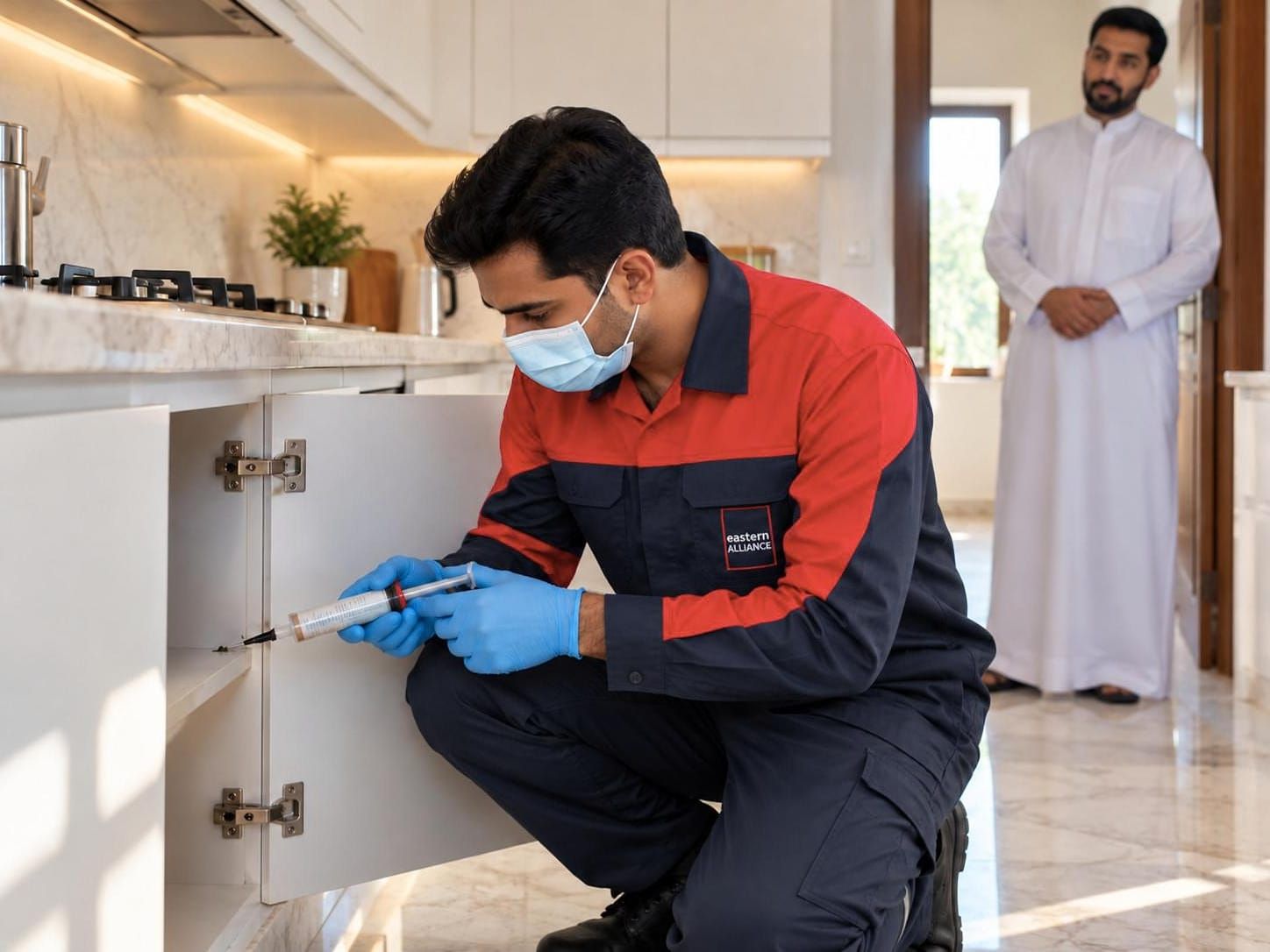
Treat every hiding place, then come back for the eggs.
Bed bugs hide in mattress seams, bed frames, headboards and skirting by day, feed at night, and their eggs survive most treatments. We inspect every piece of furniture in the room, treat each hiding place we find, and return once the eggs have hatched, so the problem ends rather than pauses.
Bites alone do not confirm bed bugs, because mosquitoes and fleas bite too. These are the signs our technicians look for on and around the bed:
Bites in lines or clusters on skin left uncovered during sleep: arms, neck, shoulders
Small rust-coloured spots on sheets, mattress seams and pillowcases
Dark specks along mattress piping, bed-frame joints and headboard screws
Pale shed skins and tiny white eggs in seams, cracks and behind picture frames
Live bugs the size of an apple seed, flat and brown, in bed-frame joints
A sweet, musty smell in a heavily infested room
Scope
Where we treat bed bugs
Villa and apartment bedrooms and guest rooms
Hotel rooms, serviced apartments and furnished rentals
Labour accommodation and staff housing with shared dormitories
Hospital wards, patient rooms and on-call rooms
Student housing and hostels
Mattresses, bed frames, headboards, sofas and upholstered chairs
Skirting, wall sockets, curtain hems and picture frames near the bed
Luggage rooms and linen stores
Why act now
Why bed bugs cannot wait
01
They spread room to room
Bed bugs travel on luggage, laundry and furniture and along cables and pipes. One infested room becomes a floor, and one apartment becomes a building, when treatment is delayed.
02
Sleep, skin and stress
Repeated bites cause itching, broken skin and, for some people, allergic reactions. Families and guests lose sleep, and the anxiety often lasts longer than the infestation.
03
Reputation and reviews
For a hotel, serviced apartment or labour camp operator, a bed bug complaint travels fast: online reviews, refunds, rooms taken out of service and lost contracts.
04
They outlast half measures
Eggs are glued into seams and cracks and survive most sprays, and adults can go months without feeding. A partial treatment leaves enough behind to start again.
Options
What the treatment includes
The inspection decides how these are combined for the room and the people who use it.
Targeted treatment of the room
A residual product applied into seams, joints, skirting gaps and cracks where bed bugs rest and lay eggs, not onto the sleeping surface. The room can be used again after the time your technician states, once treated areas are dry.
The follow-up visit
Eggs laid before the first visit hatch over the following days. The follow-up visit is timed for that: we re-inspect, treat the new nymphs before they can lay, and only then call the room clear.
Hotels and accommodation blocks
We inspect the reported room and the rooms beside, above and below it, treat every affected room in one scheduled operation, and agree a check-and-report routine with housekeeping so a new introduction is caught early.
Laundering and encasement guidance
You receive a checklist: what to wash on a hot cycle and tumble-dry, what to seal in bags, how to encase mattresses and pillows, and how to check seams and headboards yourself in the weeks after treatment.
Method
How bed bug treatment works
Every bed bug job follows the same four steps; the number of rooms, the furniture involved and how long the infestation has been there decide the plan.
01
Inspection
We strip the bed and check mattress seams, bed bases, frame joints, headboards, skirting, sockets, curtain hems and furniture in the room and the rooms beside it, and confirm the species.
02
Plan and preparation
You receive a written scope: which rooms and items we will treat, what to launder, bag and move beforehand, and when the follow-up visit falls so that eggs hatching after the first visit are reached.
03
Targeted treatment
Trained technicians treat every hiding place found: seams, frames, headboards, skirting, sockets and cracks, applying products where the bugs rest rather than spraying the whole room.
04
Follow-up & monitoring
We return after the eggs have hatched to treat any survivors, check the monitors and confirm the room is clear, with a written report after each visit and our service warranty.
Why Eastern Alliance
Why clients choose us for bed bugs
A report after every visitRooms inspected, items treated, product names and the follow-up date: the record a hotel or housing operator needs on file.
Earth-friendly productsProducts from ranges approved by the WHO, the SFDA and the US EPA, chosen and applied to protect people, pets and the environment.
Insured & guaranteedWork backed by insurance and a service warranty.
Trained in-houseTechnicians trained at our own training centre on where bed bugs hide and how to treat a room without spreading them.
Before the visit, wash bedding, curtains and clothes from the room on a hot cycle, tumble-dry them and seal them in bags; move items away from the walls, but do not carry furniture into other rooms, which spreads the bugs. Keep people and pets out of the treated room for the time your technician states, and do not vacuum or wipe treated seams and skirting until the follow-up visit, so the treatment keeps working.
Prevention
How to keep bed bugs out
Bed bugs do not come from dirt; they arrive with people and their belongings. Catching them early is what matters.
Check the bed when you travelIn any hotel room, look along the mattress seams and behind the headboard before unpacking, and keep luggage on the rack, not on the bed or the floor.
Unpack into the washing machineAfter a trip, wash and tumble-dry clothes on a hot cycle and inspect the luggage seams before storing it.
Inspect second-hand furnitureCheck the seams, joints and screw holes of used beds, sofas and mattresses before they enter the home, or avoid them altogether.
Encase mattressesZipped mattress and pillow encasements remove hiding places and make any bugs easy to spot when the bed is changed.
Reduce clutter around the bedBoxes, piles of clothes and items stored under the bed give bed bugs more places to hide and make inspection harder.
Train housekeeping to lookIn hotels and accommodation, a quick check of seams and headboards at every changeover, with a clear reporting route, catches an introduction before it spreads.
Price and quote
What decides the price of bed bug treatment
There is no flat rate: the quote follows the inspection, which shows how many rooms and items are affected and how many visits it will take.
Number of rooms affectedOne bedroom, a whole apartment, or a block of hotel or staff rooms.
How established it isA recent introduction, or a spread infestation with eggs in many places.
Furniture and fittingsUpholstered furniture, built-in headboards and cluttered rooms take longer to treat.
Follow-up visitsThe follow-up visit is part of the plan; heavy infestations may need another.
Inspection first, then an itemised quote with no hidden extras.
Tell us what you are seeing and where. A coordinator will call you back to arrange a survey.
FAQ
Frequently asked questions
How did bed bugs get into a clean home?
Bed bugs travel; they do not breed in dirt. They arrive in luggage after a trip, in second-hand furniture, with visitors, or from a neighbouring flat through sockets and pipes. Clutter makes them harder to find, but it does not cause them.
Can I get rid of bed bugs myself?
Household sprays rarely reach the eggs and often scatter the bugs into other rooms, so the problem comes back. Laundering, vacuuming and encasements help, but an established infestation needs a professional inspection and treatment of every hiding place.
How many visits will it take?
Normally two: the first treatment and a follow-up after the eggs have hatched. A heavy or long-standing infestation, or a building with several affected units, may need more. Your written plan tells you what to expect.
Do we have to throw away the mattress?
Usually not. Mattresses and bed frames can be treated and, where useful, encased. Discarding furniture without treating the room often spreads the bugs on the way out and leaves the ones in the skirting and headboard behind.
How should we prepare the room?
Wash and tumble-dry bedding, curtains and clothes on a hot cycle and seal them in bags, clear under the bed, and move items away from the walls without carrying them into other rooms. Your written plan lists the exact steps for your rooms.
Can we sleep in the room after the treatment?
Usually yes, after the time your technician states and once treated areas are dry. Keep sleeping in the treated room rather than moving to another, so any remaining bugs come to the treated bed instead of following you.
How do you handle bed bugs in a hotel or labour accommodation?
We inspect the reported room and the rooms beside, above and below it, treat every affected room, agree a check-and-report routine with housekeeping, and give you a report after each visit for your records.
Will the treatment harm children, patients or pets?
Products are applied by trained technicians into seams, joints and cracks rather than onto sleeping surfaces, and the room is kept clear for the stated time. Tell us who uses the room, including infants, patients or pets, and the plan is adjusted to suit.
Can bed bugs come back after treatment?
The treatment and follow-up deal with the bugs in the room. A new introduction, from travel, a guest or a neighbouring unit, can start again, which is why we show you how to check seams and headboards and what to do at the first sign.