Eastern Alliance — Home
Bird control by Eastern Alliance

Bird control · Pigeon proofing

Bird control

Keep pigeons off your facades, roofs and equipment.

Pigeon droppings are acidic: they corrode buildings and can carry disease, while nests block gutters and harbour bird mites. We clean the affected areas first, then fit the deterrents the survey calls for, such as netting, spikes or wire systems.

  • Survey-led proofing
  • Droppings clean-up
  • Netting, spikes & wire systems

Service areas:Al KhobarDammamRiyadhJeddahJubailJizanTabukall of Saudi Arabia

When to call us

Signs birds are becoming a problem

Pigeons come back to the same ledges and roofs day after day, so the damage builds up. These are the signs our technicians look for during a survey:

  • Droppings building up on ledges, signs, walkways or equipment
  • Stained or corroded stonework, metalwork and paint
  • Nests blocking gutters, drains or AC units
  • Bird mites appearing indoors near windows or vents
  • Birds roosting on balconies, canopies or solar panels
  • Droppings near food areas, stock or air intakes

Scope

Birds and areas we cover

  • Pigeons and other roosting birds
  • Facades, ledges and parapets
  • Rooftops, plant rooms and AC units
  • Warehouses, canopies and loading bays
  • Balconies, villas and residential towers
  • Signs, beams and solar panels

Know the pest

Pest birds and the signs they leave

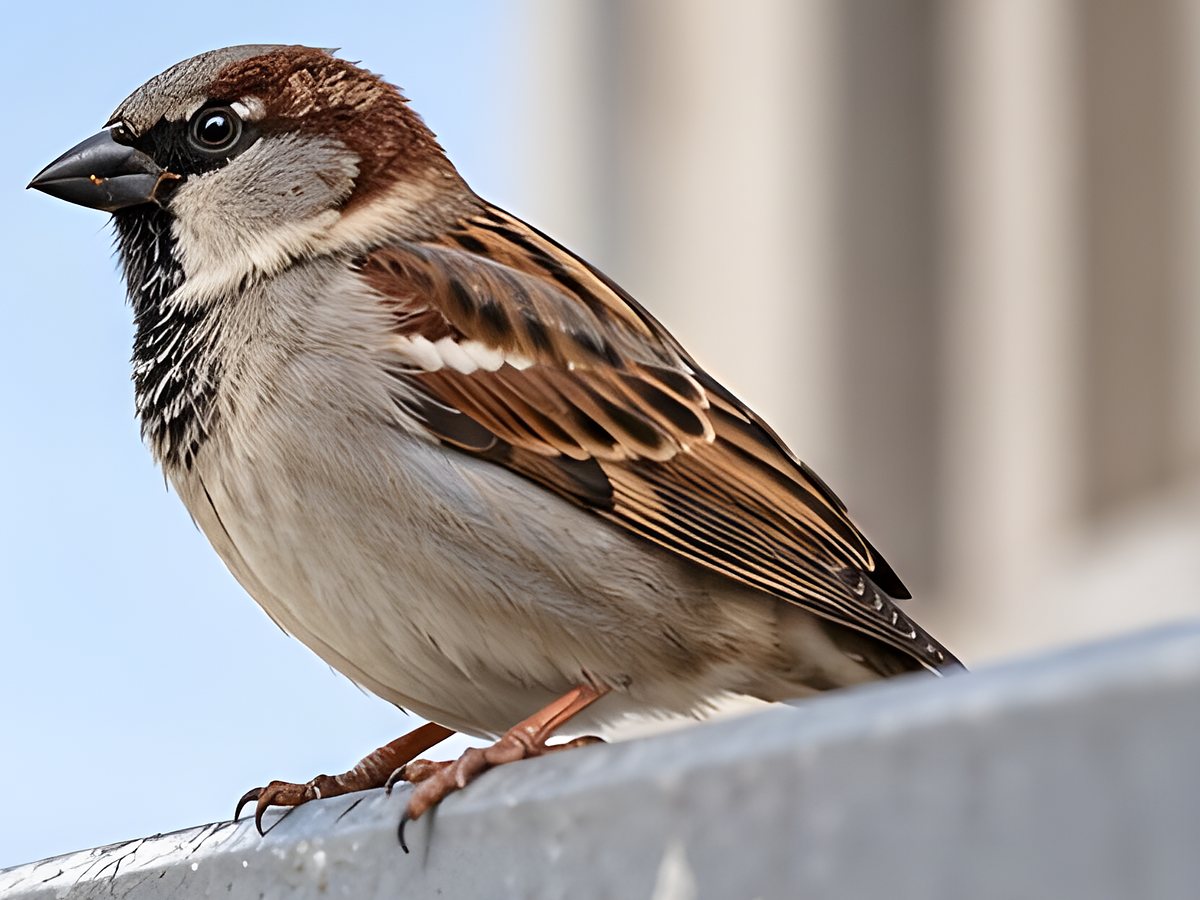
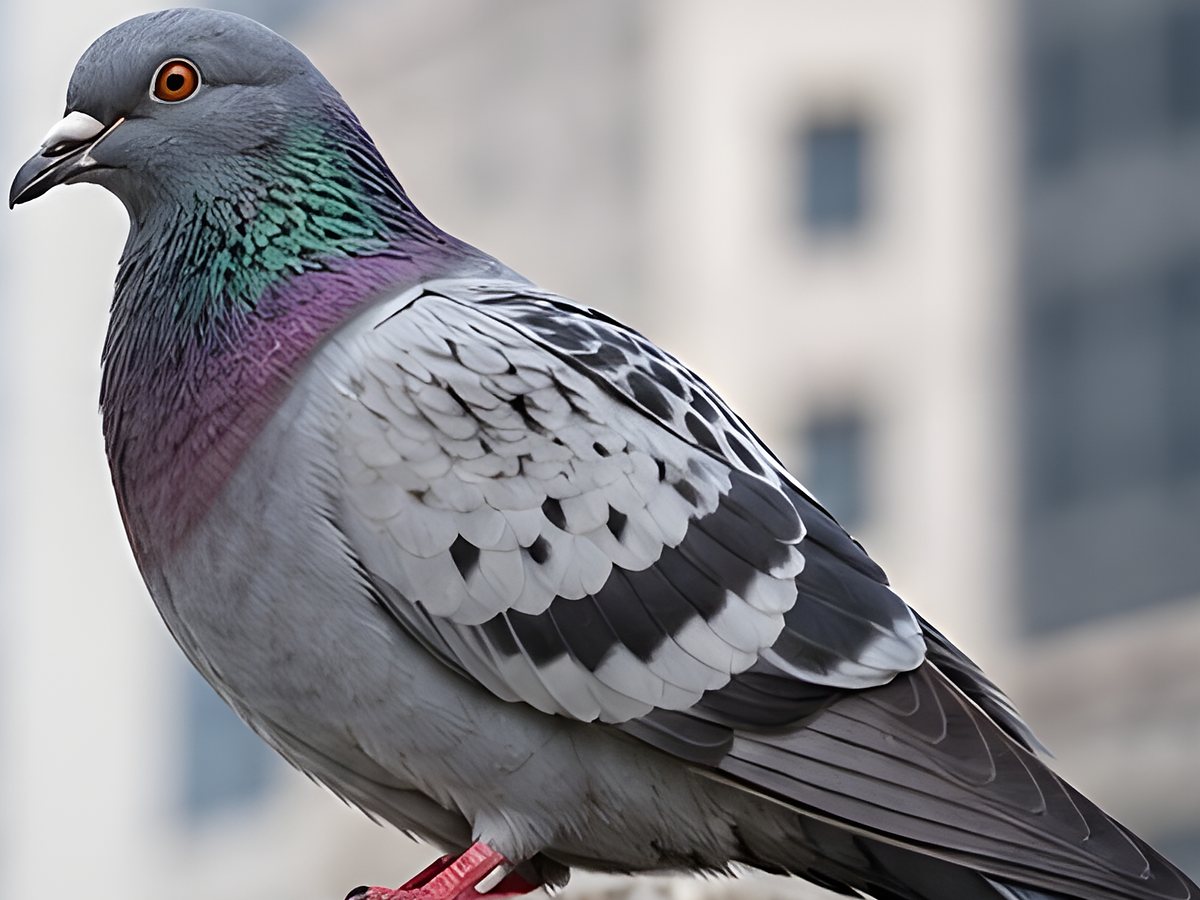
Pigeons and sparrows cause most bird problems on buildings.

  • Feral pigeon perched on a building ledge with city towers behind

    Feral pigeon

    The main pest bird on buildings: roosts and nests on ledges, roofs and AC units and fouls them with droppings.
  • House sparrow perched on a concrete parapet

    House sparrow

    Small and adaptable, nesting in eaves, vents, signs and building voids, often in large numbers.
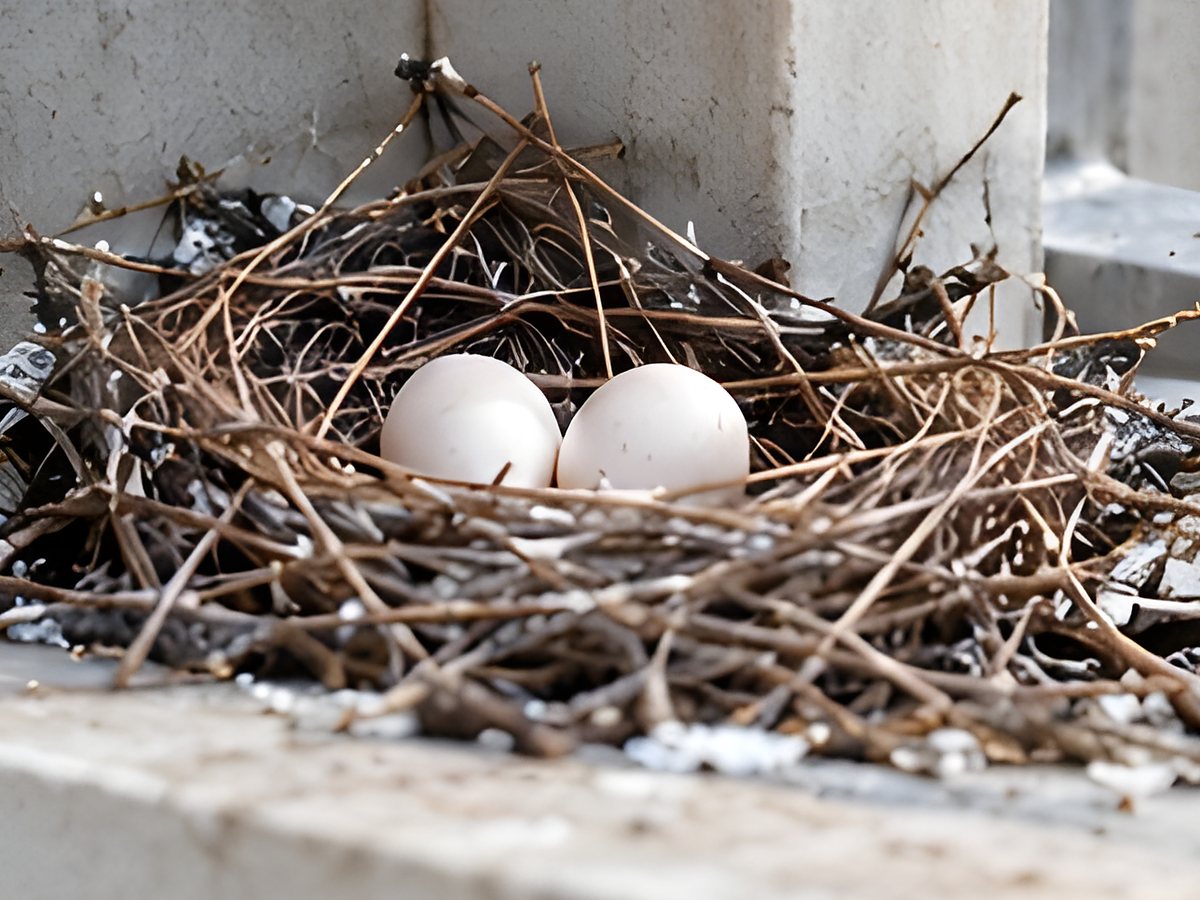
  • Pigeon nest of twigs with two eggs on a building ledge

    Pigeon nests

    Loose twig nests on ledges and in roof spaces. One pair can raise several broods a year.
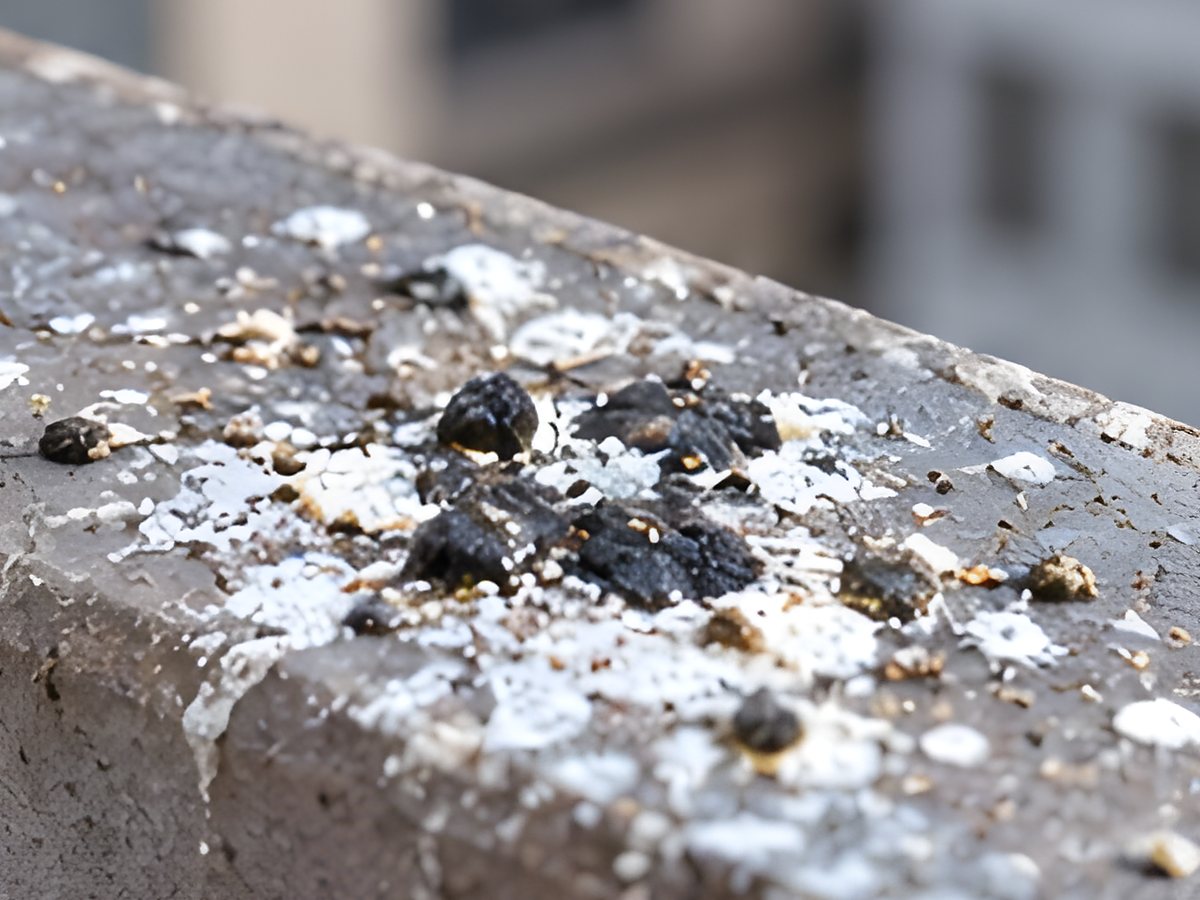
  • Pigeon droppings staining a concrete ledge

    Droppings

    Acidic droppings stain and corrode stone, metal and paint, make walkways slippery and can carry disease.
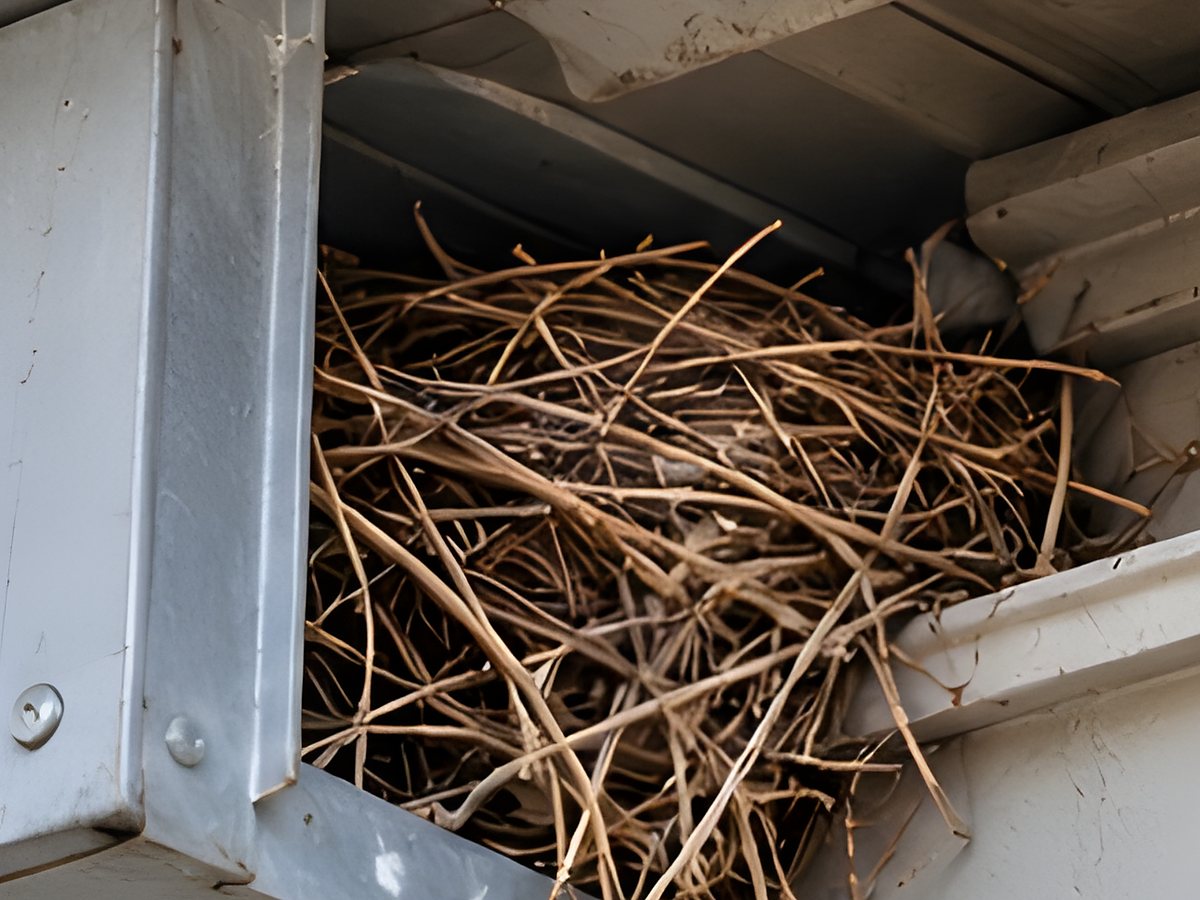
  • Sparrow nest of dry grass packed into a metal vent opening

    Nests in vents

    Sparrows pack vents, ducts and gaps with dry grass, blocking airflow and adding a fire risk near equipment.
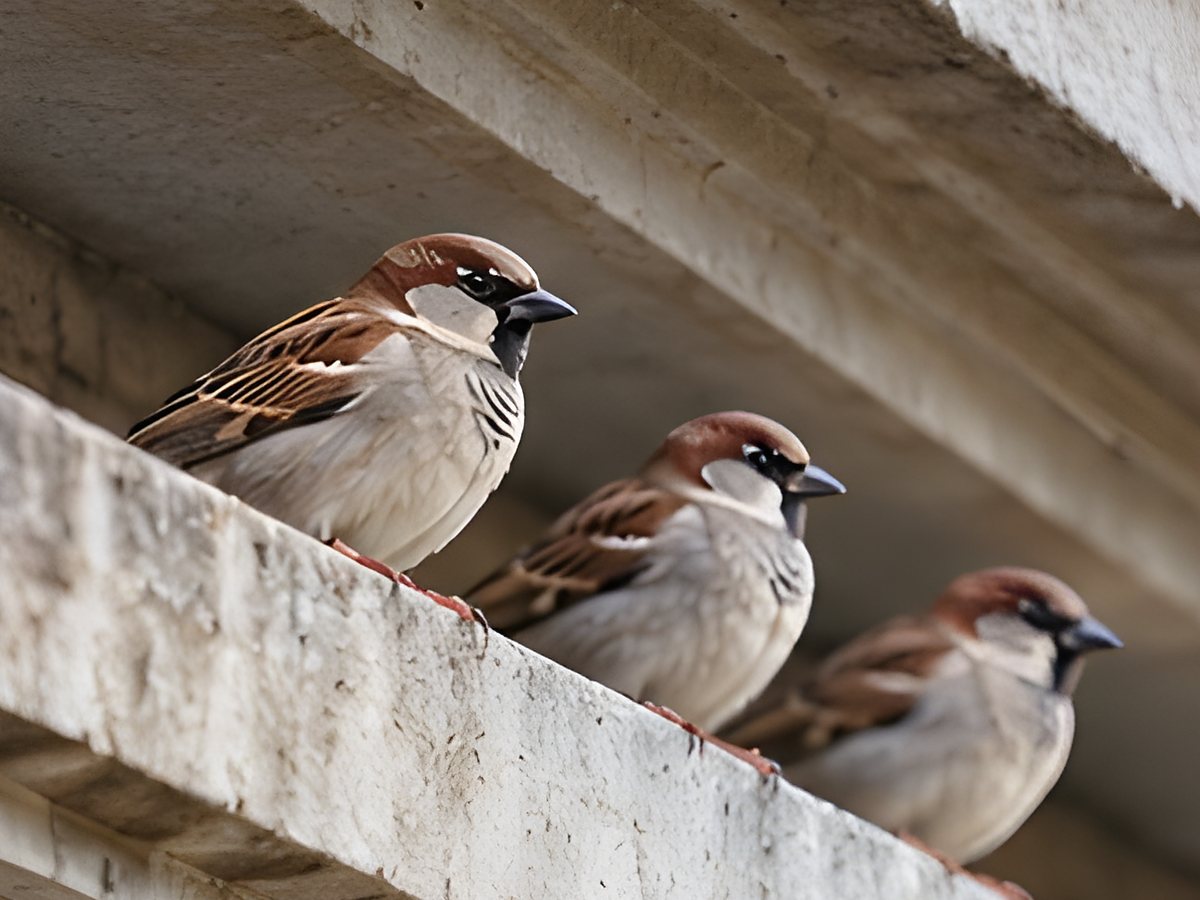
  • Three sparrows roosting on a sheltered concrete beam

    Roosting

    Birds lining ledges, beams and canopies at dusk mark a roost that keeps growing until the surfaces are proofed.

Why act now

Why a bird problem cannot wait

  1. Droppings eat into the building

    Pigeon droppings are acidic. Left on stone, render, steel and paint they stain, etch and corrode, and on roofs they clog drains and gutters. Every season adds another layer and another repair.

  2. A health and hygiene risk

    Dried droppings and nest debris can carry disease organisms and bird mites. Near air intakes, food areas, hospital and school grounds, or wherever staff clean them by hand, that is a risk an inspector will note.

  3. Blocked drains and damaged plant

    Nests in gutters, downpipes and AC units hold water and debris. Leaks, overflows and overheating equipment follow, usually on a roof no one checks until something fails.

  4. The flock grows and settles in

    Pigeons return to the same roost every day and breed through the year. Once a ledge or plant deck is established, more birds join, and the clean-up and proofing cover a bigger area.

Options

Bird control methods

Selected after the survey to suit the birds, the structure and how the area is used.
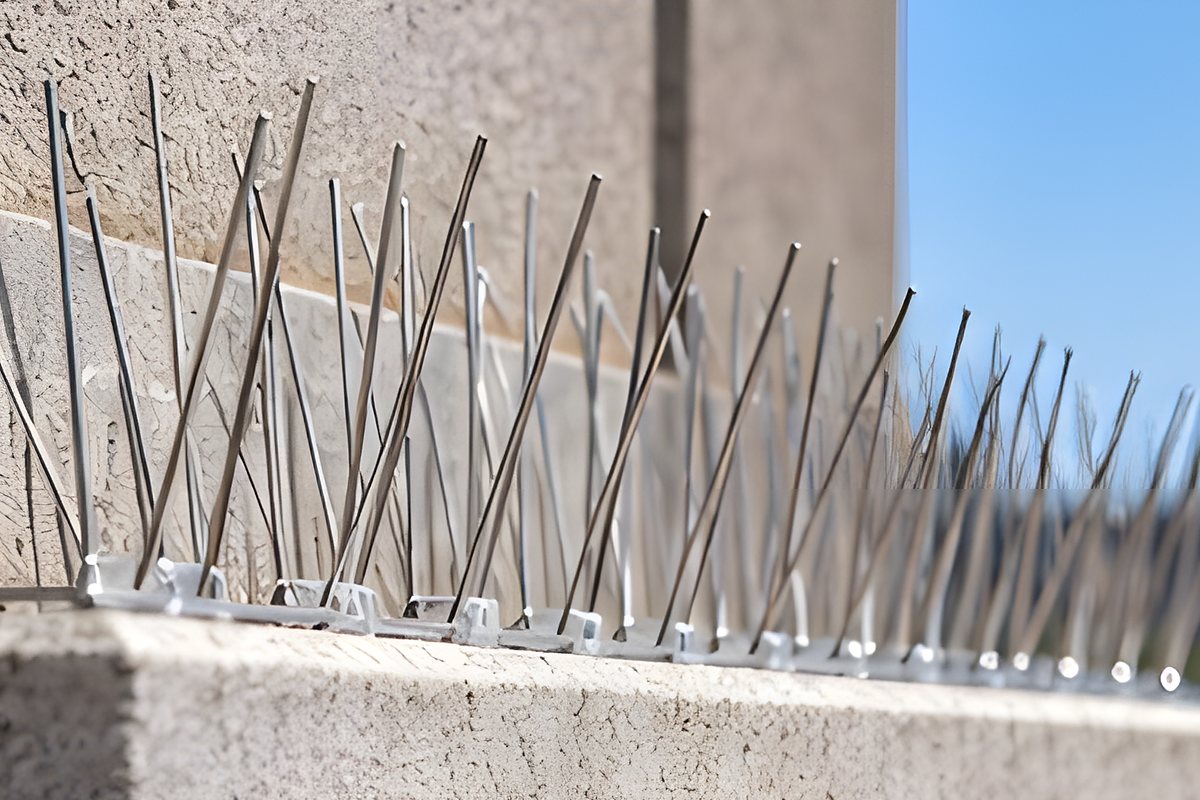
  • Stainless bird spikes fixed along a stone ledge

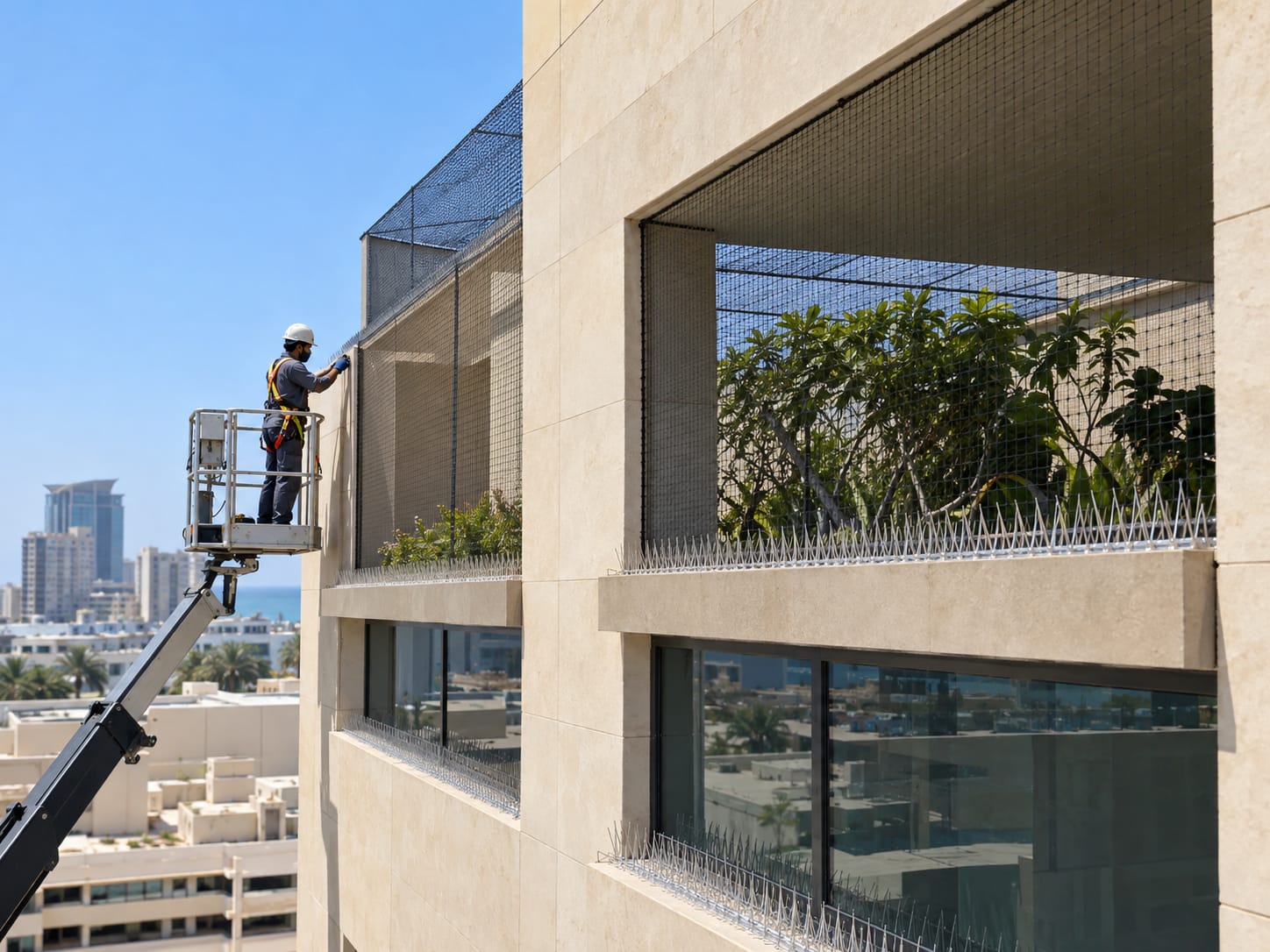
    Bird spikes

    Fitted along ledges, parapets, signs and beams to stop birds landing and perching.
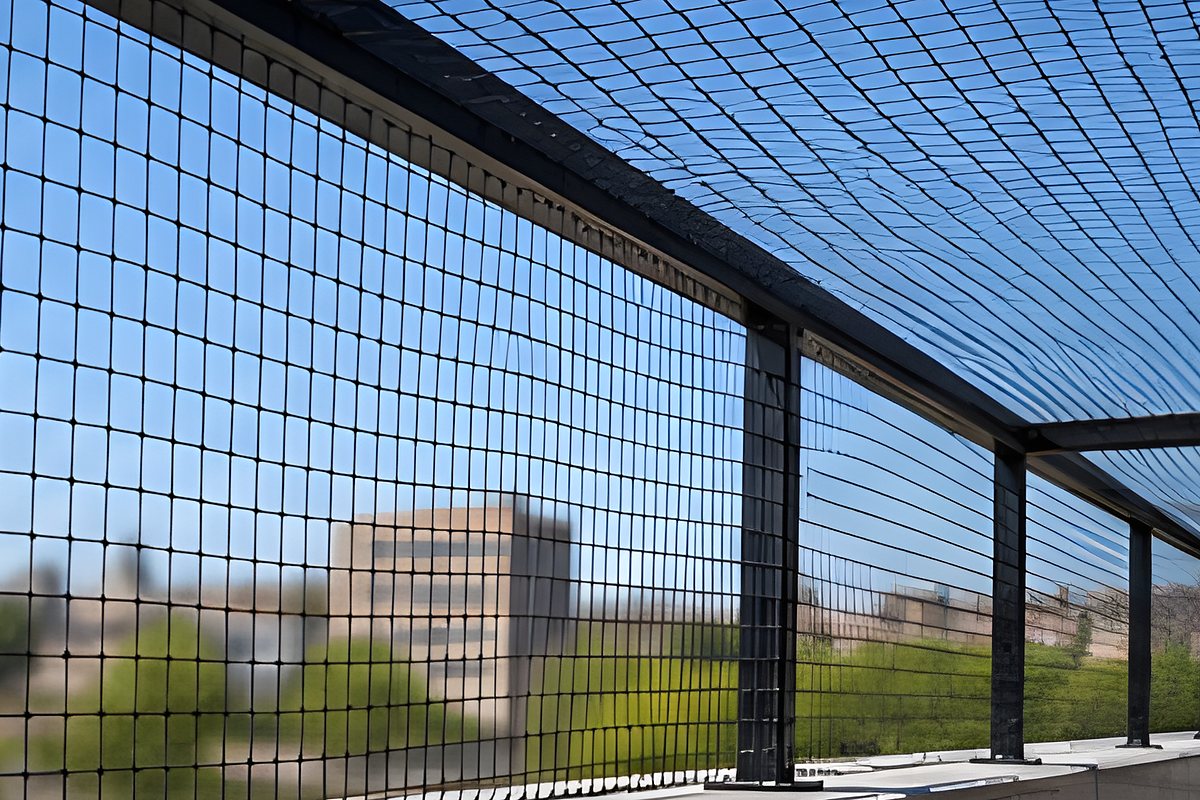
  • Black bird netting closing off a rooftop terrace

    Bird netting

    Closes off larger spaces such as courtyards, canopies, plant areas and loading bays, so birds cannot get in to roost or nest.
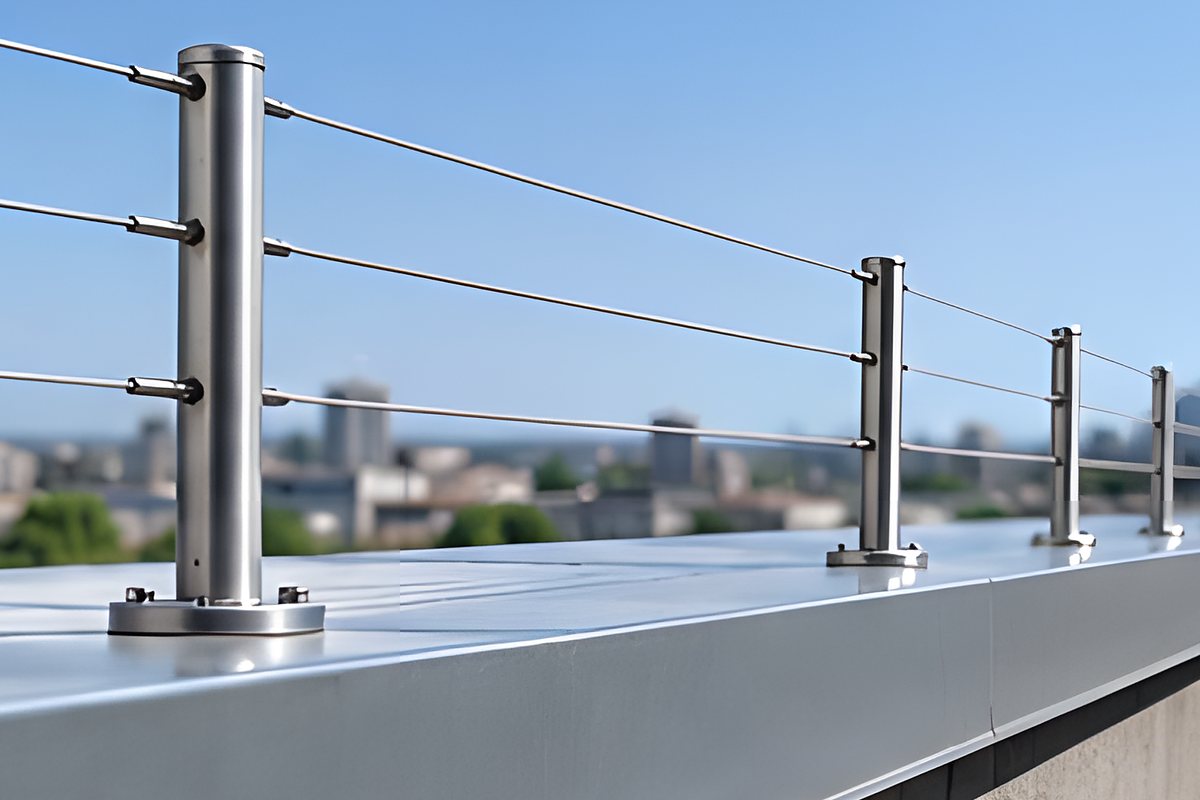
  • Post-and-wire system with tensioned wires along a roof parapet

    Post-and-wire systems

    Stainless posts carry tensioned wires along wider ledges, parapets and rooflines, so birds cannot settle. Low-profile, with little visual impact.
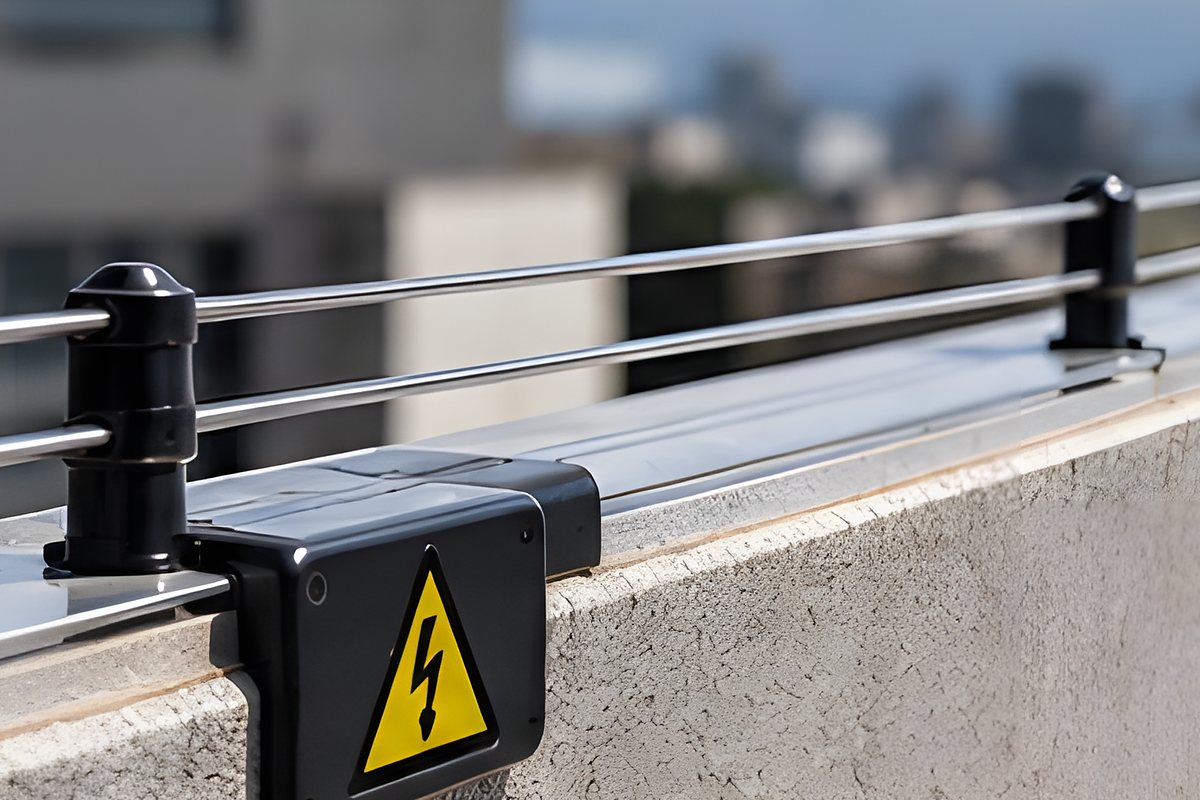
  • Low-profile electric bird deterrent track on a concrete ledge

    Electric deterrent track

    A low-profile track along ledges and parapets gives a landing bird a brief, low-level pulse, so it learns to stay off without being harmed.
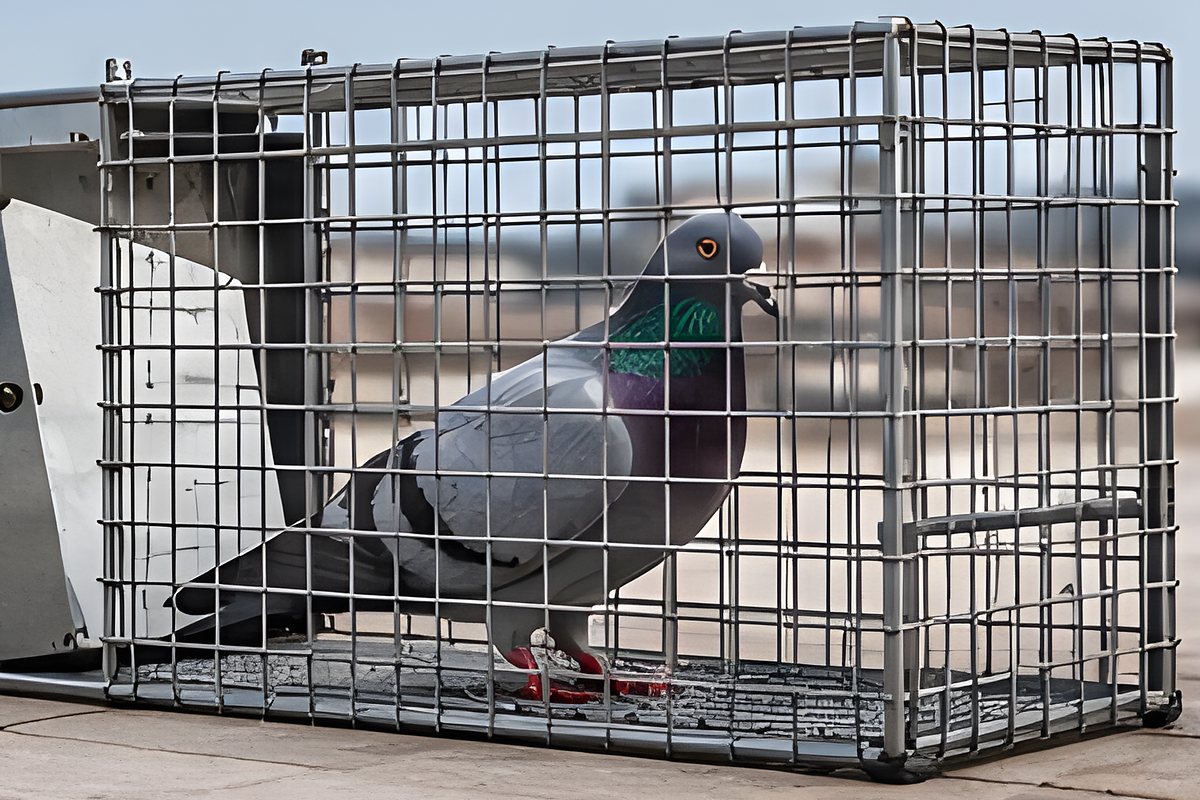
  • Pigeon inside a humane cage trap on a rooftop

    Humane cage trapping

    Where birds already live inside a building or a roof space, humane cage traps catch them safely so they can be removed and relocated in line with local wildlife regulations.
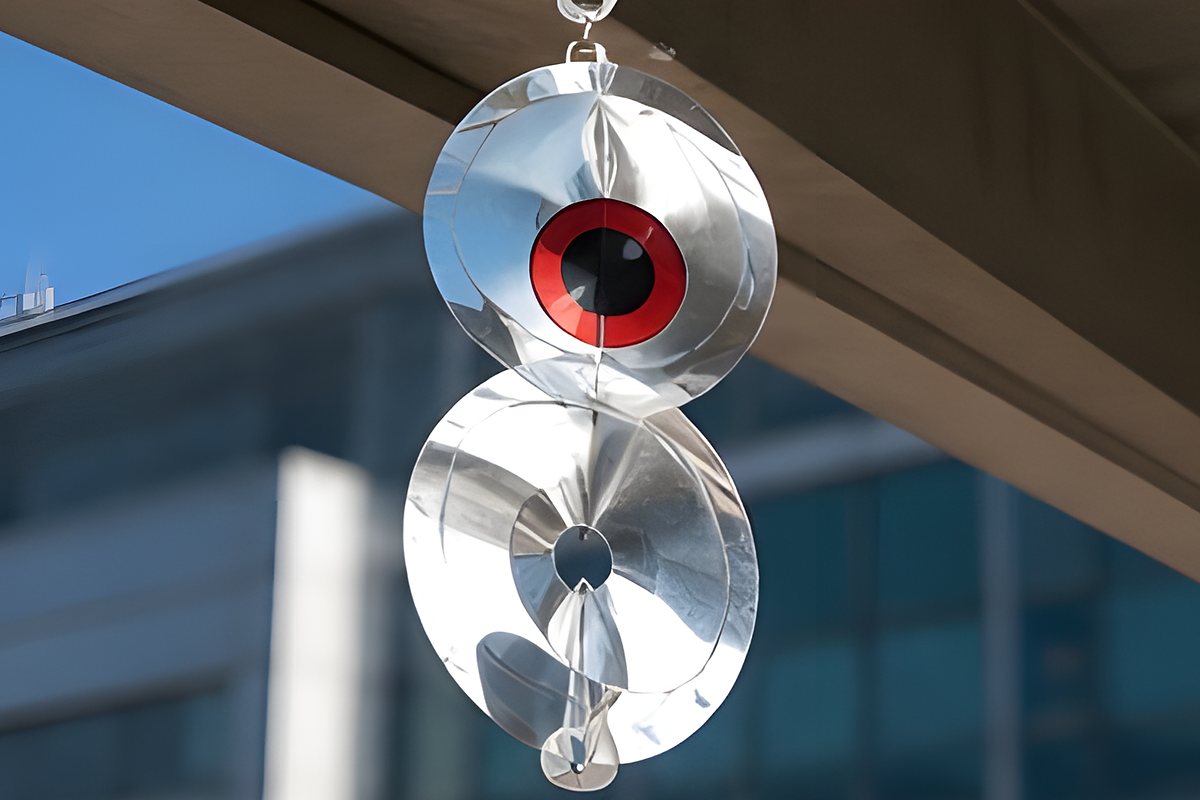
  • Reflective spiral bird deterrent hanging under a roof edge

    Visual and sound deterrents

    Reflective devices, hawk kites, lasers or sound units make an area feel unsafe to birds. Used alongside physical proofing, or where nothing can be fixed to the building.

Method

How bird proofing works

Every bird control job follows the same four steps; the deterrents used depend on what the survey finds.

  1. 01

    Bird survey

    We identify the birds, where they roost and nest, the damage so far and how each area can be reached safely.

  2. 02

    Proofing plan

    You receive a written scope that matches each area to a deterrent, such as netting, spikes or a wire system.

  3. 03

    Clean-up & installation

    Droppings and nesting debris are cleared first, then trained technicians in PPE fit the deterrents to a clean, sound surface.

  4. 04

    Follow-up & aftercare

    Follow-up inspections check the installation and confirm the birds have moved on, backed by our service warranty.

Why Eastern Alliance

Why clients choose us

  • Survey before quoteThe survey decides which deterrent goes where, so you pay only for what the building needs.
  • Physical deterrentsDesigned to keep birds off ledges and roofs, not to injure them.
  • Trained in-houseTechnicians trained at our own training centre on methods and safety.
  • Insured & guaranteedInstallation backed by insurance and a service warranty.

Safety during clean-up and installation

Droppings can carry disease, so clean-up is done by technicians in PPE while staff and the public are kept away from the area. Work at height follows your site’s safety rules, and your technician will tell you which areas to keep clear and for how long.

Prevention

How to make your building less attractive to birds

Pigeons stay where they find food, water and a sheltered ledge. Take those away and the proofing has less to do and lasts longer.

  • Do not feed themAsk staff, tenants and residents not to feed pigeons, and keep terraces, food courts and smoking areas free of crumbs. A fed flock does not move on.
  • Keep bins and waste yards closedFit lids, empty bins before they overflow and hose down waste areas. Spilled food draws pigeons first and rodents after them.
  • Clear standing waterFix leaking AC drain lines and blocked gutters, and empty trays and containers left on roofs. Birds need water as much as food.
  • Close off sheltered spacesGaps under solar panels, open plant decks, broken vents and unused balconies become roosts. Screen or close them before birds move in.
  • Act on the first few birdsTwo pigeons on a ledge are easier to move than a colony. Report new roosting early so proofing covers one spot, not a whole facade.
  • Walk the roof a few times a yearCheck gutters, parapets, AC units and the space under panels for nests and droppings, and after any roof works confirm the netting and spikes are still in place.

Price and quote

What decides the price of bird proofing

There is no fixed rate for bird proofing: the quote follows the survey and covers the clean-up, the materials and the access each area needs, so you pay for your building and nothing more.

  • Area and length to protectMetres of ledge, parapet or beam, and square metres of netting.
  • Deterrent typeNetting, spikes, wire systems, electric track or a combination, chosen area by area.
  • Access and heightLadders, mobile lifts or rope access, and your site’s work-at-height rules.
  • Clean-up requiredThe volume of droppings and nesting debris to remove before installation.

Survey first, then an itemised quote with no hidden extras.

Request a quote

Tell us what you are seeing and where. A coordinator will call you back to arrange a survey.

Saudi mobile or landline, e.g. 05X XXX XXXX

Preferred contact method

FAQ

Frequently asked questions

Do the deterrents harm the birds?
Netting, spikes and post-and-wire systems are physical deterrents that stop birds landing, roosting and nesting without injuring them. Electric track gives only a brief, low-level pulse, and birds caught in humane cage traps are relocated in line with local wildlife regulations.
Why must droppings be cleaned before installation?
Droppings are acidic and can carry disease, so they are removed before work starts. Clearing them, along with old nesting material, also gives the deterrents a clean, sound surface to fix to.
Are old nests a problem once the birds have gone?
Yes. Old nests can block gutters and drains and may harbour bird mites, which can find their way indoors. They are removed as part of the clean-up.
Will bird proofing change how the building looks?
We choose and position deterrents with the facade in mind, and low-profile options such as wire systems are less visible from street level. Your technician will explain how each option will look before work starts.
How long does bird proofing last?
That depends on the system, the location and how exposed it is to sun, dust and sea air. Periodic inspections catch damage or gaps early; your technician will recommend an interval.
How do you reach high ledges, roofs and signs?
The survey decides the access for each area: ladders, mobile lifts or rope access, planned under your site’s work-at-height rules. Access is listed in the quote, so there are no surprises on the day.
Can you proof solar panels and rooftop plant?
Yes. Pigeons nest under solar panels and in plant decks, where droppings and debris block drains and foul the equipment. We clear the area and close the gaps with mesh or netting so the birds cannot get back underneath.
Do you work on occupied buildings such as hotels and hospitals?
Yes. Work is scheduled around guests, patients and staff, the area is cordoned off during clean-up, and the deterrents are fitted with the facade in mind. Your facility team receives a written report after each visit.
Will the pigeons just move to another part of the building?
They may try, which is why the survey maps every roost and the plan covers them together. Where a flock has several landing points, proofing one ledge at a time moves the problem instead of solving it.

Industrial pest control

Pest control for plants, refineries, warehouses, ports and camps, run under permit-to-work and HSE rules with documentation for audits.

View service

Commercial pest control

Scheduled, documented pest control for offices, malls, hotels, restaurants, hospitals, schools and government buildings.

View service

Flea & tick control

Fleas and ticks treated in floors, carpets, pet areas, gardens and yards, with follow-up timed to the eggs and pupae that hatch later.

View service

Bee hive removal

Honey bee swarms and hives removed and relocated where the hive can be recovered, with the comb cleared and the cavity sealed.

View service

Annual maintenance contracts

Scheduled visits, monitoring, treatment as needed and a report after every visit, under one contract for the year.

View service

Learn more about the pest

Birds

Pigeons, mynas, sparrows and crows on ledges, roofs and plant: how they choose a building, the damage droppings and nests do, and what keeps them off.

Read the guide