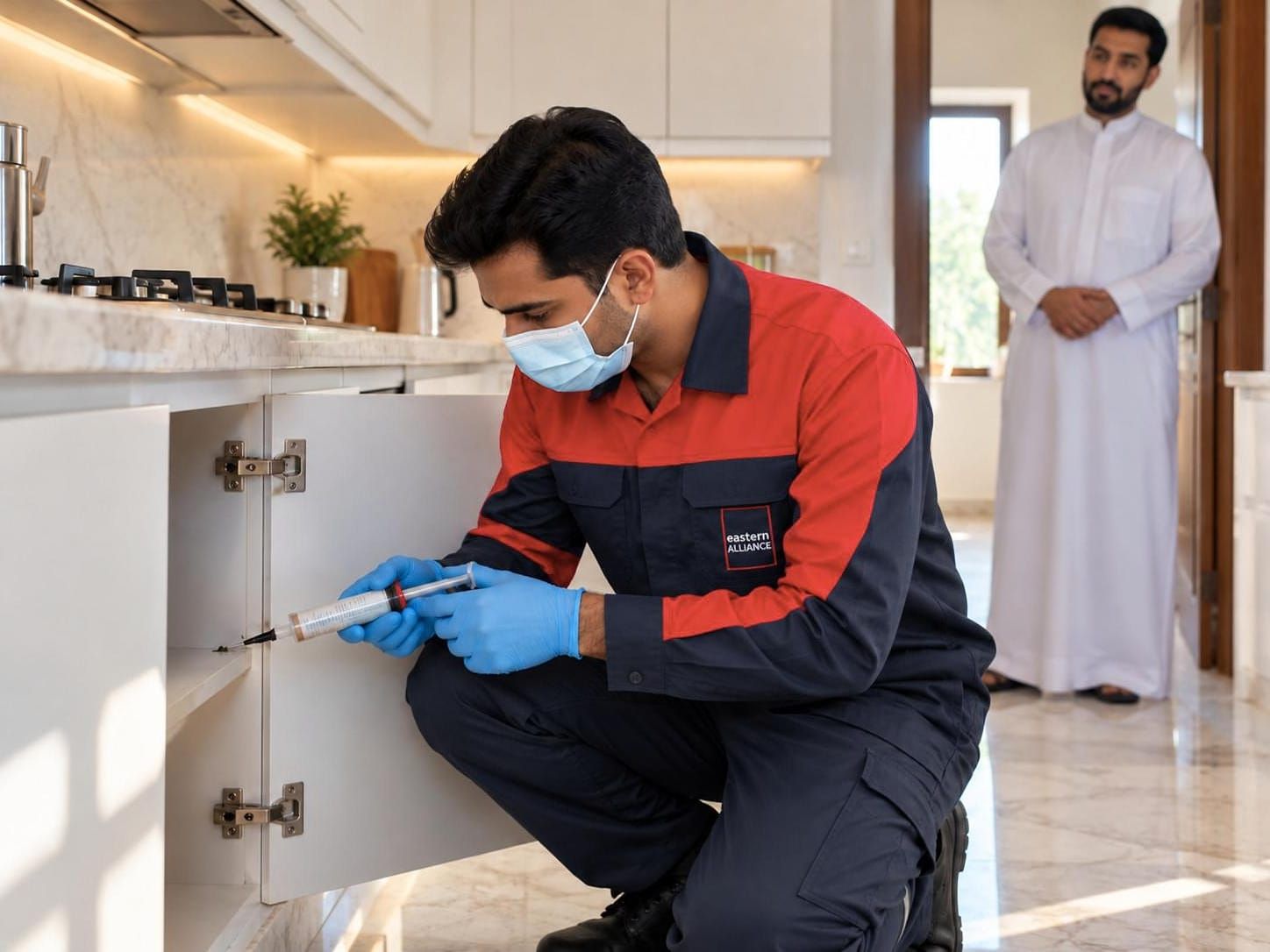
Green pest control · Homes, schools, clinics & food premises
Green pest control
Pests under control, with the least chemical the job allows.
Where children crawl, patients recover and food is prepared, blanket spraying is the wrong tool. Our green programme starts with inspection, closes the gaps and food sources pests depend on, uses traps and sealed bait stations where they work, and applies a low-impact product only where monitoring shows a need. Every product used is listed in your report.
Some sites cannot take a routine spray round, and some clients simply do not want one. These are the situations the green programme is built for:
Homes with babies, young children, elderly relatives or pets
Nurseries, schools and classrooms in daily use
Clinics, care homes and pharmacies where patients cannot be moved
Organic food producers, stores and restaurants with residue limits to meet
Companies with an environmental policy or ISO 14001 of their own
Households that react to spray odours or want fewer chemicals indoors
Scope
Pests the programme covers
Cockroaches, with gel baits in cracks and sealed stations
Ants, including trails into kitchens and nurseries
Rats and mice, with proofing and enclosed traps
Mosquitoes, by removing standing water and with smart traps
Flies, with traps, screens and waste management
Stored-product insects in pantries and food stores
Spiders and crawling insects at entry points
Why act now
Why waiting is not the green option
01
A small problem becomes a chemical one
Caught early, cockroaches or ants are handled with baits, traps and sealing. Left for months, the population grows until only a wider treatment brings it down. Acting early is what keeps chemical use low.
02
Children and pets are the most exposed
Toddlers and pets live at floor level, where cockroach droppings, rodent urine and flea activity collect. Pests in a family home are a health risk in themselves, not only the products used against them.
03
Food premises are inspected
Municipality inspectors and auditors look for pest activity, monitoring records and the products used. A sighting during an inspection costs more than a planned programme.
04
Household sprays make it worse
Supermarket aerosols scatter cockroaches into new rooms, keep ants away from baits and leave more residue in living spaces than a gel placed inside a crack. They are the usual reason pests seem to come back.
Options
Programme options
The same approach, scaled to a family home or a regulated facility.
Family homes and compounds
For villas and apartments with children, elderly relatives or pets: inspection, proofing and baits in sealed stations, with advice on the kitchen, garden and AC drain habits that bring pests in. Compounds can add a visit schedule for common areas.
Nurseries, schools and clinics
Visits timed outside class or clinic hours, methods chosen for rooms that stay in use, monitors in kitchens, store rooms and waste areas, and a record of each visit for your files and inspections.
Food premises with residue limits
Organic producers, food stores and restaurants: monitoring stations, proofing and sanitation first, products chosen against your residue limits and audit standard, and a product list for every visit.
Clients with an environmental policy
For companies that report on chemical use or hold ISO 14001 themselves: a programme that favours mechanical and non-chemical controls and documents the products used on each visit, delivered under our own ISO 14001 system.
Method
How the green programme works
The same four steps as every Eastern Alliance job, with the order of methods fixed: non-chemical controls first, a product only where monitoring shows it is still needed.
01
Inspection and mapping
We identify the pest and find where it lives, feeds and enters: drains, the space behind kitchen units, AC drain lines, bins, door gaps and openings around pipes. Monitors go in where the activity is.
02
Low-impact plan
You receive a written plan that puts proofing, sanitation and trapping first, names any product we may use and why, and sets re-entry times for rooms where children, patients or food are present.
03
Treatment, least first
Technicians seal gaps, fit door sweeps and screens, set mechanical traps and place gel baits inside cracks and sealed stations. A low-impact spray is used only at a confirmed source, never as a room-wide round.
04
Monitoring and records
Monitors are checked on each visit and the plan adjusts to what they show. Your report lists every product used and where it went, for your own records, your environmental policy or an audit.
Why Eastern Alliance
Why clients choose the green programme
Low-impact productsChosen from ranges approved by the WHO, the SFDA and the US EPA, and applied to protect people, pets and the environment.
ISO 14001 certifiedOur environmental management system is certified to ISO 14001:2015, alongside ISO 9001 for quality and ISO 45001 for health and safety.
Trained in-houseTechnicians trained at our own training centre on integrated pest management, product handling and PPE.
Every product documentedA written report after each visit lists the treatment records and product names, the record an environmental policy or an audit asks for.
Before the visit, clear food, toys, pet bowls and bedding from the areas named in the plan, and tell us about allergies, asthma, pregnancy or anyone who cannot leave the room. Where only traps, sealed stations and proofing are used, rooms usually stay in use. Where a product is applied, your technician states the re-entry time and what not to wash, so the treatment keeps working.
Prevention
How to keep pests out without chemicals
Most of a green programme happens between visits, in the kitchen, the garden and the store room. These habits do more than any spray:
Cut off food and waterWipe worktops at night, keep food in sealed containers, empty bins daily and fix dripping taps and AC drain lines. Cockroaches and ants need very little of either.
Seal the ways inFit door sweeps, mesh on vents and covers on floor drains, and seal the gaps around pipes under sinks and behind appliances with silicone or steel wool.
Keep clutter off the floorCardboard boxes, paper stacks and bags under sinks give cockroaches and rodents cover. Store things on shelves, in plastic, away from walls.
Manage bins and the gardenKeep bins closed and away from doors, empty standing water from pots, trays and AC drip points, and trim plants back from walls and windows.
Check deliveries and second-hand itemsCockroaches and bed bugs arrive in boxes, appliances and used furniture. Unpack outside and check seams and corners before anything comes in.
Report the first sightingOne cockroach or an ant trail is the moment to call, while a bait and a seal are enough. Note where and when you saw it; it shortens the inspection.
Price and quote
What decides the price of a green programme
A low-impact programme is priced on the work it takes, not on a per-spray rate: the quote follows the inspection and lists each measure, so you can see what is proofing, what is monitoring and what is product.
Size and layout of the siteRooms, kitchens and store rooms to inspect, and the number of monitors and stations.
Pests and how established they areA new ant trail needs less than a long-standing cockroach population in a false ceiling.
Proofing workDoor sweeps, mesh, sealing and drain covers, quoted as items you can approve separately.
Visit frequency and recordsOne-off or scheduled visits, and the level of reporting your policy or audit requires.
Inspection first, then an itemised quote with no hidden extras.
Tell us what you are seeing and where. A coordinator will call you back to arrange a survey.
FAQ
Frequently asked questions
Is green pest control chemical-free?
Not always, and we will not claim it is. Where proofing, sanitation, traps and sealed baits control the problem, no spray is used. Where a product is still needed, we choose the lowest-impact option that works, apply it only at the source and list it in your report.
Is it safe for babies, pregnant women and pets?
The programme is designed for homes with them: baits sit inside cracks and sealed stations, traps are placed out of reach, and a product is applied only where monitoring shows a source. Tell your technician who lives in the home, and the plan and re-entry times are set around them.
Does it work as well as a regular spray treatment?
It works because it removes the cause: entry points, food, water and hiding places, with baits that reach the nest. Results can take a little longer to show than a blanket spray, and the programme relies on the household or site keeping up the basics, which is why monitoring visits are part of it.
Which products do you use, and are they approved?
Pesticides used under Saudi regulations, from ranges approved by the WHO, the SFDA and the US EPA. For the green programme we select the lowest-impact options among them and prefer gel baits in sealed places over sprays. The product names are listed in the report after each visit.
Is the programme organic-certified?
No, and we do not use that label. What we offer is reduced chemical use, non-chemical methods where they work, products from approved ranges and a record of everything used, which organic producers can show their certifier.
Can you run the programme in a school or clinic while it is open?
Yes. Visits are scheduled outside class or clinic hours, methods are chosen for rooms that stay in use, and monitors in kitchens, store rooms and waste areas are checked each time. You receive a record of each visit for your files and inspections.
What does your ISO 14001 certification mean for my site?
ISO 14001 is the international standard for environmental management. Our certification means the way we choose, store, apply and dispose of products is run under a documented system that is audited, and that the products used on your site are recorded in your visit report.
How is this different from your regular residential service?
Both start with inspection and use targeted methods and earth-friendly products. The green programme goes further: non-chemical controls come first, sprays are limited to a confirmed source, and every product is documented for your records. It suits homes and sites that want chemical use kept to the minimum.
How soon can we use the treated rooms again?
Rooms where only traps, baits in stations and proofing were used usually stay in use. Where a product was applied, your technician tells you the re-entry time on the day and what not to wash afterwards; follow the label instructions they give you.
Ants, silverfish, beetles, pantry moths, centipedes, fleas and ticks: how to recognise the everyday crawling insects of Saudi homes and what keeps them out.