
Eastern Alliance — Home
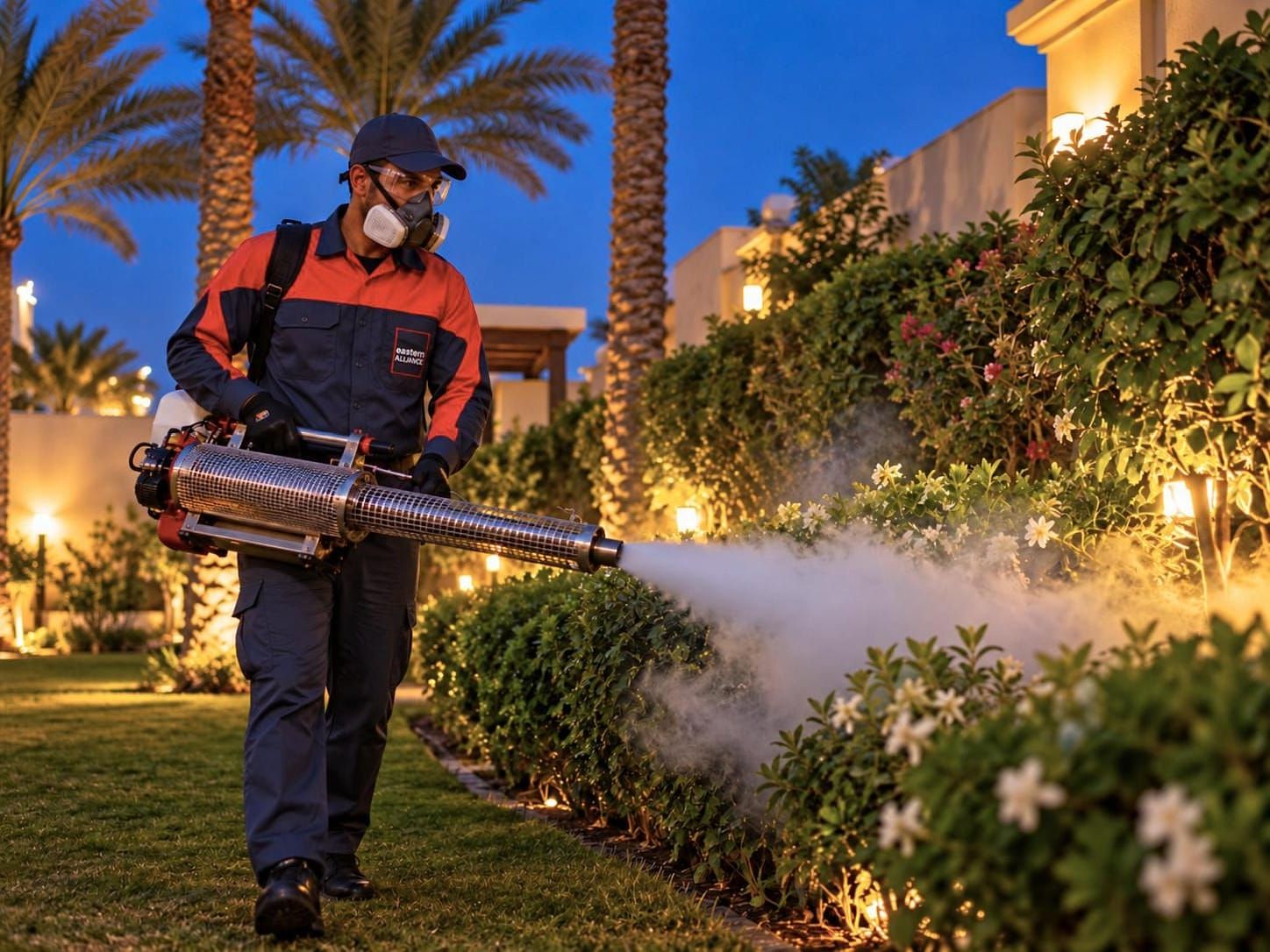
Technician in a respirator thermal-fogging the hedges of a compound garden at dusk

Smart mosquito traps · Compounds, hotels, camps & venues

Smart mosquito traps

Trap mosquitoes day and night, without insecticide.

Smart traps imitate a person: a plume of CO2, warmth and a scent lure draw host-seeking mosquitoes in, and a fan or sticky surface holds them. Our technicians place the units where mosquitoes approach people, service them on a schedule and record the catch at every visit, so fogging and larviciding are adjusted on evidence rather than complaints.

  • No insecticide released
  • Placed & serviced by our technicians
  • Catch counts recorded every visit

Service areas:Al KhobarDammamRiyadhJeddahJubailJizanTabukall of Saudi Arabia

When to call us

When smart traps make sense

Traps suit sites where fogging alone is not enough, is not wanted near people, or where you need numbers to show that the programme is working:

  • Guests or residents are bitten on terraces, pool decks and lawns despite fogging
  • Breeding sites are off your land: wadis, farms, lagoons or a neighbouring plot
  • Restaurants, children's areas or wellness zones where spraying is unwelcome
  • An HSE team or client asking for monitoring data, not just treatment dates
  • Camps and remote facilities where crews work and gather outdoors at dusk
  • A green or low-chemical policy for the site

Scope

Where we deploy smart traps

  • Residential compounds and gated communities
  • Hotels, resorts and beach clubs
  • Outdoor restaurants, event lawns and wedding venues
  • Worker camps, remote sites and project accommodation
  • Industrial facilities and plant perimeters
  • Schools, campuses, parks and government facilities

Why act now

Why fogging alone is not enough

  1. Mosquitoes arrive from outside

    Culex and Aedes fly in from wadis, farms, lagoons and neighbouring plots you cannot treat. Fogging clears tonight's adults; by tomorrow more have arrived. Traps keep working between visits.

  2. Complaints are a poor sensor

    By the time guests complain, numbers have been high for days. Catch counts show rising pressure early, so fogging is brought forward instead of booked after the damage is done.

  3. Spraying where people are

    Dining terraces, pool decks and children's areas are exactly where bites happen and where frequent spraying is least welcome. Traps control those zones without re-entry periods.

  4. Disease vectors need records

    Aedes mosquitoes can carry dengue. When guests, staff or a client's HSE team ask what is being done, technician-recorded counts and service reports answer better than treatment dates alone.

Options

Deployment options

Trap type and number follow the site; all are placed, serviced and counted by our technicians.

  • Perimeter interception

    A line of traps between an external source, such as a wadi, lagoon or farm, and the protected area, catching mosquitoes before they reach terraces and villas.
  • Hotspot protection

    Units placed near pool decks, outdoor dining, play areas and event lawns, where bites are reported and spraying is least welcome.

  • Monitoring points

    A smaller number of traps used mainly as sensors: counts by location and date show seasonal trends and trigger fogging or extra larviciding when pressure rises.

  • Combined programme

    Traps run alongside larviciding, residual treatment and fogging under one contract and one report, usually as part of an annual maintenance contract.

Method

How the smart trap service works

The traps are part of a programme, not a product dropped off at the gate. Every deployment follows the same four steps, and the catch data feeds back into the rest of your mosquito control.

  1. 01

    Site survey

    We map where people gather at dusk and dawn, where mosquitoes rest and approach from, the prevailing wind, shade and power points, and identify the breeding sites on and off your land.

  2. 02

    Deployment plan

    You receive a written scope: the number and position of traps, the service interval, how counts will be reported, and how the traps fit with larviciding and fogging, with an itemised quote.

  3. 03

    Installation

    Technicians position each unit between the breeding source and the people it protects, clear of seating and kitchens, start the CO2 or attractant supply and check the catch mechanism.

  4. 04

    Service & counts

    On each scheduled visit we empty and clean the unit, replace lures, gas and consumables, record the catch by location and adjust fogging and larviciding to what the numbers show, with a written report.

Why Eastern Alliance

Why clients choose us

  • Part of an IPM programmeThe traps are deployed by the same team that larvicides and fogs, so the counts change what we do on the next visit.
  • Insecticide-free zonesNo product is released by the traps, which suits restaurants, pools, children's clubs, wellness areas and sites with a green policy.
  • Reports for HSE and managementA written report after each visit with catch counts by location, consumables replaced and recommendations, ready for audits and client reviews.
  • Trained in-houseTechnicians trained at our own training centre on trap placement, servicing and mosquito identification.

Safety around the traps

The traps release no insecticide, so there is no re-entry period and no preparation needed from guests or staff. Units are placed away from seating, play equipment and kitchens, and CO2 cylinders and lures, where used, are handled, secured and replaced by our technicians. Please do not move, open or unplug a unit; if one is damaged or in the way, tell your account contact and we will relocate it.

Prevention

Getting the most from smart traps

Traps catch the mosquitoes that come to people. Everything that stops mosquitoes breeding nearby makes the traps' job smaller.

  • Keep breeding water off the siteEmpty AC drip trays, planters and containers weekly, cover tanks and keep drains flowing; a trap next to a breeding tank is working against itself.
  • Leave the units where we put themPosition is based on wind, shade and approach routes. Moving a trap into a flower bed or behind a wall for looks usually cuts what it catches sharply.
  • Protect the power supplyTell landscaping and maintenance teams which sockets and cables feed the traps so they are not switched off or cut during works.
  • Share bite reports with usAsk security, housekeeping or guest relations to log where and when bites are reported. Matched against the trap counts, it shows where to add, move or supplement a unit.
  • Keep the rest of the programme runningTraps supplement larviciding and fogging; they do not replace them. Keep the scheduled visits even when counts are low, because that is usually why they are low.

Price and quote

What decides the price of a smart trap programme

The quote covers the units, their consumables and the technician visits that keep them working, so it depends on the site rather than a list price. The survey sets the number of traps and the service interval, and the quote itemises each.

  • Number of trapsSet by the area to protect and how many approach routes mosquitoes use.
  • Service intervalHow often lures, gas and consumables need replacing at your site.
  • Season lengthYear-round on the humid coasts, or the warm months inland.
  • Combined programmeWhether larviciding and fogging are included under the same contract.

Inspection first, then an itemised quote with no hidden extras.

Request a quote

Tell us what you are seeing and where. A coordinator will call you back to arrange a survey.

Saudi mobile or landline, e.g. 05X XXX XXXX

Preferred contact method

FAQ

Frequently asked questions

How do smart mosquito traps work?
They imitate the signals a mosquito uses to find a person: a plume of carbon dioxide, warmth and a scent lure. Host-seeking females fly to the unit and are drawn in by a fan or held on a sticky surface, where they dry out. No insecticide is released.
Do the traps replace fogging?
No. Traps reduce the number of biting mosquitoes in the zone they protect and tell us how pressure is changing, but they do not stop breeding. Larviciding removes the source and fogging clears a sudden rise in adults; the traps make both better targeted.
How do we see the results?
Our technician records the catch at each service visit, trap by trap, and the written report shows the counts over time alongside the actions taken. There is nothing for you to install or log in to; the data comes with the report.
How many traps does a compound or hotel need?
It depends on the area to protect, where the mosquitoes come from and how many places people gather outdoors. The survey sets the number and positions, the first service visits confirm them, and units can be added or moved as the counts show.
Are the traps safe for children, pets and bees?
The traps use attractants aimed at mosquitoes and release no insecticide, so there is no re-entry period. Units are placed away from play areas and seating, and consumables are handled by our technicians. Bees and other pollinators are not attracted to these lures.
Do the traps need power?
Most units need a mains supply for the fan and the lure system, so placement takes nearby sockets into account and the survey confirms what each position needs. Where there is no power, we look at alternatives or adjust the position.
Which mosquitoes do they catch?
Host-seeking females of the common species, including Culex, which bite at night, and Aedes, which bite by day and can carry dengue. Lure choice and placement are adjusted to the species the survey finds.
Can we have traps only for an event or the summer?
Yes. Traps can be deployed for a season, an event period or year-round, with the service interval set to match. Give us the dates when you request a quote and we will plan installation so the units are running before guests arrive.
Is this part of a green pest control programme?
It can be. Smart traps, larviciding with biological products and targeted residual treatment are the backbone of our green mosquito programme for sites that want to minimise spraying. Call us or request a quote online and tell us about the site.

Mosquito control

Breeding water treated at the source, then fogging, ULV spraying and residual treatment for villas, compounds, hotels and outdoor sites.

View service

Green pest control

Inspection-led, reduced-chemical pest control for homes with children and pets, schools, clinics and food premises.

View service

Annual maintenance contracts

Scheduled visits, monitoring, treatment as needed and a report after every visit, under one contract for the year.

View service

Fly control

Source reduction in waste areas and drains, fly traps and ribbons, and residual treatment for kitchens, food factories and farms.

View service

Commercial pest control

Scheduled, documented pest control for offices, malls, hotels, restaurants, hospitals, schools and government buildings.

View service

Industrial pest control

Pest control for plants, refineries, warehouses, ports and camps, run under permit-to-work and HSE rules with documentation for audits.

View service

Learn more about the pest

Mosquitoes

Aedes, Culex and Anopheles: how to tell them apart, where they breed around Saudi homes and sites, what they can carry and how to stop them at the source.

Read the guide