Pest guide · Wasps, hornets, bees, ants and scorpions
Stinging insects and scorpions
A sting passes in hours; a disturbed nest does not.
Warm nights from spring to autumn bring out Saudi Arabia's stinging insects and scorpions: paper wasps under eaves, hornets in cavities, bee swarms on branches, samsum ants in irrigated gardens and scorpions under stones. Most stings hurt and pass. The risks are allergic reactions, many stings from a disturbed nest and two scorpions whose venom is serious.
Species
What stings in Saudi Arabia
01
Paper wasps
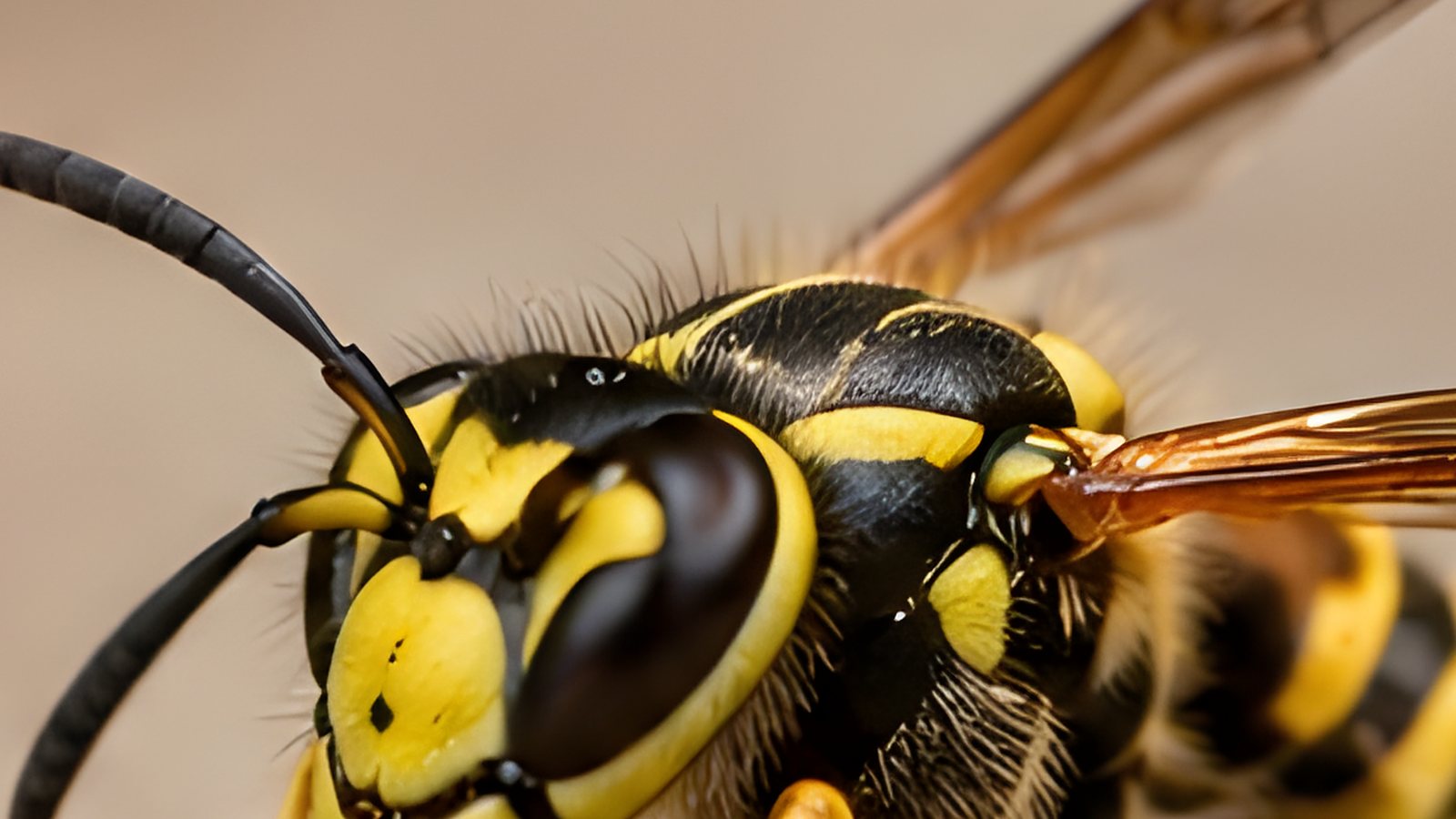
Slender, yellow and brown, legs dangling in flight. They build small grey umbrella-shaped combs under eaves, balcony ceilings, pergolas and AC units and inside meter and shutter boxes. They defend the comb and sting repeatedly, but ignore people away from it.
02
Oriental hornets
Large and reddish-brown with a yellow band and face, loud in flight and active even in midday heat. Colonies sit in ground holes, wall and roof voids and hollow trees. Stings are painful, several at once are dangerous, and the nest is never a DIY job.
03
Honey bees
A swarm is a hanging cluster of bees on a branch, wall or fence; usually calm, it moves on within days. A colony that enters a wall cavity or roof void stays and builds comb. Bees are pollinators, so the aim is relocation, not spraying.
04
Samsum and fire ants
The samsum ant, black and larger than a garden ant, nests under paving and in irrigated lawns, notably in the Eastern Province; its sting burns and causes serious allergic reactions in some people. Fire ants are smaller, reddish, and swarm up legs in seconds.
05
Scorpions
Several species live in the Kingdom. The slim yellow scorpion and the thick-tailed black scorpion are the two whose stings can be serious, especially for children. They hide under stones, blocks and stored items by day, hunt on warm nights and glow under UV.
Identification
How to tell them apart
Bees are rounded and furry; wasps and hornets are smooth and narrow-waisted. A bee leaves its barbed sting behind, a wasp or hornet does not and can sting again. An open grey papery comb is paper wasps; an entrance hole in soil or masonry with loud traffic is hornets; a dense hanging cluster is a bee swarm. Scorpions show pincers and a curled tail and glow green-blue under a UV torch at night.
Paper wasp: 15–20 mm, slim, yellow-brown, legs trailing in flight
Oriental hornet: 25–35 mm, reddish-brown, yellow band across the abdomen
Honey bee: 12–15 mm, golden-brown and furry, carries pollen on its hind legs
Samsum ant: black, slow-moving, found around irrigated soil; it stings rather than bites
Yellow scorpion: slender pincers, thick tail, up to about 10 cm; black scorpion: dark, heavy tail
Habitat and behaviour
Where they nest, where they shelter and when they are active
Wasp and hornet queens start nests in spring; colonies peak in late summer and autumn, when workers are most numerous, defensive and drawn to sugary drinks, fruit and bins. Bees swarm mainly in spring and seek cavities and water in the heat. Samsum ants nest under paving beside irrigated lawns and leaking taps. Scorpions spend the day under stones, blocks and stored items and in wall cracks, and hunt on warm nights from spring to autumn, especially after hot days and rain. They get in under doors, around pipes and through floor drains, and nearby building work pushes them indoors.
Warning signs
Signs to look for
Wasps flying in and out of one spot under the eaves, a shutter box or an AC unit
A loud, steady stream of large reddish wasps into a hole in the ground or a wall
A hanging cluster of bees, or bees entering a crack in a wall, tank room or roof
Honey stains or a sweet smell on a ceiling or wall
Burning stings on feet and ankles after standing on a lawn or planter edge
A scorpion in a bathroom, shoe or under a doormat, or glowing shapes under a UV torch at night
Shed scorpion skins or small dark droppings in a garage or store corner
Why it matters
Why they need care, not improvisation
01
Allergic reactions
Most stings cause local pain and swelling for a few hours. In some people a sting brings on swelling of the face or throat, difficulty breathing, dizziness or widespread hives within minutes; that is an emergency and needs immediate medical help.
02
Multiple stings from a disturbed nest
Knocking down a nest, mowing over one or spraying a hornet hole releases dozens of defenders at once. Many stings together can make anyone ill, and ladder falls during DIY removal cause injuries of their own.
03
Scorpion stings in children
Most stings cause severe local pain. Venom from the yellow and black scorpions can also cause sweating, restlessness, drooling, a fast pulse or breathing trouble, mostly in children and the elderly. Any such sign means hospital now; antivenom is given there.
04
Damage from an abandoned bee colony
A colony killed or sealed inside a wall leaves kilograms of comb. In the heat the honey melts and runs through plaster, stains ceilings and attracts ants, beetles, cockroaches and rodents for months.
05
Liability on shared and public sites
A nest over a school gate, a hotel pool or a compound playground, or scorpions in labour accommodation, is a safety finding against the operator and a source of complaints and claims.
Prevention
How to reduce the risk at home and on site
Inspect the eaves every springFrom March, check under eaves, balcony ceilings, pergolas, shutter boxes, meter boxes and AC units weekly. A nest the size of a coin is a quick professional job; one the size of a football is a hazard.
Close the ways inFit door sweeps and thresholds, seal cracks in walls and around pipes, put mesh over vents, weep holes and floor drains, and screen the openings of tank rooms and roof voids.
Take away the shelterClear rubble, block piles, pallets, timber and old tyres from the garden and perimeter, raise stored items off the floor and keep garages and store rooms swept; scorpions and wasps use the same quiet spots.
Fix the waterIn the heat, bees, wasps and hornets come to AC drips, dripping taps, pool edges and pet bowls. Route condensate to drains, repair leaks and cover tanks.
Manage sweet waste and fallen fruitKeep bins lidded, rinse cans and bottles, pick up fallen dates and fruit, and keep drinks covered outdoors in late summer, when wasp numbers peak.
Night habits in scorpion countryWear closed shoes outdoors at night, shake out shoes, towels and bedding left on the floor, keep beds away from walls, and check the garden and thresholds with a UV torch on warm evenings.
Know what not to doDo not knock down, burn, hose or spray a nest, do not seal a hole bees are using, do not pick up a scorpion by hand, and keep children and workers away from a nest while it is being dealt with.
How we deal with it
When to call a professional
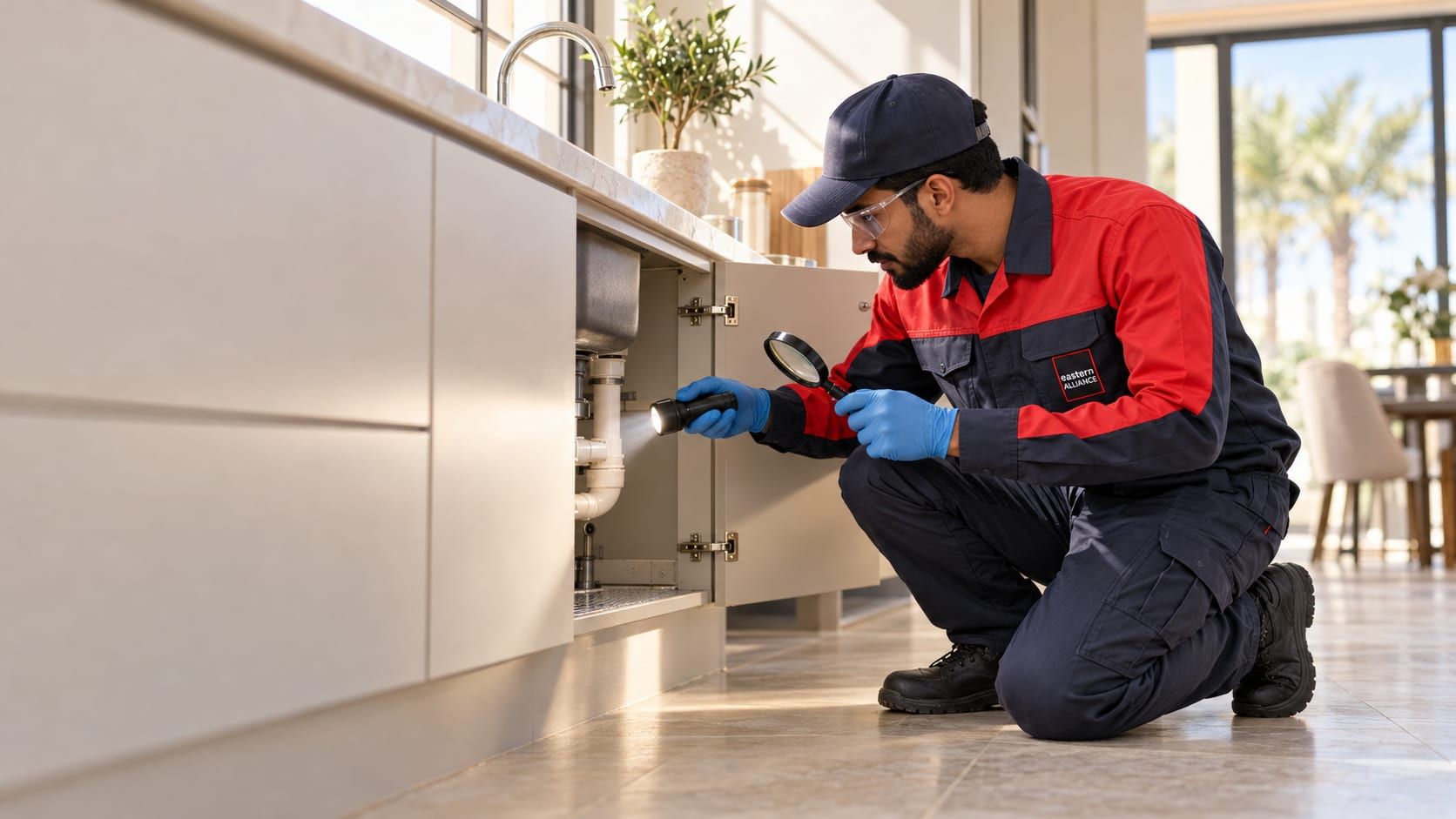
Call for any nest you would need a ladder to reach, any hornet nest, a nest near a door, AC unit or play area, bees inside a wall or roof, scorpions indoors, or stinging ants where children play. Our technician identifies the species, finds each nest and harbourage (a night UV survey for scorpions), works in protective gear when the colony is inside, relocates bees where reachable, and leaves a written report.
Our services that cover this pest, from inspection to monitoring.
Move away from the nest first. Scrape out a bee sting with a card edge, wash the area, apply a cold compress and keep the limb still. Get emergency help immediately for swelling of the face or throat, difficulty breathing, dizziness or hives spreading over the body, for many stings at once, or for a sting inside the mouth. Anyone with a known allergy should use their prescribed medication.
What should I do after a scorpion sting?
Wash the site, apply a cold compress, keep the person calm and the limb still, and remove rings or tight items near the sting. Do not cut, suck or tie off the area. Go to hospital without delay if the person is a child or elderly, if pain spreads, or if sweating, drooling, restlessness, muscle twitching or breathing trouble appear; antivenom is given there.
There is a swarm of bees on my tree. Is it dangerous?
A resting swarm is usually calm: the bees have no comb or young to defend and are waiting while scouts find a new home, and most swarms leave within a day or two. Keep people and pets away, do not spray or hose it, and call if it stays, settles into a wall or sits over a doorway or play area; it can then be collected and relocated.
Do you kill the bees?
Not where it can be avoided. Honey bees are pollinators, so the aim with a swarm or a reachable colony is collection and relocation of the colony, with the comb removed so melting honey does not attract other pests. Treatment is considered only when a colony cannot be reached or poses an immediate danger, and the inspection tells you which applies.
Can I remove a small wasp nest myself?
We advise against it. Even a small paper-wasp comb has defenders that sting repeatedly, hornets are far worse, and most injuries happen on ladders or when a nest is knocked down and the wasps return to the spot. A technician treats the nest in the evening, when the colony is inside, in protective gear, and removes it so it is not rebuilt. Call us or request a quote online.
How do scorpions get into the house?
Under doors without sweeps, through gaps around pipes and cables, up through floor drains, and inside firewood, boxes or shoes brought in from outside. They are hunting the insects drawn to your lights. Door seals, mesh on drains, less clutter outside and an insect-free perimeter keep them out; a night survey with a UV torch shows how many are around.
When are wasps and scorpions most active?
Wasps and hornets build from spring and peak in late summer and autumn, when colonies are largest and most defensive. Scorpions hunt on warm nights from spring to autumn, especially after very hot days and after rain, and are rarely seen in the cold months. Spring is the time to inspect and seal; late summer is when most calls come.
Aedes, Culex and Anopheles: how to tell them apart, where they breed around Saudi homes and sites, what they can carry and how to stop them at the source.
Ants, silverfish, beetles, pantry moths, centipedes, fleas and ticks: how to recognise the everyday crawling insects of Saudi homes and what keeps them out.
Which snakes turn up around Saudi homes, farms and sites, how to read the signs, what to do after a bite and how to make your property less inviting.
Read the guide
This guide is general information for homes and facilities in Saudi Arabia. Species and their behaviour vary by region and season, and the right treatment is decided after an inspection.